For Mahtlal Bisen, a farmer from Gangeruwa village in Madhya Pradesh’s Seoni district, growing paddy has always been a challenging task. Water shortages and the subsequent infestation of Sada Lamba (weedy rice) used to reduce his crop yields by 30–40%. Moreover, once the crop approached maturity and Sada Lamba became identifiable, removing it manually from the field as a weed was almost impossible. By that stage, it had already caused considerable damage to the main crop.
But Mahtlal has now found a solution to this problem. He is also benefiting from higher crop productivity, water savings and lower labour costs. This has been made possible by adopting the Direct-Seeded Rice (DSR) method, along with FullPage technology developed by Savannah Seeds as the next generation of DSR cultivation. Having started DSR cultivation using FullPage technology on just two acres three years ago, Mahtlal has now expanded it to 11 acres.
The experience of Khelendra Bishen, a farmer from Pipariya village in Seoni district, is similar. He began trials of Savannah 134 FullPage DSR on two acres three years ago. This year, he is cultivating it on 20 acres. Ajay Bishen and Jitendra Kumar Gautam are among other farmers who have reported similar experiences.
According to these farmers, conventional transplanted paddy generally yields around 16 quintals per acre under normal conditions. However, production falls to 12–14 quintals per acre during adverse weather conditions. In comparison, FullPage DSR is delivering yields of 20–26 quintals per acre.
Farmers point to several advantages, including higher productivity, better weed control, savings in water, labour and diesel through direct seeding, and improved soil health for the succeeding crop. These benefits are driving a year-on-year increase in the number of farmers adopting DSR.
FullPage Gains Ground in Seoni’s Rice Belt
Around 30 kilometres from Gangeruwa, in Dhaturiya village of Seoni district, farmer Baidyanath Baghel has also emerged as a strong advocate of the technology. He started using FullPage seeds under the DSR method two years ago. This year, he has expanded the area under the technology to 120 acres.
Farmers in this part of the district generally have larger landholdings. Since the land is uneven, conventional paddy transplantation involving puddling is not feasible here. As a result, DSR has naturally become the preferred method of paddy cultivation.
The Savannah 134 FullPage rice variety, developed using specialised genetics, is opening up new possibilities for farmers in the region, and the area under cultivation is steadily expanding.
Baghel says that weed infestation had previously resulted in very low yields under DSR, whereas FullPage offers significantly better productivity. The pre-treated seeds ensure better plant establishment and require less water. Compared with conventional paddy varieties, the technology saves around two irrigations. It also requires a lower seed rate.
According to Baghel, the variety is robust and responds effectively to herbicide application, unlike many other rice varieties. Earlier, the DSR variety 1010 yielded around 16–17 quintals per acre and required nearly 40 kg of seed per acre. In comparison, just 7–10 kg of FullPage seed is sufficient for an acre. It also provides an additional yield advantage of around five quintals per acre. Thus, despite the higher seed price, FullPage offers substantial economic benefits to farmers.
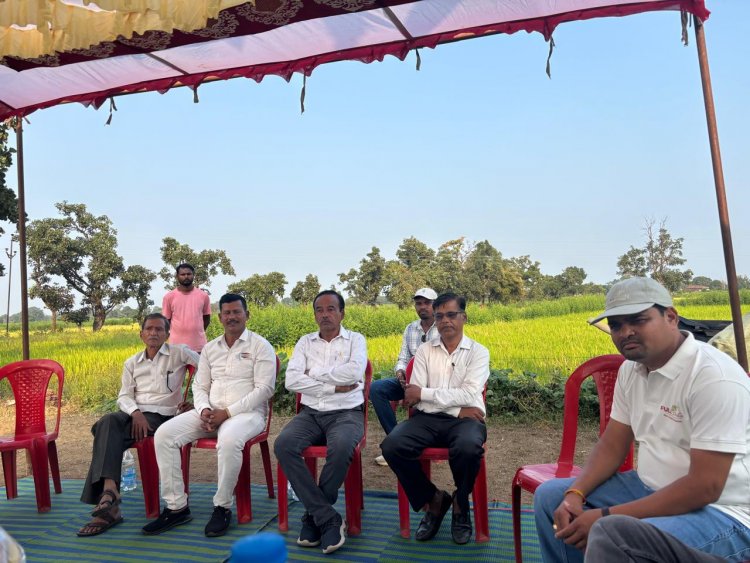
Shanu, a farmer from neighbouring Kishanpur village, shares a similar experience. He has cultivated FullPage paddy on 30 acres this year. Chandrabhan Singh from Kudwari has also used Savannah's FullPage seeds on 35 acres. He says the variety ensures better plant establishment and requires less irrigation than other varieties. Since rainfall is limited in this area, farmers can raise the paddy crop with just two irrigations using sprinklers.
Located around 180 kilometres from Jabalpur, close to the Maharashtra border, this part of Seoni district is largely dependent on rainfall for agriculture. Maize and soybean are also cultivated here, but the area under soybean has declined sharply because the crop is no longer economically viable for farmers. This year, low rainfall has also resulted in a significant decline in maize production. Against this backdrop, farmers are increasingly placing their confidence in DSR paddy.
However, conventional DSR has traditionally faced two major challenges. The first is inadequate weed control, as ordinary rice varieties are not herbicide-tolerant (HT). Farmers therefore had to depend on manual labour to remove weeds, increasing cultivation costs. Labour shortages further aggravated the problem. The second major challenge was the relatively low productivity of these varieties.
Addressing the Challenges of DSR
Savannah 134 FullPage has emerged as a solution to many of these challenges, strengthening farmers' confidence in the DSR method.
Developed using specialised genetics, the variety comes with pre-treated seeds and has greater tolerance to adverse growing conditions. This ensures better seed germination and early-stage crop establishment. As an HT rice variety, it also allows farmers to use Savannah's designated herbicide, Wazir, at the prescribed stage of crop growth to effectively control weeds. This directly reduces labour costs.
Freedom from the Weedy Rice
Interestingly, FullPage is proving effective in two different ways in separate parts of the same district.
Villages around Dhaturiya did not traditionally cultivate paddy, so the problem of Sada Lamba (weedy rice) is not prevalent there. Instead, FullPage is gaining popularity because of its higher productivity, lower seed requirement, effective weed control and reduced irrigation needs.
Farmers apply the Wazir herbicide 12–15 days after sowing, followed by a second application after 20 days. According to farmers, this helps control weeds and keeps the rice crop healthy.
In contrast, Sada Lamba is a major challenge for farmers in the Barghat region. Under conventional transplanting, there is no effective solution to this problem. The weed is difficult to identify until the crop has grown considerably, as its plant closely resembles that of cultivated rice. By the time farmers recognise it, it has already caused substantial damage to the main crop. Beyond a certain stage, even labourers refuse to remove it manually from the fields.
In this context, Savannah 134 FullPage is proving effective in addressing the problem.
Perhaps the biggest achievement of this technology for farmers is that they can now see their fields free from the infestation of weedy rice. They have even given Savannah's FullPage rice a new name: 'Sada Lamba-Free Rice'.
Water Savings and Better Soil Health
Conventional paddy transplantation requires large quantities of water, whereas DSR significantly reduces water consumption. Farmers also save the additional expenditure of around Rs. 1,200 per acre on tractor-based puddling.
In conventionally transplanted paddy fields, harvesting often leaves behind large, hard soil clods because of the compact nature of the local soil. In contrast, after FullPage cultivation, the soil remains in better condition for sowing the next crop. Rainwater is also conserved more effectively in the soil.
Farmers report that adopting DSR has also improved the performance of their subsequent wheat crop. Conventional paddy transplantation involves puddling, which creates a compacted layer in the soil known as a hard pan. Since DSR eliminates puddling, the soil structure remains relatively undisturbed, creating better conditions for root development and the growth of the succeeding wheat crop.
Thus, DSR is proving beneficial not only for paddy cultivation but also for the next crop in the rotation.
Focus on a Complete Crop Solution
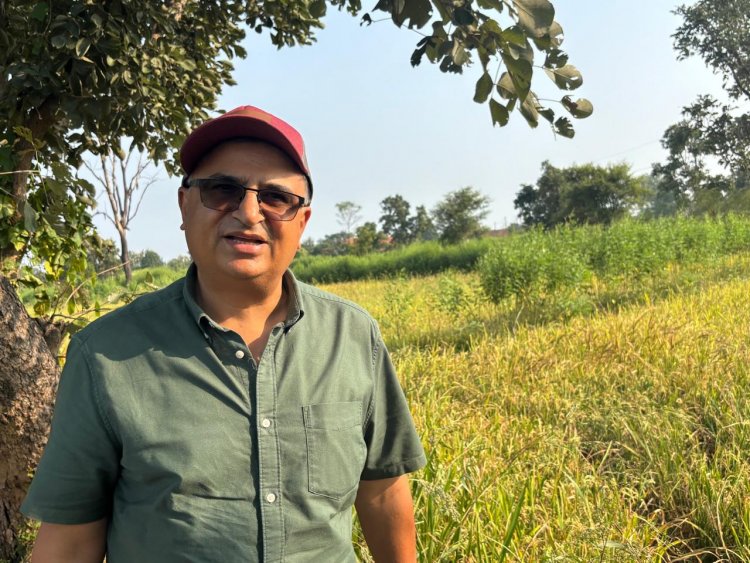
Ajay Rana, Managing Director and CEO of Savannah Seeds, told Rural Voice, "We have brought an effective solution for these farmers. That is why the number of farmers adopting FullPage is increasing year after year. We have used specialised genetics in our rice variety, Savannah 134 FullPage. In addition, our seeds are pre-treated. These two features ensure better germination and greater tolerance to stress.
"Working with ADAMA, we have also developed the herbicide Wazir, which we sell along with the seeds. We do not sell it separately, so that it is used appropriately. In this way, FullPage is a complete package that we offer to farmers, along with detailed guidelines for its application. The results have been encouraging, and the pace of adoption among farmers is quite strong."
According to Savannah Seeds officials, farmers in central India (Madhya Pradesh and Chhattisgarh) have adopted FullPage DSR across approximately 100,000 acres. Adoption has been growing rapidly, with the area under the technology more than doubling every season since its commercial launch in 2024.
Rana says FullPage is not merely a new rice variety but a comprehensive rice cultivation solution that brings together seeds, seed treatment, specialised genetics and herbicide technology. The package combines SmartRice genetics, SQUAD seed treatment, FullPage's proprietary herbicide-tolerance trait and ADAMA's herbicide.
The Next Step in DSR
Direct seeding is one of the oldest methods of rice cultivation in India. Farmers in several parts of the country have traditionally practised direct sowing by broadcasting seeds directly in the fields. However, conventional direct seeding faced several challenges, including poor crop establishment, heavy weed infestation and the problem of weedy rice.
These challenges gradually encouraged farmers in irrigated regions to shift towards conventional transplanting. Under this method, seedlings are first raised in nurseries and then transplanted into fields after flooding and puddling. This improves early-stage crop establishment and weed management. However, the method requires considerable quantities of water and involves higher labour and field-preparation costs.
Savannah Seeds' FullPage technology aims to address these limitations.
With labour availability becoming an increasingly serious challenge, farmers are now being offered an opportunity to return to the traditional DSR method with the support of modern technology. FullPage aims to resolve the major constraints that had previously discouraged farmers from adopting direct-seeded rice.
By integrating improved genetics, seed treatment, weed management and control of weedy rice, the technology seeks to make DSR a viable and attractive option once again.
Farmers adopting FullPage say the technology ensures strong early-stage crop establishment even when there is little or no standing water in the fields. This contrasts with conventional transplanting, which requires fields to be flooded.
The Savannah team attributes this to SmartRice genetics, developed specifically to make rice cultivation more suitable for direct seeding.
SmartRice hybrids are resource-efficient seeds designed to deliver higher yields and genetically suited to DSR cultivation. They offer better tolerance to adverse conditions and diseases, along with improved resistance to lodging. They also provide higher rice milling recovery, contributing to more sustainable rice production.
Pointing towards a seed drill kept on his farm, Mahtlal explains, "Another company had provided us with this machine to promote DSR, but its seeds were not herbicide-tolerant (HT). As a result, the machine was of little use to us because merely adopting DSR did not solve the problems of weeds and Sada Lamba. FullPage addresses these challenges.
"We initially tried it on a small area, but the benefits we experienced strengthened our confidence. Now, nearly 70% of the farmers in this area are moving towards adopting FullPage."
The experiences of farmers in Seoni demonstrate that the successful adoption of DSR requires solutions to several challenges, including weed infestation, weedy rice, seed quality and early-stage crop management.
FullPage has emerged as a new option in this direction. It is not simply a shift from conventional transplanting back to direct seeding; rather, it represents an effort to address the very challenges that had earlier driven farmers away from DSR.