A bioenergy programme held in Greater Noida, Uttar Pradesh, on Thursday focused on increasing farmers’ incomes through green energy generated from stubble and agricultural residues. Policymakers, scientists and industry representatives at the programme stressed the need for a robust supply chain from farms to Compressed Bio Gas (CBG) plants, better stubble quality, remunerative prices and village-level collection centres to increase farmers’ incomes and ensure a consistent supply of biomass to industry. Farmers were also urged to become aggregators and entrepreneurs.
The programme was jointly organised by the Indian Federation of Green Energy (IFGE) and Rural Voice on the theme ‘Fuelling Green Energy and Income Opportunities for Farmers’. It was part of the three-day India Bioenergy & Tech Expo 2026.
The two sessions featured Uttar Pradesh Goseva Commission Chairman Shyam Bihari Gupta; Director of Agriculture Extension, Government of Uttar Pradesh, Dr Kaniz Fatima; Joint Director in the Agriculture Department, Balram Verma; Vice President of Praj Industries, Tushar Patil; Principal Scientist at ICAR-Indian Institute of Millets Research, Hyderabad, Dr A.V. Umanath; Co-founder and COO of Farmwatt Innovations, a super-aggregator company, Sachin Sakalle; Chairman and Managing Director of Punjab Renewable Energy Systems Pvt. Ltd., Lt Col (Retd.) Monish Ahuja; and CEO of Mapsets India, Nikhil Chandra. Progressive farmers Umesh Kumar from Shamli district, Uttar Pradesh, and Manish Bharti also raised issues concerning farmers. The programme was moderated by Rural Voice Editor-in-Chief Harvir Singh.
Goseva Commission Chief Suggests Spraying Biogas Slurry on Fields
Uttar Pradesh Goseva Commission Chairman Shyam Bihari Gupta urged farmers to rear livestock, install biogas plants and sprinkle biogas slurry on their fields. He said that higher organic matter in the soil would improve crop production. He claimed that microorganisms required for agriculture are found in cow urine and dung.
Suggesting a reduction in the use of chemicals in agriculture, he said the organic carbon content of Uttar Pradesh’s soil has now fallen to just 0.2%, compared with 1.5-2% before the Green Revolution. He said adopting biological measures could enable farmers to become not only food producers but also energy producers.
Soil Health Needs to Be Improved: Dr Kaniz Fatima
Dr Kaniz Fatima, Director of Agriculture Extension, Government of Uttar Pradesh, said Uttar Pradesh accounts for 11% of the country’s total cultivable land but contributes 21% of foodgrain production. The state ranks first in the production of rice, wheat, sugarcane and potatoes, but its soil health has deteriorated significantly. She attributed this to the excessive use of chemicals.
She said the use of chemicals has sharply reduced beneficial microorganisms in the soil. These microorganisms are now being multiplied in laboratories and reintroduced into agricultural fields.
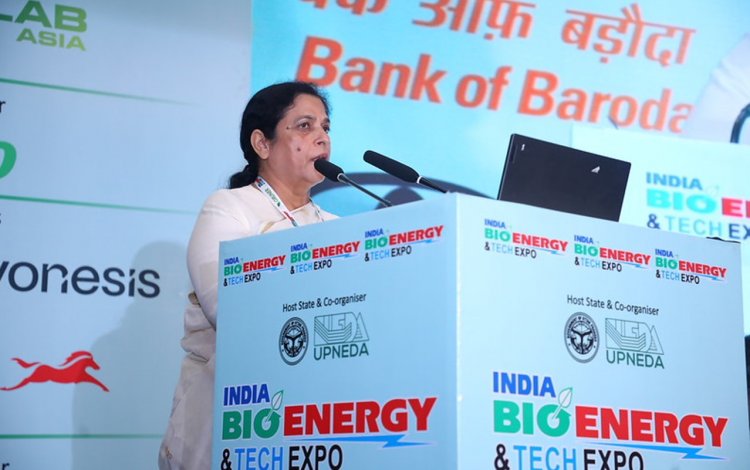
She welcomed the suggestion to establish stubble collection centres at the village level and assured participants that the suggestion to simplify the process of forming FPOs would be considered.
She said Uttar Pradesh has a strong system for taking government schemes to farmers. Around 2,600 Assistant Technology Managers/Block Technology Managers (ATMs/BTMs) are working across the state to support farmers. She advised farmers facing any problems to approach district agriculture officers and other officials. If their problems remain unresolved, farmers can also contact her directly.
Farmers Should Join the Supply Chain: Balram Verma
Balram Verma, Joint Director in the Agriculture Department, Government of Uttar Pradesh, said the state is estimated to generate around 260 lakh tonnes of paddy stubble this year, of which the target is to use around 72 lakh tonnes as feedstock.
The Uttar Pradesh government is promoting the ‘Farm to Clean Fuel’ programme through FPOs and Custom Hiring Centres. The entire supply chain is expected to generate a large number of employment opportunities. It includes farmers, FPOs, aggregators, super-aggregators, CBG platforms and, ultimately, fuel and biofertiliser.
He urged farmers to join this supply chain and benefit from the emerging opportunities. Verma said Uttar Pradesh currently has 40 CBG plants, while around 200 more are at various stages of construction. The government is working to establish an aggregator at every development block, while Custom Hiring Centres are being established in all 826 blocks.
An awareness campaign will be conducted across the state from September 1 to November 15 to educate farmers about the harmful effects of stubble burning and the benefits of CBG, with the aim of making every farm a source of energy.
Industry Should Sign Long-Term Agreements with Farmers: Tushar Patil
Tushar Patil, Vice President of Praj Industries, said industry looks at the availability of raw material, the quantity that can be supplied, the duration for which it can be supplied and its quality. Highlighting the importance of quality, he said one tonne of stubble can yield 110 kg of gas, but if the quality of the stubble is poor, the output could fall to around 70 kg. He said farmers seeking to increase their earnings through carbon credits need to understand the entire system.
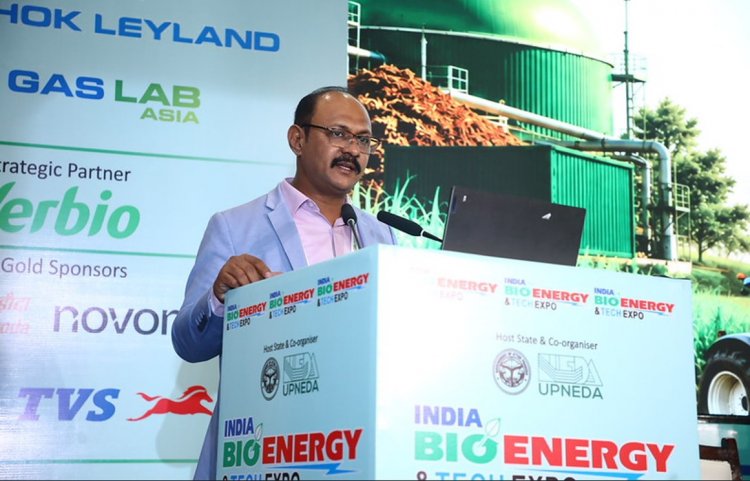
He also suggested steps that industry could take to strengthen the ecosystem. He said industry should enter into long-term stubble procurement agreements with farmers to build confidence among them. He also urged the state government to provide farmers with technical information related to bioenergy.
Farmers Should Become Aggregators: Sachin Sakalle
Sachin Sakalle, Co-founder and COO of super-aggregator company Farmwatt Innovations, said farmers are currently not adequately integrated into the value chain. Their primary concern is simply that someone should remove the stubble from their fields. He said farmers need to become aggregators themselves. If an individual farmer cannot undertake aggregation alone, farmers can form a Farmer Producer Company (FPC) and take up the activity collectively.
Farmers can collect crop residues and sell them at the appropriate time. The supply chain can also create business opportunities for young people as machine operators, spare-parts dealers and machinery repair technicians. He added that Fermented Organic Manure (FOM) could also emerge as a business opportunity. Farmers need to start viewing stubble as a product rather than waste, he said.
Village-Level Stubble Collection Centres Needed: Umesh Kumar
Progressive farmer Umesh Kumar from Shamli district said farmers cannot turn their fields into laboratories because they also have to support their families. He said there is a need to examine why livestock rearing has declined and why cattle rearing has reduced.
He said paddy stubble was purchased last year at around Rs 1,000-1,500 per acre in his area, which meant that farmers did not burn their stubble. However, most of the buyers came from Punjab and Haryana.
He suggested that village-level collection centres could discourage farmers from burning stubble. He also called for simplifying the process of forming FPOs and introducing a single-window system for the required approvals.
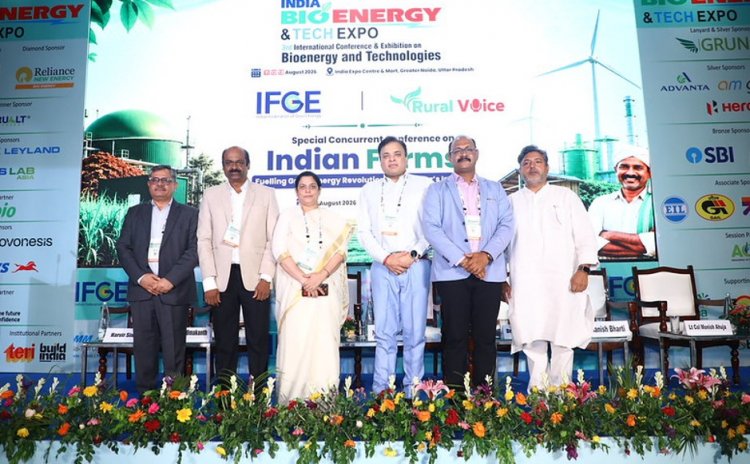
Second Session Discusses Feedstock Ecosystem
The second session of the programme was titled ‘Way Forward for a Sustainable Bioenergy Feedstock System’.
Lt Col (Retd.) Monish Ahuja, CMD of Punjab Renewable Energy, said government schemes are often formulated without adequately assessing their economic viability. Citing an example, he said a target was set in 2018 to establish 5,000 CBG projects within five years, but only 48 projects were installed during that period. Subsequently, the target of 5,000 projects was extended to 2028, but only around 200 plants have been established so far.
Highlighting the funding challenge, he said banks and financial institutions would provide funding only when projects are based on sustainable business models. A subsidy-dependent business model cannot work, he said. He also called for a separate regulator for the emerging sector.
Sweet Sorghum a Good Option for Biomass: Dr Umanath
Dr A.V. Umanath, Principal Scientist at ICAR-Indian Institute of Millets Research, said the bioenergy sector requires sustainable and reliable biomass. He said sugarcane, maize and rice have so far been widely used as feedstock, but excessive dependence on these crops could pose a food security challenge in the future. Therefore, diversification of feedstock is essential, and sorghum could be a good alternative.
He said sweet sorghum is being used for ethanol production in the United States and that the Indian government has also approved ethanol production from sweet sorghum.
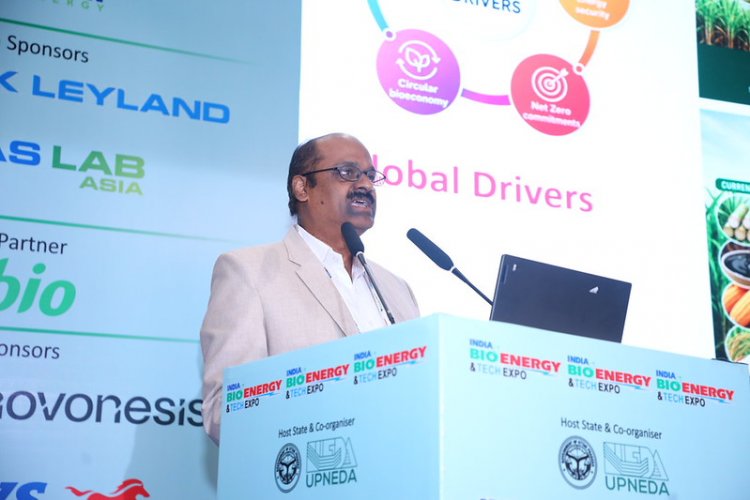
Sweet sorghum takes only around four months to mature, allowing farmers to grow two crops in a year, he said. He also highlighted different sorghum varieties developed by IIMR that offer higher yields for CBG production. Some of these varieties require less water, making them suitable for areas where sugarcane cultivation is not feasible.
Farmers Need Better Economic Incentives for Organic Farming: Farmer Manish
Farmer Manish Bharti said government reports indicate that crop yields can decline by 30% when organic farming practices are adopted, and questioned why farmers would shift to such practices without adequate economic incentives.
He said that if the government wants farmers to move towards organic farming, it should provide a 30% premium for such produce. Farmers will not adopt a crop unless they are able to recover the cost of raw materials, he said.
He added that although the government has several schemes, they often do not adequately address farmers’ practical requirements. There is a significant gap between policy and implementation, he said.
Mapsets India CEO Nikhil Chandra provided live information on UP Yantra Tracking (upyantratracking.in) for machinery purchases.
The programme concluded that increasing farmers’ participation in the bioenergy sector requires more than stubble management; the entire value chain must be made economically sustainable. Fair pricing, long-term procurement agreements, village-level collection centres and easier FPO formation can enable farmers to benefit directly. Diversified feedstock, better technology and practical policies can further provide a strong foundation for the growth of the CBG sector.