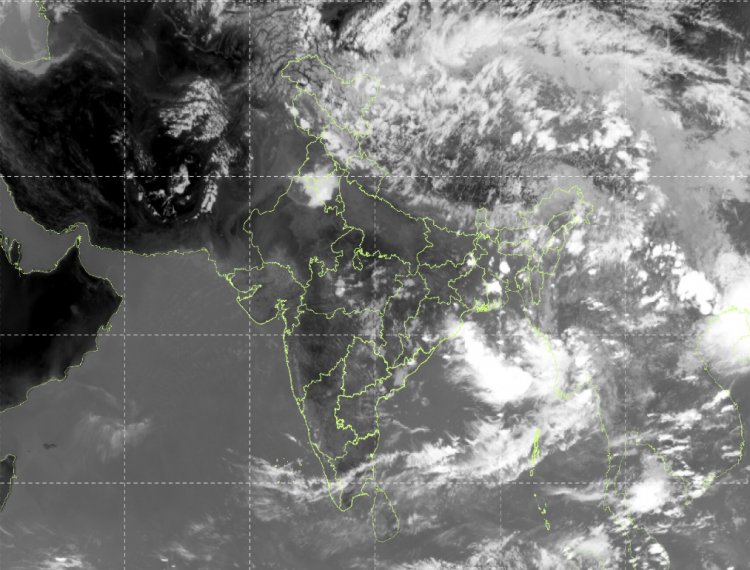
India's southwest monsoon has stumbled at the very start of the season, raising concerns over rainfall prospects amid fears of a developing Super El Niño. After arriving in Kerala on June 4, three days later than normal, the monsoon initially advanced into parts of southern and central India but has since slowed dramatically and is now close to a standstill.
For nearly a week, the monsoon has remained stalled over Karnataka and Andhra Pradesh. Under normal circumstances, the monsoon reaches much of Maharashtra and advances into Gujarat and Madhya Pradesh by around June 15.
According to the India Meteorological Department (IMD), the country received only 42.4 mm of rainfall between June 1 and June 15, compared with the normal 62.1 mm, leaving India with a 32% rainfall deficit during the period.
While pre-monsoon showers have provided relief from intense heat across parts of northern India, large areas of central, eastern and southern India are still waiting for widespread monsoon rains. Meteorologists note that a significant share of the rainfall recorded so far has come from pre-monsoon weather activity in northern states rather than from an active monsoon system.
Rainfall Deficit Likely to Worsen
Weather experts warn that the current pause in monsoon progress could push the nationwide rainfall deficit even higher in the coming days. If the monsoon remains sluggish, the shortfall could widen to nearly 40% by next week.
Recent satellite imagery highlights the weakening monsoon activity. Large parts of southern, central and eastern India show limited cloud cover, a stark contrast to the extensive cloud bands typically associated with an active southwest monsoon in mid-June.
The IMD's rainfall departure map also paints a concerning picture. Vast regions of central, southern and eastern India are marked in yellow and red, indicating deficient to large deficient rainfall. Even in areas where the monsoon has officially advanced, including parts of Karnataka, Telangana, Andhra Pradesh and Maharashtra, rainfall activity has remained patchy and below expectations.
Why the Monsoon Has Slowed
The biggest concern at present is the absence of a strong weather system over the Bay of Bengal. Typically, low-pressure systems developing over the bay help pull the monsoon deeper into the Indian mainland and enhance rainfall across central and eastern regions.
Without such systems, the monsoon circulation has weakened, resulting in slower progress and reduced rainfall intensity across much of the country.
Despite the current lull, the IMD expects the monsoon to make gradual progress over the next four to five days. The weather department forecasts further advancement into additional parts of the central Arabian Sea, Maharashtra, the remaining parts of Karnataka and Telangana, as well as Odisha, Jharkhand, Bihar and parts of Chhattisgarh.
However, significant improvement in rainfall distribution may depend on the formation of favourable weather systems over the Bay of Bengal and a strengthening of monsoon circulation.
Relief for Northwest India
Meanwhile, western Uttar Pradesh, Delhi, Haryana and Rajasthan have witnessed intermittent pre-monsoon showers, bringing much-needed relief from the intense summer heat. The IMD has indicated that a fresh western disturbance may begin influencing northwest India from June 18, potentially triggering additional rainfall and thunderstorm activity across the region.
With the monsoon season entering a crucial phase, farmers and policymakers will be closely watching whether the current pause proves temporary or signals a more prolonged period of below-normal rainfall during the early weeks of the season.