Use of a nanofertiliser, developed by a consortia led by the University of Hyderabad (UoH) has helped in slashing chemical application, boosting yields and improving quality in certain essential oil cultivation.
Experiments done with nanosized macro and micro nutrients have shown significant enhancement in the growth of Rosemary plant, yield of oil and its quality, even at fertiliser dosages lower than recommended at present.
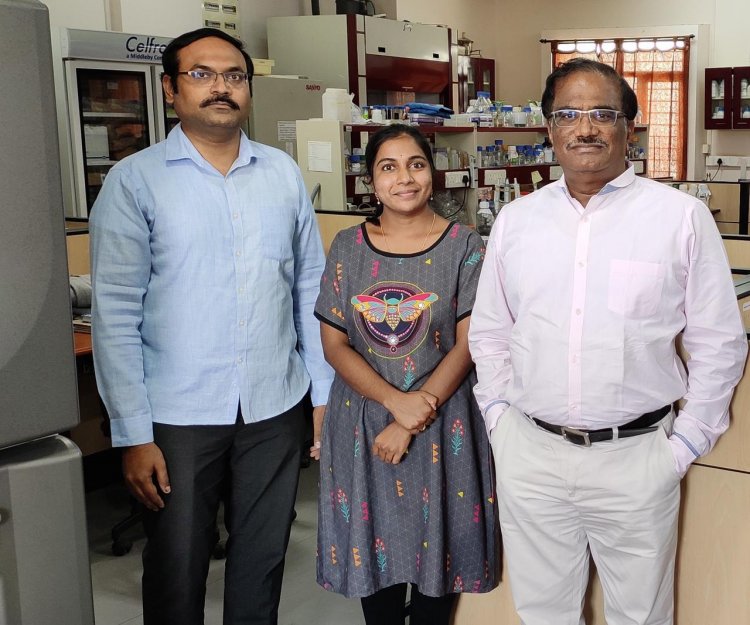
The work has been published in the journal Industrial Crops & Products. It is one of the principal outcomes of a Department of Biotechnology (DBT) project and a model of interdisciplinary collaboration across the Department of Plant Sciences, School of Life Sciences led by Prof. Appa Rao Podile and School of Engineering Sciences and Technology led by Prof. VVSS Srikanth.
Rosemary (Rosmarinus officinalis) is prized worldwide for its aromatic essential oil, which is extensively used in the food, cosmetic, and pharmaceutical industries.
However, traditional high-input fertiliser practices pose environmental challenges and are costly. By converting commercial fertilisers into nano sized particles through design-directed mechanical milling, the surface availability of critical nutrients, including nitrogen, iron, zinc, manganese, and copper, was enhanced.
As a consequence of using the present product, the Rosemary plants received as little as 20–30% of the standard nutrient dosage when delivered in nano sized particle form through foliar spraying on leaves, and exhibited improved shoot and root growth, increased biomass, and higher accumulation of beneficial nutrients.
The nano sized fertiliser particles enabled increased efficient nutrient uptake and stimulated metabolic pathways, resulting in higher levels of 1,8-cineole, a key quality marker for Rosemary oil.
“This is a true team effort,” the group emphasises, pointing to the balanced roles of engineering and plant sciences, as well as hands-on support from other institutes for greenhouse and material characterisation. Both research groups at the University of Hyderabad collaborated closely to ensure the project's success. This breakthrough highlights the potential for sustainable crop management where reduced fertiliser uses leads to higher yields and improved oil quality.
The project investigators believe that their methodology could be applied to other commercial crops, making a significant contribution to eco-friendly agricultural practices. Their study lays the groundwork for next-generation fertiliser systems designed to maximise productivity while minimising environmental impact.
The scientific paper with more details is titled “Low-dosage foliar application of nanosized macro- and micro- nutrients for enhanced yield of high-quality Rosemary oil,” Industrial Crops & Products 237, 122138 (2025).