After the 2020-21 farmers' agitation, the national capital once again witnessed a major public protest. This time, the agitation led by the Cockroach Janata Party (CJP) along with several other organisations focused on issues including alleged examination paper leaks, corruption in the education system, rising unemployment and demands for greater accountability.
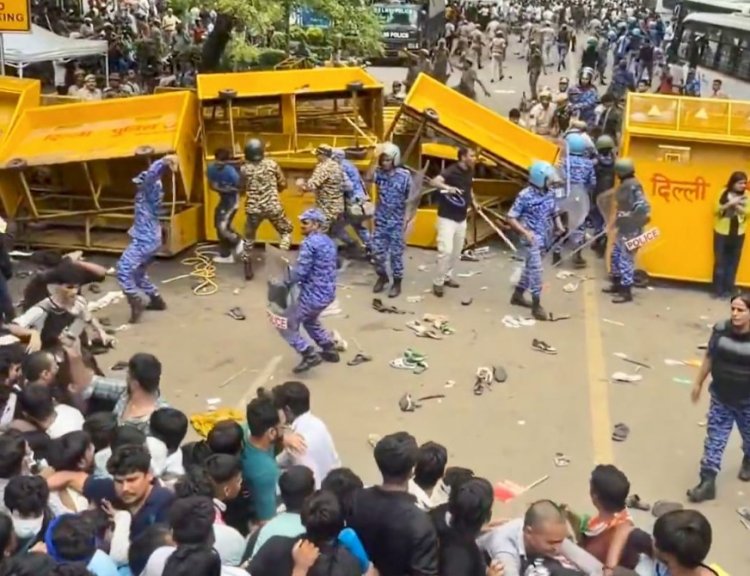
On the opening day of Parliament's Monsoon Session, thousands of young people took to the streets in response to a call for a "March to Parliament." The protest, which began at Jantar Mantar, drew students, competitive examination aspirants and youth from different parts of the country. To prevent the march from reaching Parliament, Delhi Police erected barricades at multiple locations and used batons and tear gas to disperse the crowd, resulting in tense scenes across several parts of the city.
As protesters attempted to advance towards Parliament, some groups reportedly crossed security barricades and reached areas close to the Parliament complex. Following the incident, security around Parliament was further tightened, the main entry gates were temporarily closed and additional police personnel were deployed. Traffic movement was also disrupted in several parts of the capital.
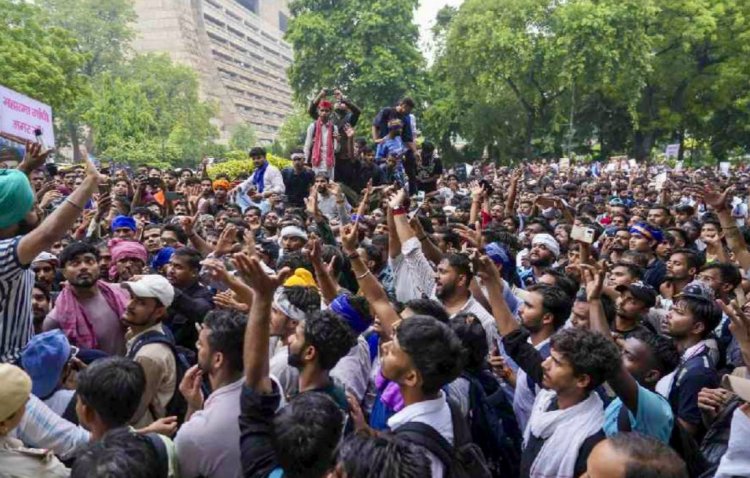
Despite repeated attempts by the police to disperse the crowd using tear gas and baton charges, thousands of protesters continued their march from Jantar Mantar towards Parliament.
Large Number of Youths and Students Join Protest
Thousands of students and young people began assembling at Jantar Mantar early in the morning. Participants included competitive examination aspirants and youth from several states. The protesters demanded reforms in the education system, greater transparency and accountability in the examination process, a fair investigation into alleged paper leak cases and the resignation of Union Education Minister Dharmendra Pradhan. Reports said police used batons and tear gas at several locations during the protest, and some demonstrators were reportedly injured.
Addressing the gathering, social activist Yogendra Yadav described it as the country's largest youth-led movement in nearly five decades. He said the movement had succeeded in bringing education and employment back to the centre of national political discourse. Yadav urged the government to engage with the protesters through dialogue rather than force and called for the removal of what he described as an "incompetent education minister" while addressing the concerns of the country's youth.
Actor Shabana Azmi, Rajya Sabha MP Manoj Jha and actor Prakash Raj also joined the protest at Jantar Mantar. They ended the hunger strike of AISA leader Neha and several other students by offering them juice.
Issue Raised in Parliament
The police action against the protesters also echoed in Parliament on the very first day of the Monsoon Session. In the Rajya Sabha, Leader of the Opposition Mallikarjun Kharge criticised the use of force against students and young people and sought an explanation from the government. He alleged that excessive force had been used against youths who had gathered to protest peacefully and said the authorities had responded with repression instead of engaging with their demands.
Government Initiates Dialogue
Amid the day's tense developments, the central government initiated talks with the protesters. According to the CJP, the government conveyed a proposal for dialogue in the morning, following which the organisation's spokespersons, Saurav Das and Ashutosh Ranka, met Union Minister J. P. Nadda. The meeting is being seen as the first formal engagement between the government and the CJP since the agitation began.
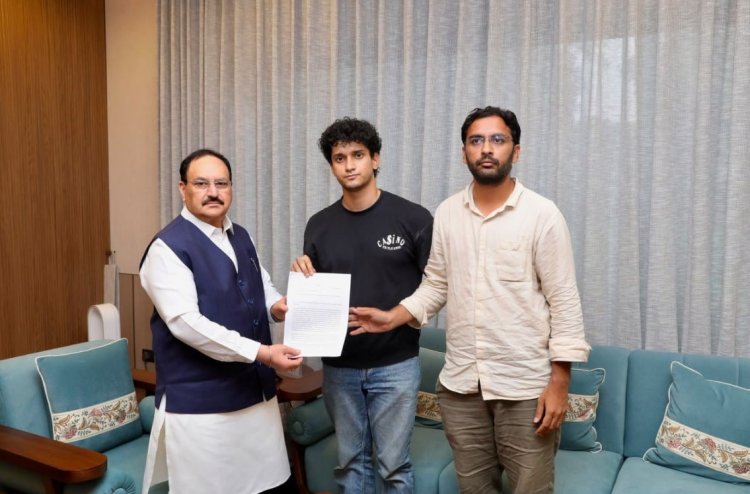
During the meeting, the CJP delegation placed three key demands before the government: the resignation of Union Education Minister Dharmendra Pradhan, the immediate release of Sonam Wangchuk, and compensation of ₹1 crore for the families of candidates who allegedly died by suicide due to examination-related pressure.
After the meeting, CJP leaders said J. P. Nadda had sought time to discuss the demands with the government's top leadership and appealed to them to withdraw the protest. However, no concrete assurance or formal decision was announced following the discussions.