Sugarcane farmers in Maharashtra are opposing efforts to start crushing operations at sugar mills early in an attempt to keep sugar prices under control. Farmers argue that the cane is not yet fully mature. Harvesting it at this stage would result in a loss of cane weight for farmers, while sugar mills would also get lower sugar recovery.
Raju Shetti, president of Maharashtra-based farmers' organisation Swabhimani Shetkari Sanghatana, is leading the agitation in the state. His organisation is demanding a Fair and Remunerative Price (FRP) of Rs 450 per quintal, along with a bonus of Rs 50 per quintal at the end of the season, taking the total payment to Rs 500 per quintal. In a letter to Prime Minister Narendra Modi, Shetti has also urged to raise the minimum selling price (MSP) of sugar to Rs 50 per kg and increase the price of ethanol produced from C-heavy molasses to Rs 70 per litre.
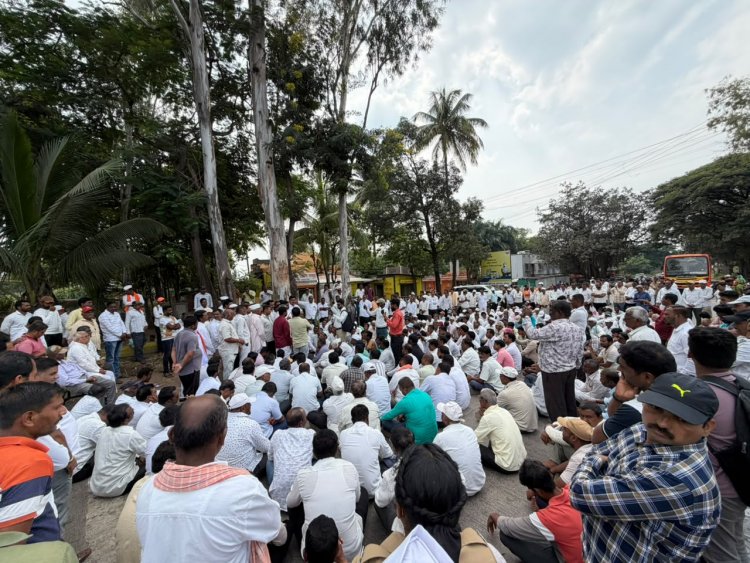
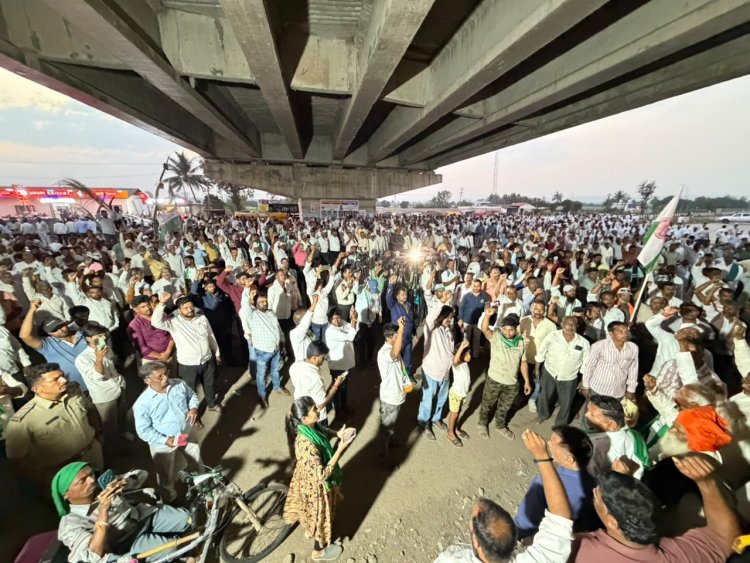
Speaking to Rural Voice, Shetti said that after blocking the Pune-Bengaluru highway two days ago, sugarcane farmers would hold a major protest in Hubballi, Karnataka, on October 20 to put pressure on the government to accept their demands. He said the strategy was to stop crushing operations at sugar mills until the demands were met.
On Friday, his organisation staged a protest at the Jarandeshwar sugar mill in Maharashtra's Satara district, which is associated with the family of former Maharashtra Deputy Chief Minister Ajit Pawar. Shetti said some mills in Maharashtra had started operations but were receiving far less sugarcane than their crushing capacity. He said the organisation had explained to farmers that harvesting sugarcane at this stage could cause them a loss of Rs 50,000 per acre.
Sources in Maharashtra's sugar industry told Rural Voice that the sugarcane crop had started drying up because of the impact of El Niño. In view of the situation, mills had decided to begin crushing from October 8 instead of the scheduled date of October 15. The objective was to prevent farmers from suffering losses if the cane dried out completely and became unsuitable for crushing, potentially leaving them with no option but to use it as animal fodder. The state is also facing a shortage of fodder.
According to the industry source, 14 mills had started crushing operations in Maharashtra, while another 40 had completed preparations to begin. However, after a meeting with Union ministers in Delhi failed to produce an agreement on the issues, farmer leaders immediately called on farmers to launch the agitation. As a result, mills that had not yet started crushing postponed their plans, while farmer organisations began pressuring mills already in operation to shut down.
Shetti's agitation is affecting major sugarcane-growing regions in Maharashtra and Karnataka. These include Belagavi, Dharwad, Bagalkot and Bijapur districts in Karnataka, and Pune, Satara, Kolhapur, Sangli, Solapur, Baramati and Latur in Maharashtra.
Shetti said there was already a shortage of sugar and that delays in production could worsen the situation. The objective of the agitation, he added, was to intensify pressure on the government to act on the demands of sugarcane farmers.
Recently, Shetti and some farmers associated with the Karnataka Rajya Raitha Sangha held meetings with Union Minister for Consumer Affairs, Food and Public Distribution Prahlad Patel and Union Agriculture and Farmers Welfare Minister Shivraj Singh Chouhan.
Commenting on the committee constituted by the central government under former NITI Aayog member Professor Ramesh Chand, Shetti said the panel had only recently been formed and its report would take time. The farmers were therefore pressing for a decision on their demands before the crushing season began.
In the letter to Prime Minister Narendra Modi seeking an increase in the sugar MSP and the price of C-heavy molasses-based ethanol, Shetti cited estimates by the National Federation of Cooperative Sugar Factories (NFCSF), the Indian Sugar & Bio-Energy Manufacturers Association (ISMA), which represents private sugar mills, and the Maharashtra State Federation of Cooperative Sugar Factories (MISMA).
According to these estimates, the cost of sugar production is around Rs 48 per kg. Shetti argued that mills would be able to earn a reasonable return only if the sugar MSP was raised to Rs 50 per kg.
Maharashtra has a large number of cooperative sugar mills, making higher sugar and ethanol prices important for the financial viability of the industry and the interests of sugarcane farmers, he said.