
Heavy Rain Hits Uttar Pradesh, Damages Kharif Crops; 25 Times More Rainfall Recorded in a Day
Heavy rains in Uttar Pradesh have triggered flood-like conditions across several districts, damaging standing Kharif crops just as the harvest season approaches. The state received nearly 25 times its normal rainfall on September 27, while cumulative monsoon rainfall has reached 8
 Join the RuralVoice whatsapp group
Heavy rainfall over the past three to four days has triggered flood-like conditions in several districts of Uttar Pradesh, dealing a major blow to standing Kharif crops towards the end of the monsoon season.
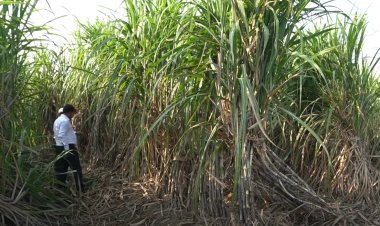
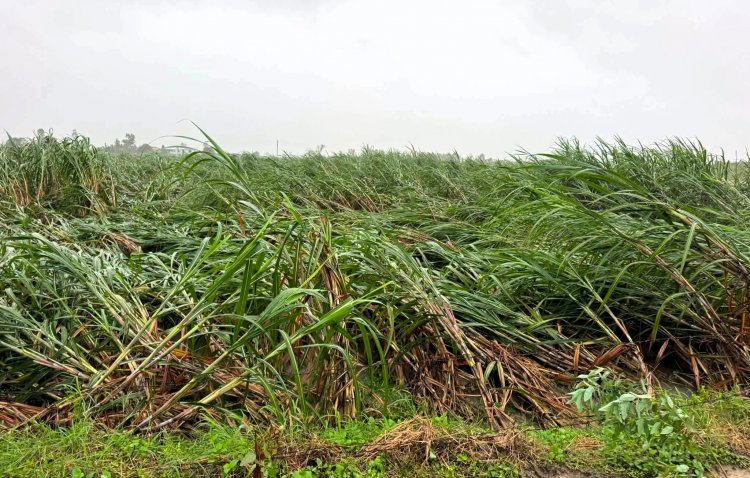
Continuous rain accompanied by strong winds and thunderstorms has flattened standing paddy and sugarcane crops, while waterlogging has damaged pulses, oilseeds, maize, pearl millet and horticultural crops. Prolonged waterlogging could also delay field preparation and the sowing of Rabi crops.
According to the India Meteorological Department (IMD), Uttar Pradesh received an average of 45.6 mm of rainfall on September 27, nearly 25 times the normal rainfall of 1.8 mm for the day. Between September 25 and 27, the state received an average of 66.5 mm of rainfall against the normal 7.6 mm, an excess of 775%, or nearly eight times the normal.
As many as 56 of Uttar Pradesh’s 75 districts recorded large excess rainfall during the period. Among the districts severely affected by heavy rain and flooding are Farrukhabad, Kannauj, Shahjahanpur, Hamirpur and Mahoba.
According to the Agriculture Department, field inspections are being carried out in various districts of Uttar Pradesh to assess the condition of crops affected by heavy rainfall and evaluate the extent of crop damage.
Monsoon Rainfall Turns 8% Above Normal
The intense rainfall in recent days has pushed Uttar Pradesh’s cumulative monsoon rainfall into surplus territory. Between June 1 and September 28, the state received 802 mm of rainfall against the normal 742.2 mm, an excess of 8%.
Rainfall has been unevenly distributed across the state. Eastern Uttar Pradesh received 816.5 mm against a normal of 793.6 mm, an excess of 3%, while western Uttar Pradesh received 781.2 mm against a normal of 670.2 mm, an excess of 17%.
Sharp Regional Variation in Rainfall
The rainfall distribution across Uttar Pradesh has been highly uneven. Sambhal recorded the highest excess rainfall at 97% above normal, followed by Mahoba at 89% and Hamirpur at 85%. In contrast, rainfall remained 68% below normal in Deoria, 67% below normal in Shamli and 61% below normal in Kushinagar.
The contrast is particularly striking within western Uttar Pradesh, where Sambhal recorded 97% excess rainfall while neighbouring Shamli remained 67% below normal. Bundelkhand, a region frequently affected by drought, has recorded some of the highest rainfall surpluses this season. Mahoba, Hamirpur, Banda and Chitrakoot have all received more than 70% above their respective normal rainfall.
81 Killed, 62 Injured; 2,254 Houses Damaged
Rain-related incidents between September 25 and 27 have killed at least 81 people and injured 62 others in Uttar Pradesh. As many as 154 livestock deaths have also been reported, while 2,254 houses have been damaged.
Sitapur recorded the highest number of deaths at seven, followed by Lakhimpur Kheri, Bahraich and Balrampur with five each. Ayodhya, Maharajganj and Gorakhpur reported four deaths each. Heavy rainfall in neighbouring Uttarakhand and Nepal has also pushed up water levels in rivers flowing through the Terai region, increasing the risk of flooding in low-lying areas.
Paddy and Sugarcane Among Affected Crops
The heavy rain has come at a critical stage of the Kharif season, with paddy crops in several parts of Uttar Pradesh approaching maturity and harvest.
Strong winds and persistent rainfall have flattened standing paddy and sugarcane crops. Maize, pearl millet and pulses have also been affected, while horticultural crops have suffered from waterlogging and excessive moisture.
For farmers whose paddy has reached maturity, standing water in fields is disrupting harvesting. Agriculture and revenue department officials, along with insurance company representatives, are assessing crop losses in affected areas.
Rising water levels in the Ganga and its tributaries have also submerged thousands of hectares of agricultural land in several areas. Crops in other flood- and waterlogging-affected districts have similarly been inundated.
Farmers Face a Double Challenge
The latest spell of rain has created a challenge beyond the immediate loss of standing Kharif crops. Prolonged waterlogging could affect soil conditions and delay the preparation of fields for the Rabi season.
If excess water remains in the fields, farmers may find it difficult to prepare land on time for wheat, mustard, chickpea and other Rabi crops. Delayed drainage and harvesting of Kharif crops could therefore have a knock-on effect on the start of the next cropping season.
For farmers, the immediate priorities are to drain excess water, salvage mature crops wherever possible and complete damage assessments so that eligible compensation and crop insurance claims can be processed.
Report Crop Damage Immediately
The Agriculture Department has urged farmers whose crops have been affected by unseasonal rainfall, strong winds or waterlogging to report the crop damage promptly and complete the necessary procedures. Farmers have been advised to preserve photographs of the damaged crops and fields, along with other relevant records. They should also contact the concerned Agriculture Department officials for information on the survey and crop damage assessment process.
In case of crop damage caused by excessive rainfall, farmers are advised to report the crop loss within 72 hours.
Crop Insurance Toll-Free Number: 14447
Kisan Call Centre: 0522-2317003
WhatsApp Number: 7065514447
While filing a complaint, farmers should provide their name, Gram Panchayat, development block and tehsil details. Timely reporting of crop damage will help facilitate the further processing of the claim and related procedures.