
Uttar Pradesh Sets 30 Lakh Tonne Increase in Rabi Output, Rs 600 crore Subsidy for Seeds
Uttar Pradesh has raised its rabi foodgrain production target from 480 lakh metric tonnes last year to 510 lakh metric tonnes this year. The state is offering a 75 percent subsidy on chickpea and pea seeds, 4.68 lakh free mustard mini-kits, and adequate fertiliser stocks.

 Join the RuralVoice whatsapp group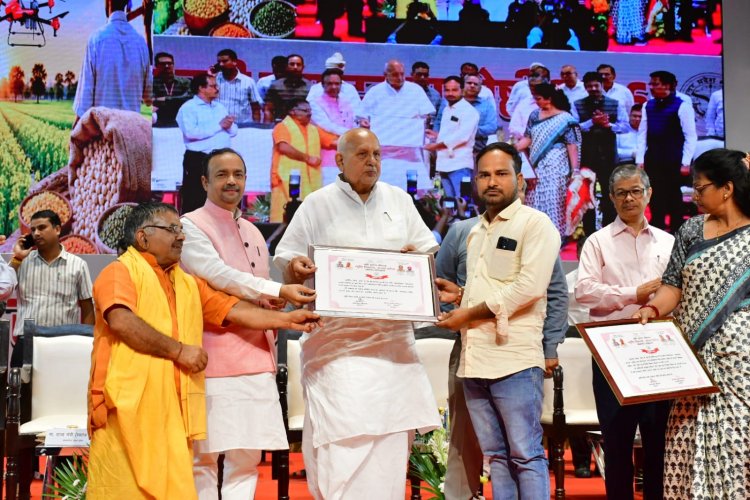
Uttar Pradesh Agriculture Minister Surya Pratap Shahi said the state has set a target of producing 510 lakh metric tonnes of rabi foodgrains this year, an increase of 30 lakh metric tonnes over last year’s 480 lakh metric tonnes. He was addressing the ‘State-Level Rabi Productivity Seminar-2026’ at the Jupiter Auditorium of Indira Gandhi Pratishthan in Lucknow.
Addressing farmers with the slogan ‘Jai Jawan, Jai Kisan, Jai Vigyan and Jai Anusandhan’, the Agriculture Minister expressed his gratitude to farmers for helping Uttar Pradesh achieve a leading position in the country in the production of foodgrains, milk, sugarcane, sugar and vegetables.
He said that under the leadership of Chief Minister Yogi Adityanath, the state’s agricultural growth rate has increased from 8 percent to 18 percent. He added that compared with the combined budget expenditure of about Rs 22,483 crore over 10 years under previous governments, the present government has spent Rs 69,163 crore on farmers’ interests.
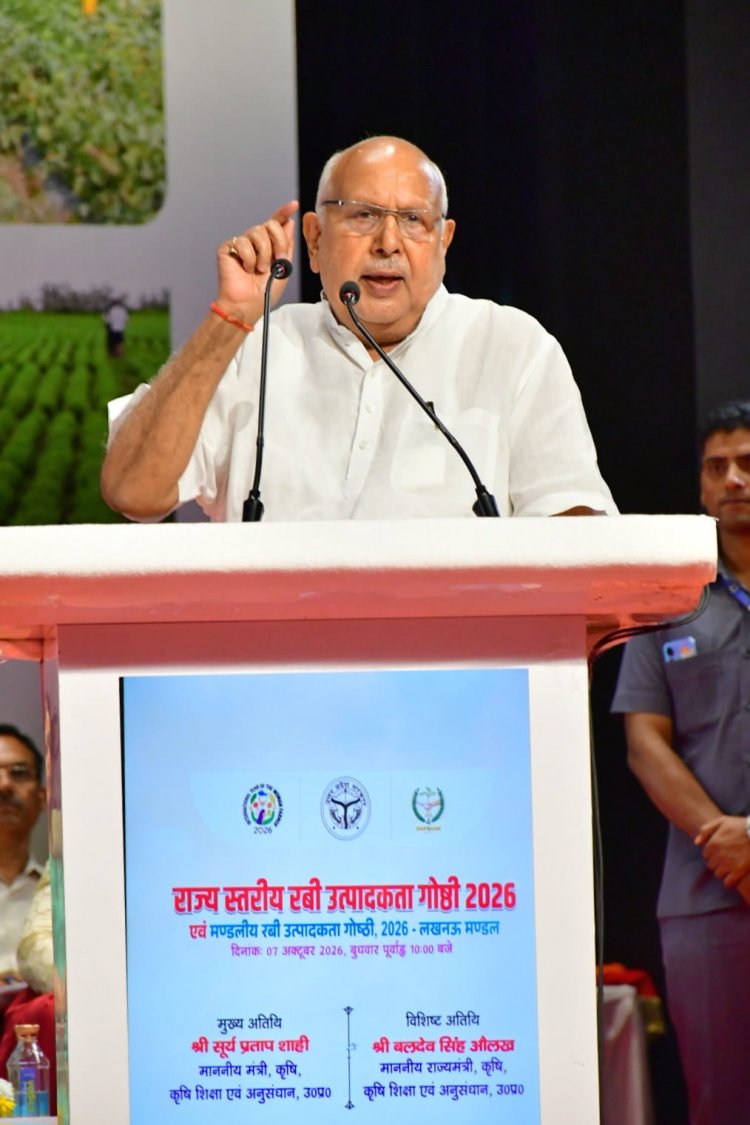
He said 50 lakh free mini-kits are being distributed to promote self-reliance in pulses and oilseeds, while subsidies of Rs 600 crore are being provided on seeds and around Rs 350 crore on agricultural machinery.
Minister of State for Cooperation (Independent Charge) J.P.S. Rathore said the cooperative movement is providing farmers with economic security and support. He said 50 district cooperative banks that were on the verge of closure have been revived, adding 54 lakh new farmers. These farmers are being provided KCC loans of up to Rs 3 lakh at an interest rate of just 3 percent, while women farmers can access loans of up to Rs 2 lakh for animal husbandry at a minimum interest rate.
The Uttar Pradesh Cooperative Village Development Bank is providing loans of up to Rs 6 lakh at an interest rate of 6 percent for tractors, agricultural machinery and small agriculture-based industries. In addition, the cash credit limit of PACS has been increased from Rs 10 lakh to Rs 15 lakh, interest-free. GPS systems are being installed in trucks to ensure transparency in fertiliser transportation, along with the availability of quality agricultural inputs.
Uttar Pradesh Gau Seva Commission Chairman Shyam Gupta called for the adoption of the model of ‘One indigenous cow, five acres of farming’ and emphasised the development of multilayer farming models and integrated model farms across the state’s 59,000 gram panchayats.
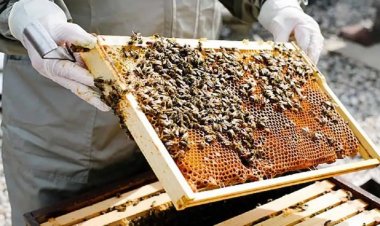
Additional Chief Secretary, Horticulture and Food Processing, B.L. Meena said the state ranks second globally in the productivity of horticultural crops, schemes have been made completely ‘target-free’, and Uttar Pradesh ranks first in the country with honey production of 31,000 metric tonnes. Additional Chief Secretary, Animal Husbandry, Mukesh Meshram provided information on the Rs 72,000 annual DBT assistance available under the Mukhyamantri Sahbhagita Yojana for adopting four cattle from destitute cattle shelters, as well as operational mobile veterinary units under the ‘Pashupalan Aapke Dwar’ initiative.
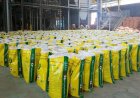
Principal Secretary Agriculture Dr M.K.S. Sundaram directed officials to select crops according to the state’s nine agro-climatic zones, ensure balanced fertiliser management and expedite insurance surveys. Agriculture Director Tryambak Mani Tripathi said that, for the first time in the state, a 75 percent subsidy is being provided on the purchase of chickpea and pea seeds. He added that 4.68 lakh free mustard mini-kits are being made available and adequate stocks of 15.50 lakh metric tonnes of urea and 6.25 lakh metric tonnes of DAP have been ensured for the rabi season.
Principal Adviser to the FARMER Project Amit Mohan Prasad discussed farming techniques suited to global warming. During the technical sessions, senior scientist Dr R.K. Malik of the International Rice Research Institute, Varanasi, provided guidance on crop residue management and zero-tillage methods, while senior scientist Dr Mehak Singh of Chandrashekhar Azad University of Agriculture and Technology, Kanpur, discussed the latest improved varieties of mustard and linseed.
NABARD Chief General Manager Pankaj Kumar shared practical information on KCC renewal according to the prevailing scale of finance for crops and on FPO management. The Additional Director of Agriculture (Extension) concluded the programme by expressing gratitude to all guests, scientists and farmers.
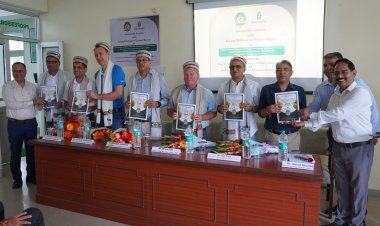
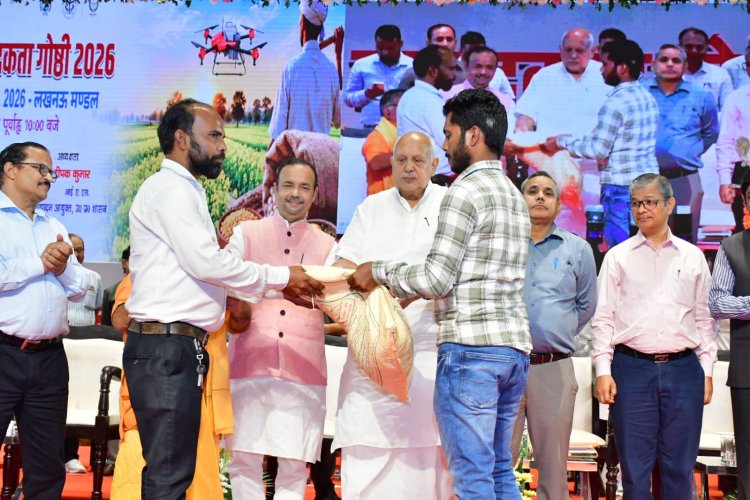
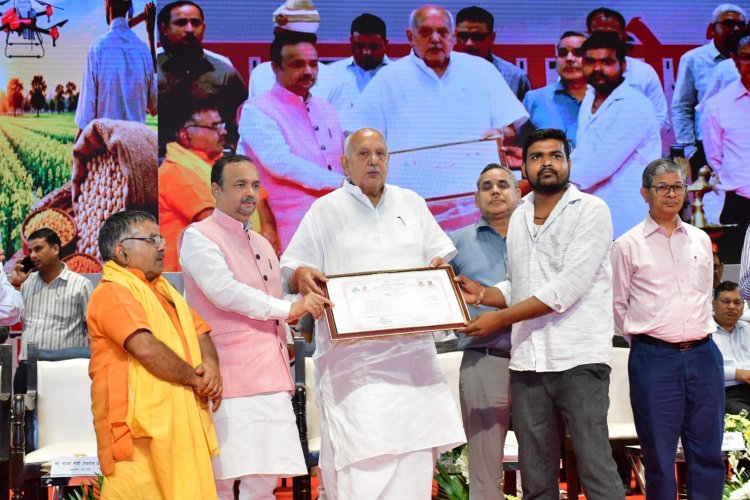
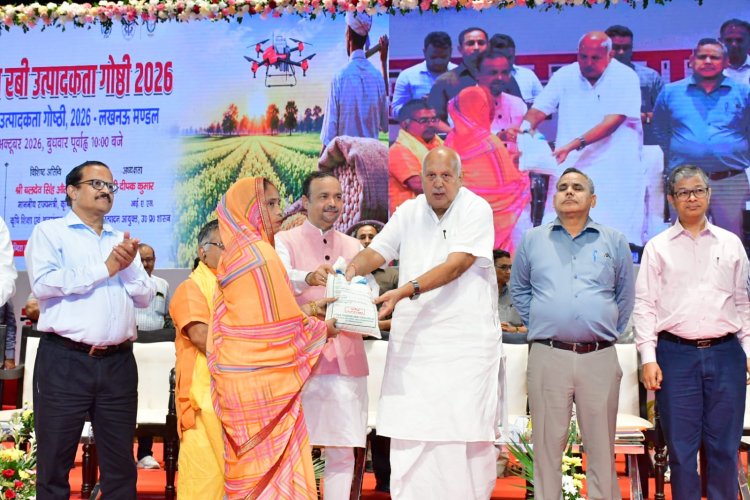
Progressive farmers from various districts were presented with mini-kits of improved seeds, sanction letters for agricultural machinery and pheromone traps as a symbolic measure to promote chemical-free farming. Senior officials from the Agriculture, Cooperation, Animal Husbandry, Horticulture, Fisheries and Irrigation departments, along with scientists and farmers, held detailed discussions on production targets for the upcoming rabi campaign, technological innovations, climate-resilient farming and farmer welfare schemes.
Commissioner and Registrar of Cooperative Societies Kumar Prashant, Managing Director of PCF Neeraj Shukla, Director General of UPKAR Dr Sanjay Singh, Director of the State Institute of Agricultural Management, Rahmankheda, R.K. Maurya, Director of Uttar Pradesh Seed Development Corporation Ashutosh Mishra, Director of Statistics Sumita Singh, Director of Uttar Pradesh Seed Certification Kaneez Fatima, and Secretary of UPKAR Rajesh Dubey, among other officials, were present on the occasion.