
Telangana Declares Drought in 365 Mandals Across 31 Districts
Telangana has declared 365 mandals across 31 districts drought-affected for the 2026 Kharif season, including 111 severely affected areas. Rainfall deficits and prolonged dry spells have reduced crop acreage, particularly paddy. The state has sought a Rs 20,000-crore central relief package and directed officials to provide farm assistance, drinking water and fodder.

 Join the RuralVoice whatsapp group
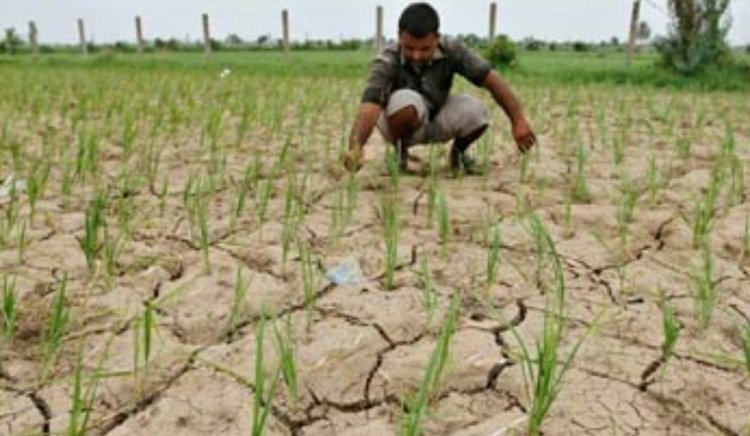
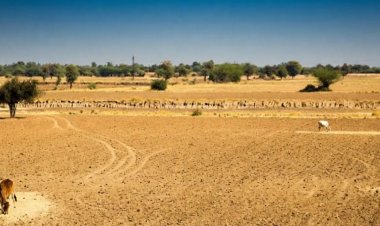
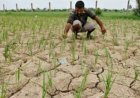
The Telangana government has declared 365 mandals across 31 districts drought-affected for the 2026 Kharif season, citing deficient and uneven rainfall, prolonged dry spells and deteriorating soil moisture conditions. Of these, 111 mandals have been classified as severely drought-affected and 254 as moderately affected. Hyderabad and Peddapalli are the only two districts excluded from the notification.
The Revenue and Disaster Management Department issued the order following a scientific assessment of drought conditions across the state and recommendations from a Cabinet sub-committee constituted to examine the impact of El Niño and the evolving rainfall situation. The sub-committee reviewed the situation on October 23.
The notification covers 365 of Telangana's 621 mandals, or about 58.8% of the total. The assessment considered rainfall patterns, crop-sown area, soil moisture, groundwater conditions and other indicators in accordance with the National Manual for Drought Management, 2016.
According to the detailed assessment cited in the government order, Telangana received 615.5 mm of rainfall against the normal 740.6 mm between June 1 and September 30, representing a deficit of 17%. The government attributed the adverse monsoon conditions to strengthening El Niño conditions, weak low-pressure systems over the Bay of Bengal and prolonged dry spells during critical crop-growth stages.
Crop area contracts amid rainfall deficit
The rainfall shortfall has affected agricultural operations across several parts of the state. The area under Kharif crops declined from 139.28 lakh acres to 126.06 lakh acres, while the area under paddy fell by 18%, from 69.19 lakh acres to 57 lakh acres.
Water availability has also emerged as a concern. Live storage in major and medium reservoirs stood at 179.63 thousand million cubic feet (TMC), against a combined capacity of 585 TMC, according to the assessment. The situation raises concerns over water availability for irrigation, drinking water, livestock and power generation.
Districts have experienced varying degrees of drought severity. Nalgonda and Sangareddy have the highest number of affected mandals, with 28 each, followed by Suryapet with 23. Adilabad and Vikarabad have 20 affected mandals each. Medak has one affected mandal, while Rajanna Sircilla has two. Jagtial, Karimnagar and Mulugu have three each.
The government has directed district collectors to publish the drought notifications in their respective district gazettes. Notified municipal and urban areas are to be excluded from the mandal-level drought notifications, although they will be treated as drought-affected for drinking water supply purposes.
Relief measures and farm credit restructuring
The notification requires district administrations to initiate drought mitigation measures, including crop-loss input assistance through Direct Benefit Transfer (DBT), augmentation of drinking water supplies, fodder arrangements and cattle camps wherever necessary. Authorities have also been asked to generate employment under the VB-G RAM G programme.
District collectors will coordinate with the State-Level Bankers' Committee to facilitate restructuring of agricultural loans and prevent coercive recovery measures, subject to applicable Reserve Bank of India guidelines.
The Agriculture and Cooperation Department has been directed to ensure that eligible farmers receive input subsidies through DBT within one month of receipt of central assistance from the National Disaster Response Fund (NDRF). Beneficiary lists are to be published on the websites of the respective district collectors and the state government.
The Planning Department has also been instructed to prepare a memorandum seeking central assistance and submit it to the Revenue and Disaster Management Department within seven days for onward transmission to the concerned Union ministries.
State seeks Rs 20,000 crore package
The drought declaration follows the Telangana Legislative Assembly's unanimous resolution on September 18 seeking central intervention. The state has demanded a special drought-relief package of Rs 20,000 crore, assistance under the NDRF and release of its share of State Disaster Response Fund (SDRF) funds.
The demands also include crop-loss compensation, input subsidies, drinking water and fodder support, groundwater recharge and restoration of water bodies. The state has sought an additional 50 days of employment under VB-G RAM G, with the Centre bearing the entire cost, increased fertiliser availability and an additional 1,500 MW of power.
Telangana has further requested that the fiscal deficit borrowing limit under the Fiscal Responsibility and Budget Management (FRBM) framework be raised from 3% to 3.5% of gross state domestic product (GSDP) for 2026-27. It has also sought additional assistance under central and centrally sponsored schemes with relaxed eligibility norms.
The extent of central assistance and the scale of relief ultimately available to farmers will depend on the assessment and approval process. The immediate challenge for the state is to address crop losses, protect rural livelihoods and manage water availability as the effects of the deficient monsoon extend beyond the Kharif season.