
India’s Edible Oil Import Bill Hits Rs. 2 Lakh Crore; Volume Rises 2.8 Times and Cost 15 Times in 20 Years
India’s edible oil import bill surged 24% to nearly Rs. 2 lakh crore in 2025-26, while import volumes increased 5.68% to 169.23 lakh tonnes. Over the past 20 years, edible oil imports have grown 2.8 times by volume and nearly 15 times in value, highlighting India’s continued dependence on overseas supplies to meet domestic demand.

 Join the RuralVoice whatsapp group
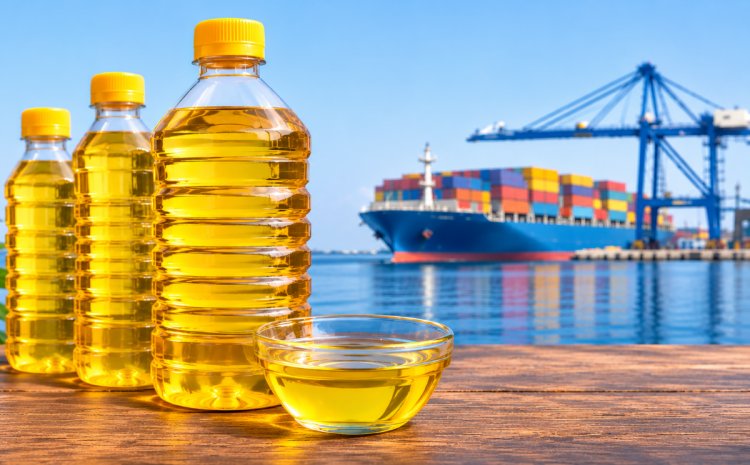
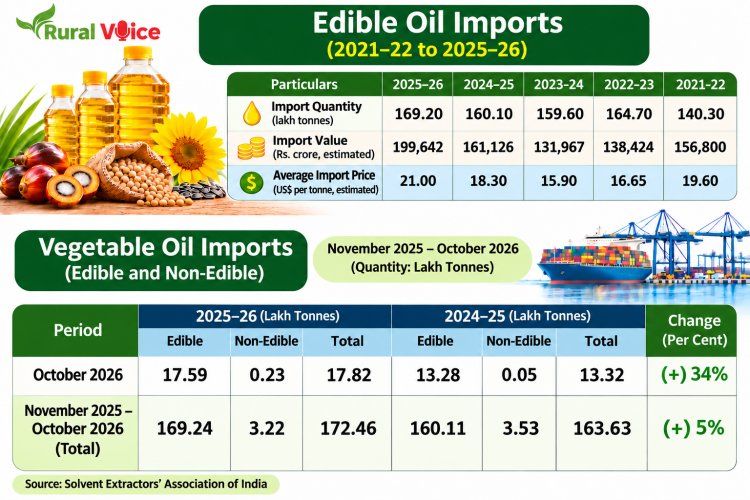
India’s edible oil imports rose by 5.68% to 169.23 lakh tonnes in the 2025-26 oil year (November 2025 to October 2026), while the import bill increased by 24% to nearly Rs. 2 lakh crore (US$21 billion). Higher international prices, a weaker rupee and increased imports of palm and soybean oils contributed to the rise.
According to data released by the Solvent Extractors’ Association of India (SEA), India imported 160.1 lakh tonnes of edible oils in the previous oil year, 2024-25. The value of imports increased from Rs. 1.61 lakh crore (US$18.30 billion) to Rs. 1.996 lakh crore in 2025-26.
The increase in imports reflects India’s continued dependence on overseas supplies to bridge the gap between domestic production and consumption. India has been importing edible oils since the 1990s. Over the past two decades, from 2005-06 to 2025-26, the volume of imports has increased around 2.8 times, while the import bill has risen nearly 15 times, according to SEA.
SEA Executive Director B.V. Mehta said higher international edible oil prices and the depreciation of the rupee had also pushed up the import bill.
Higher Global Prices And Weaker Rupee
The increase in the import bill was driven not only by higher import volumes but also by rising international prices and the depreciation of the Indian rupee against the US dollar.
According to SEA, the average price of RBD palmolein increased by 7% to US$1,182 per tonne in 2025-26, compared with US$1,106 per tonne in the previous oil year. Crude palm oil prices rose by 8% to US$1,242 per tonne, from US$1,148 per tonne.
Similarly, the price of crude soybean oil increased by 12% to US$1,319 per tonne, while crude sunflower oil became 12% more expensive at US$1,483 per tonne.
The rupee also weakened during the period, with the exchange rate moving from Rs. 88.37 per US dollar to Rs. 95.52. This represented a depreciation of around 8.1%, making imported edible oils more expensive for Indian buyers.
October Imports Reach Record Level
India imported 17.59 lakh tonnes of edible oils in October 2026, compared with 15.44 lakh tonnes in September, an increase of 13.92% in a month. SEA said October’s imports were the highest monthly level in more than two years.
Total vegetable oil imports, including edible and non-edible oils, reached 17.82 lakh tonnes in October 2026, up 34% from 13.32 lakh tonnes in October 2025.
The festive season, which typically boosts demand for sweets, snacks and fried foods, contributed to higher consumption. In September 2026, the Central Government had also reduced the basic import duty on crude and refined edible oils, including palm, soybean and sunflower oils, to help contain domestic prices ahead of the festive season.
Soybean oil imports reached 6.60 lakh tonnes in October, according to the detailed SEA data. Sunflower oil imports more than doubled to 2.24 lakh tonnes from 1.09 lakh tonnes in September, when they had fallen to a four-year low.
Palm And Soybean Oil Imports Increase
Palm oil remained the largest component of India’s edible oil imports in 2025-26. Imports rose by 8.5% to 82.27 lakh tonnes, compared with 75.83 lakh tonnes in the previous oil year.
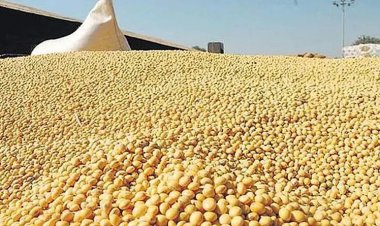
Soybean oil imports also increased, rising to 58.37 lakh tonnes from 54.69 lakh tonnes. In contrast, sunflower oil imports declined to 28.48 lakh tonnes from 29.37 lakh tonnes.
As a result, palm oil’s share of total edible oil imports increased from 47% to 49%, while the share of soft oils, including soybean and sunflower oils, declined from 53% to 51%.
SEA attributed palm oil’s stronger position to its lower price compared with competing soft oils and robust demand from the refining industry. During the first half of the 2025-26 oil year, palm oil imports had nearly doubled compared with the corresponding period of the previous year.
Refined Oil Imports Decline
The composition of India’s edible oil imports also changed significantly during 2025-26, with a sharp decline in refined oil imports and a corresponding increase in crude oil shipments.
Refined edible oil imports fell to 8.17 lakh tonnes during November 2025-October 2026, from 17.37 lakh tonnes in the corresponding period of the previous year. Their share in total imports consequently declined from 11% to 5%.
In contrast, crude edible oil imports increased to 161.06 lakh tonnes from 142.74 lakh tonnes. Their share rose from 89% to 95%.
According to SEA, negligible imports of refined palmolein from Indonesia and Malaysia were a major factor behind this shift. Higher imports of crude palm oil, which is processed by domestic refineries, replaced a significant portion of refined palmolein imports.
Argentina Emerges as Largest Edible Oil Supplier
Argentina was India’s largest supplier of edible oils in 2025-26, exporting 39.67 lakh tonnes. This included 30.96 lakh tonnes of crude soybean oil and 8.70 lakh tonnes of crude sunflower oil.
Indonesia supplied around 33 lakh tonnes of palm oil, while imports from Malaysia stood at 32.56 lakh tonnes, also largely comprising palm oil. India imported 14.24 lakh tonnes of edible oils from Brazil and 13.16 lakh tonnes from Russia.
Nepal is also emerging as an important supplier, particularly of refined soybean oil. Under the South Asian Free Trade Area (SAFTA) agreement, imports from Nepal benefit from zero import duty. India imported around 7.55 lakh tonnes of edible oils from Nepal during the year, including 6.74 lakh tonnes of refined soybean oil.
India's Growing Import Dependency
According to SEA, India meets around 55-60% of its edible oil requirements through imports. The country relies mainly on Indonesia and Malaysia for palm oil, while Argentina, Brazil, Russia and Ukraine are important sources of soft oils such as soybean and sunflower oil.
The rise in imports comes as the Central Government is seeking to strengthen domestic production and reduce dependence on overseas supplies. The Agriculture Ministry’s third advance estimates for 2025-26 put domestic oilseed production at 430.59 lakh tonnes, with record production anticipated for groundnut and rapeseed-mustard.
However, the continued high level of edible oil imports highlights the substantial gap between domestic oilseed production and the country’s growing demand for edible oils.