
Regenerative Agriculture Opens Doors for Smallholder Farmers’ Prosperity
Regenerative agriculture can improve smallholder farmers’ incomes while restoring soil health, conserving water and strengthening climate resilience. Carbon payments, scientific research and supportive government policies can accelerate adoption. India’s emerging carbon market offers additional income opportunities, provided measurement, verification and payment systems remain transparent, affordable and accessible to small farmers.

 Join the RuralVoice whatsapp group
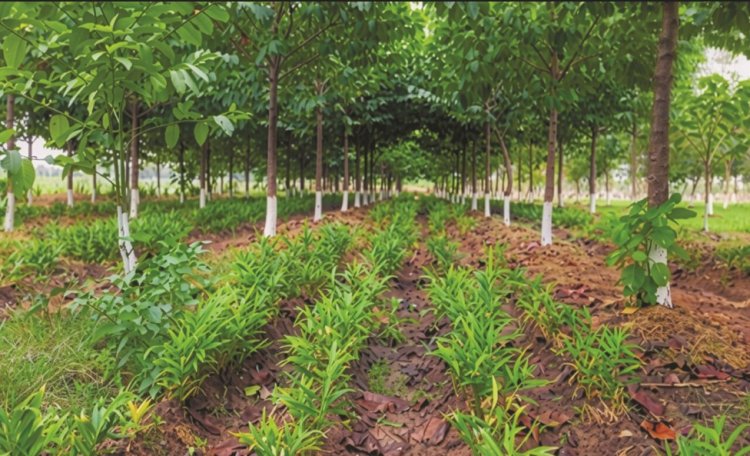
For a smallholder farmer, the strongest reason for changing a familiar practice is an improvement in income and farm productivity. Regenerative agriculture can offer both while restoring soil health, conserving water and reducing the environmental burden of farming. India now has an example of how these efforts can also create additional income opportunities for farmers. At an event in Ludhiana on 14 September 2026, the launch of carbon payments for farmers in Punjab and Haryana linked years of resource-conserving farming with additional income. It showed how farmers can receive payments for the environmental benefits created through better farming practices.
The Ludhiana programme announced payments exceeding Rs. 2.9 crore to about 2,550 farmers under Grow Indigo’s Aadi initiative, developed with technical guidance from ICAR. The first credit issuance covered approximately 30,000 acres and generated more than 50,000 credits. Most farmers received Rs. 4,000–15,000 for practices adopted during 2019–2022. These payments show that scientifically verified improvements in farming can have a market value, adding to the returns from crop production.
These opportunities come at a time when Indian agriculture faces several interconnected challenges, including climate change, declining soil health, water stress and the loss of agrobiodiversity – the diversity of crops, livestock and beneficial organisms that support farming. Together, these pressures threaten reliable harvests, food security and farm incomes. Smallholders have limited resources to absorb multiple production risks simultaneously. The task is therefore to sustain production while restoring the natural resources on which the long-term sustainability of farming depends. This gives regenerative and climate-resilient agriculture a shared purpose – healthier soils, greater diversity, efficient water use and more secure livelihoods.
Different Approaches With A Shared Purpose
Regenerative agriculture seeks to restore soil health and the natural processes that support productive farming. Conservation agriculture, natural farming, organic farming, agroecology, agroforestry and integrated farming are different approaches, but they can have similar outcomes. Their philosophies may differ, but their practices can contribute to sustaining production, improving resilience to climate change and reducing the environmental burden of farming, depending on local conditions.
Conservation agriculture combines minimum soil disturbance, soil cover and crop diversification. Natural farming emphasises ecological processes and locally prepared biological inputs, while organic farming follows defined production standards. Agroforestry and integrated farming combine crops with trees, livestock and other enterprises. Regenerative approaches can also include soil-test-based nutrient management, efficient irrigation and appropriate machinery. Their performance should be assessed through crop yields, net returns, soil condition, water use and environmental benefits.
The main task is to improve the capacity of soils to support roots, supply nutrients and retain water. Crop residues, legumes, organic amendments and crop rotations can help, but their effects vary according to soil, climate and management. Reducing tillage alone is insufficient. Crops still need adequate nutrients and protection from pests and diseases. Farmers therefore need combinations of practices tested for their fields and farming conditions.
For the rice-wheat landscape, direct seeding, better irrigation, residue retention and timely wheat sowing can form such a combination. Avoiding residue burning reduces air pollution, while retaining appropriate quantities of residue protects the soil and adds organic matter. Water savings from direct seeding require proper field preparation and crop management. In rainfed regions, moisture conservation, legumes, suitable trees and livestock integration can provide several sources of income. Recommendations must also consider the use of residues as fodder, labour requirements and market access.
The farmer’s main return should come from a productive, economical and more resilient farming system. Carbon revenue can add to these benefits. Smallholders need practical support during the transition so that they can maintain production and manage costs while longer-term soil and environmental benefits develop.
Public Policy Can Support Wider Adoption
The Government of India’s emphasis on natural farming, resource efficiency and farmer welfare supports this transition. The National Mission on Natural Farming was approved in November 2024 with an outlay of Rs. 2,481 crore through 2025–26. It combines farmer clusters, demonstration farms, training and bio-input resource centres. These can help farmers learn, test and adapt practices, supported by evidence on crop performance, soil improvement and the full cost of cultivation.
Other initiatives provide complementary support. Paramparagat Krishi Vikas Yojana supports organic farming; Per Drop More Crop promotes micro-irrigation; Soil Health Cards guide nutrient management; and Rainfed Area Development supports integrated farming systems and crop diversification. Crop-residue management machinery and Custom Hiring Centres help small farms access equipment without having to purchase it individually. These programmes should work together at the village level, providing farmers with advice, machinery services, finance and market access.
This policy support also extends to rewarding farmers for verified environmental benefits. Building on the January 2024 framework and the voluntary carbon market proposal reported alongside the new government’s 100-day agenda, the Ministry of Agriculture and Farmers Welfare is supporting 11 pilot projects through ICAR and State Agricultural Universities. These projects provide technical support, build capacity and develop methods for generating carbon credits from regenerative farming practices. Approved methodologies for improved rice cultivation and livestock manure management also provide routes into India’s domestic carbon market. These efforts bring research, field practices and financial incentives closer together, with scientific verification central to their credibility.
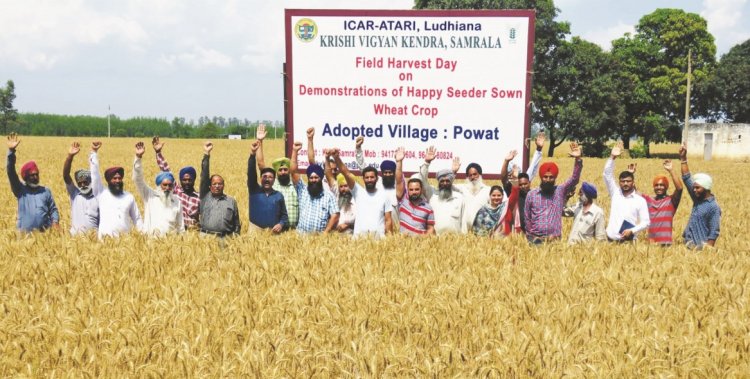
The Government of India has consistently emphasised taking research to farmers and promoting resource-conserving agriculture. Ransinh Kalan in Moga shows what sustained community action can achieve. The village has maintained zero stubble burning. Practices include Happy Seeder-sown wheat and residue management in potato and mustard. The village demonstrates the importance of local leadership, access to machinery and continued extension support in maintaining improved farming practices.
ICAR brings science and farmers’ experience together to improve farming practices. Its emphasis on regenerative landscapes and research guided by farmers’ needs strengthens this partnership. Farmers’ field problems shape ICAR research priorities, while trials and demonstrations assess yield stability, water use, soil health, labour and net income together. This continuous exchange between research and the field can turn promising ideas into practical solutions that farmers can adopt with confidence.
ICAR’s contributions to greenhouse gas accounting, soil sampling protocols, modelling, field-team training and remote sensing for the carbon programme illustrate this approach. These capabilities help identify which practices work under different conditions and verify their benefits. Applying the same scientific rigour across regenerative farming approaches can provide farmers with clear, relevant advice and help translate healthier soils and better resource use into improved livelihoods.
When Environmental Benefits Reach The Farmer
The Ludhiana experience for farmers in Punjab and Haryana adds a financial incentive to these efforts. According to the programme account, Grow Indigo advanced payments from its own funds before all credits were sold. Farmers could choose an assured upfront payment or 75% of net carbon revenue after sale. Clear information on deductions and payment schedules is essential for farmers to understand what they will receive.
For enrolled fields during 2019–22, the programme estimates that 45 billion litres of water were saved and more than two lakh tonnes of crop residue were kept out of fires. These estimates show the wider benefits that resource-conserving practices can provide. Water conservation and cleaner air also benefit neighbouring communities, making support for these practices a shared responsibility of agriculture, water and environmental agencies.
A Credible Carbon Market Must Work For Small Farms
A carbon credit represents one tonne of CO2 equivalent reduced or removed under an approved accounting system. Agricultural credits recognise verified emission reductions or additional carbon stored in soil and vegetation. Verra’s VM0042 methodology provides a framework for assessing these changes under improved agricultural land management. Credibility rests on evidence of benefits beyond what would otherwise have occurred, independent verification and safeguards against counting the same benefit twice.
Careful measurement is essential. Soil sampling, locally tested models and satellite observations provide complementary evidence. Assessment must account for measurement uncertainty, relevant greenhouse gas emissions and the risk of losing stored carbon. These safeguards protect market confidence and the value of farmers’ efforts.
Making this market accessible to smallholders requires affordable monitoring and fair payment arrangements. Organising farmers through FPOs, cooperatives and village groups allows monitoring costs to be shared. Clear contracts in local languages are essential, covering revenue shares, deductions, payment schedules and responsibilities. Women cultivators and tenant farmers deserve fair access to participation and benefits.
Building on these policy and pilot initiatives, the priority now is affordable measurement, independent verification and effective farmer advisory services, supported by finance and access to buyers. The test of success is the additional net income retained by farmers, together with lasting improvements in production and natural resources.
Making Regenerative Farming A Lasting Practice
Lasting adoption depends on support throughout the crop season. Timely machinery services, good-quality inputs and practical advice are essential. Demonstrations need to present both benefits and costs, including family labour. Phased adoption gives farmers time to learn before expanding, while market access and profitable prices support crop diversification. Together, these measures strengthen the economic basis for continuing regenerative practices beyond a project or incentive period.
India’s field experience also has international relevance. The September 2026 BRICS New Delhi Declaration welcomed a network of centres of excellence on agroecology and regenerative agriculture (Natural Farming) for climate resilience and productivity at ICAR-IIFSR. This provides a platform for sharing research, training and verification methods suited to smallholder farming.
Regenerative agriculture places soil restoration, water conservation and farmer income within a common development goal. Its lasting value lies in farming systems that remain productive while improving the resources on which future harvests depend. Carbon payments add an incentive for verified climate benefits. The national priority is clear – bring sound science, coordinated public support and farmers’ knowledge together to make regenerative agriculture a practical and profitable choice for India’s smallholders.
(Writer is Secretary, Department of Agricultural Research and Education & Director General, Indian Council of Agricultural Research)