
A Day After: Calm Gradually Returns to West Bengal, But Fear and Welfare Payment Concerns Persist
Political violence in West Bengal has eased after the formation of the new BJP government, though tension continues in several areas. Trinamool Congress offices and local clubs remain shut, while residents report an atmosphere of fear and uncertainty. Many people hope for industrial revival under the new government, but delays in welfare payments such as widow pensions and Lakshmi Bhandar have left beneficiaries worried.

 Join the RuralVoice whatsapp group
Kolkata. The wave of political violence that swept across West Bengal following the Assembly election results appears to be gradually receding after the formation of the new government on Saturday. However, tension continues to simmer in several minority-dominated areas, where residents remain silent yet visibly anxious. Localities that once remained lively late into the night now fall eerily quiet soon after dusk.
Most neighborhood clubs, regarded as the grassroots nerve centres of Bengal’s political culture, which until recently displayed Trinamool Congress flags, are now shut. A similar situation prevails at Trinamool Congress offices, many of which have reportedly been vandalised in different parts of the state.
At the same time, many residents have welcomed the political transition, expressing hope that the Bharatiya Janata Party government could attract industries and generate employment opportunities in the state. Yet concerns persist among beneficiaries of welfare schemes such as widow pensions and the Lakshmi Bhandaar scheme, as the monthly payments, usually credited to accounts by the 3rd or 4th of each month, have still not been received. The state administration is currently undergoing large-scale reshuffling, and people believe governance mechanisms are likely to become fully functional once the transition process is completed.
Laxman, a 64-year-old retired private-sector employee from North 24 Parganas district, told Rural Voice, “The overall situation is largely peaceful, though some tension persists in Muslim-majority areas. With central forces deployed across the region, ordinary people are not facing any major difficulties.”
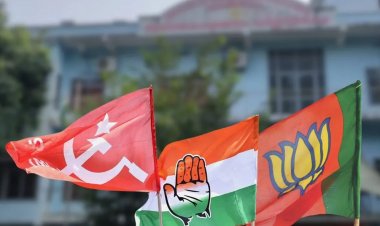
West Bengal was ruled by the Left Front for nearly 34 years before the Trinamool Congress (TMC), led by Mamata Banerjee, came to power and remained in office for the next 15 years. The state has long been known for its entrenched “club culture,” with political workers routinely gathering at local neighborhood clubs. When the TMC came to power in 2011, control of many such clubs shifted almost overnight from Left supporters to the Trinamool Congress.
“Most of these clubs and local party offices are now shut,” Laxman said. “TMC leaders are barely stepping out of their homes.”
When the TMC replaced the Left Front government 15 years ago, many Left workers switched allegiance to the Trinamool Congress. This time, however, local BJP leaders have publicly declared that TMC leaders will not be welcomed into the party.
Yet, political realignments appear to be happening at the grassroots level. Rajesh Rai, 57, a resident of Kolkata’s Bhawanipur area - where BJP leader and current Chief Minister Suvendu Adhikari defeated former Chief Minister Mamata Banerjee by more than 15,000 votes - said a quiet shift is underway.
“Just as many Left workers joined the Trinamool Congress after the change in power in 2011, several TMC workers are now moving towards the BJP,” he said. “However, this is mostly happening at the lower levels. The BJP leadership is still unwilling to induct TMC leaders holding positions such as councillors or above.”
Rajesh, who travels daily through Muslim localities such as Raja Bazaar and Garden Reach for work, says the atmosphere there still feels somewhat tense. “Several Trinamool Congress offices were vandalised after the election results were declared, and the situation had become quite volatile at the time. However, conditions have gradually started returning to normal following appeals made by Suvendu Adhikari and state BJP president Samik Bhattacharya,” he says. Both leaders had publicly warned that strict police action should be taken against any BJP worker found involved in violence.
Rahman Khan, a 58-year-old resident of Chinsurah in Hooghly district, echoes a similar sentiment. “There were incidents of vandalism at Trinamool Congress offices and attempts at retaliation, but peace appears to be slowly returning, especially after the swearing-in ceremony,” he says. According to him, one major reason behind the easing tensions is the absence of overt backing from senior BJP leaders. “Many workers perhaps fear that if police cases are filed against them, the party may not come to their rescue,” he adds.
Rahman, who works at a nursing home, says most of the vandalism at local clubs and party offices was allegedly carried out by grassroots-level workers rather than senior leaders. At the same time, he points out that fear persists in several Muslim-majority neighbourhoods. “There have been incidents of violence and intimidation. People transporting animals for kurbani were stopped in some places. But these acts too are largely being carried out by individuals at the lower level,” he says.
Despite the tensions, Rahman believes a significant section of the population supports the political transition. “You could say nearly 60% of the people are happy and feel this change was necessary,” he says. “There was widespread resentment at the grassroots level against Trinamool Congress workers, who were often accused of demanding ‘cuts’ for various local works. Over time, that anger appears to have translated into votes.”
Women have traditionally been one of the strongest support bases for the Trinamool Congress. However, according to Rahman, that support appears to have fragmented in this election. He attributes the shift to two major factors. While the Trinamool government had been providing Rs 1,500 per month to homemakers under the Lakshmi Bhandar scheme, the BJP promised to double the amount to Rs 3,000 and aggressively campaigned on the issue. The second factor, he says, was the rape and murder of a woman doctor at RG Kar Hospital, an incident that triggered widespread public outrage. The victim’s mother, Ratna Debnath, contested the Panihati seat on a BJP ticket and defeated Trinamool Congress candidate Tirthankar Ghosh.
At the same time, many women dependent on welfare schemes are anxious about the future of these benefits. Sumitra, a 72-year-old widow from Hooghly, says her widow pension would usually reach her bank account by the 3rd or 4th of every month. This time, however, the money has still not been credited. She fears the payments may stop altogether. Women in her neighbourhood who receive benefits under the Lakshmi Bhandar scheme are facing similar uncertainty, as their payments too have been delayed.
Sumitra also points to a sharp rise in household expenses over the past week. Vegetables have become costlier, while potatoes that earlier sold for Rs 10-15 per kilogram are now priced between Rs 20 and Rs 30. Cooking oil prices, she says, have risen as well, adding to the financial strain on ordinary families.
Hooghly is also home to the historic Imambara, where Amitabh Bachchan shot parts of the film Te3n in 2015, ahead of its 2016 release. Living near the landmark is 65-year-old Pradeep, who drives an e-rickshaw for a living. He says his locality has not witnessed any violence, yet an atmosphere of fear persists. “You can see it on people’s faces and in the way they speak,” he says. Markets are noticeably less crowded, and the drop in passengers has hurt his earnings. “Areas that used to remain lively till late at night now fall silent after 8 p.m. As evening sets in, central forces begin patrolling the streets,” he adds.
Shankar, 65, from North 24 Parganas district, who has witnessed both the Left Front and Trinamool Congress eras, says disturbances broke out in several areas after the election results were declared. According to him, Trinamool Congress leaders and workers were chased away, and some were allegedly assaulted. “At present, Trinamool leaders are barely stepping out of their homes, while many workers have virtually gone underground,” he says.
Abhishek, a 25-year-old resident of Naihati in North 24 Parganas who joined a private company two months ago, describes the prevailing mood as tense and subdued. He says even the usually crowded and noisy local trains appear unusually silent these days. “It feels as though someone has died and people are in mourning,” he remarks. The Trinamool-run neighbourhood clubs now lie deserted, and party workers who once gathered regularly at local tea stalls have disappeared from public view.
He also points to changes in the social atmosphere around local religious institutions. “Even the queue for daily prayers at Naihati’s Badi Maa (Kali) temple has become shorter,” he says. The temple’s puja committee was earlier dominated by Trinamool Congress members, but now a meeting has reportedly been called to discuss possible changes in its office-bearers as well.
Abhishek commutes to Kolkata every day for work. For the first time in his conscious life, he says, he is witnessing a change of government in West Bengal. He points to a symbolic shift visible across the city: “The colors of the roads are changing. Earlier, roadsides in Kolkata were painted blue and white — the colors associated with the Trinamool Congress. Now saffron is replacing blue.”
But the transformation, residents say, goes beyond symbolism. In Kanchrapara of North 24 Parganas district, home to a major railway workshop, 59-year-old jewellery shop owner Kishore says several illegal bicycle and motorcycle stands allegedly run by Trinamool workers outside railway stations are being dismantled. According to him, the move has been welcomed by traders and local residents alike, as even shop employees were earlier compelled to park their vehicles there and pay fees.
Kanchrapara also has deep political significance. Former Union minister Mukul Roy hailed from the town, which falls under the Bijpur Assembly constituency. His son, Subhranshu Roy, has represented the constituency twice as MLA. Before the 2026 Assembly elections, the seat was held by Trinamool Congress leader Subodh Adhikari. Reports of alleged assaults on him surfaced following the announcement of election results.
Subodh Adhikari’s brother, Kamal Adhikari, served as the municipal chairman, while Subhranshu Roy was the vice-chairman. Owing to differences with the chairman, Roy had stayed away from the municipal office for some time. However, after the election results, the chairman reportedly stopped attending office, following which Roy resumed his visits. He has since said that he intends to work with people across political affiliations.
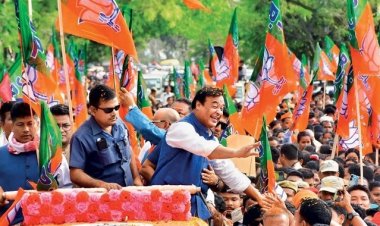
According to Kishore, incidents of vandalism have been reported from several areas. A petrol pump allegedly linked to a close associate of a Trinamool Congress leader was also attacked. However, BJP leaders are now reportedly touring different localities, using loudspeakers to urge party workers to refrain from violence. They have also announced that neighborhood clubs will continue to function, but without displaying the flags of any political party, and that people from all backgrounds would be welcome there.
Rajesh, a resident of Bhawanipur, believes the political transition was necessary. “During the 34 years of Left Front rule and the subsequent 15 years under the Trinamool Congress, industrial growth remained limited. Industries willing to invest here often had to deal with demands for ‘cuts’ from local political leaders and workers. If that culture changes and industries begin to return, it could generate large-scale employment,” he says.
Kishore points out that several major industrial units, including the Dunlop factory and hundreds of jute mills, remain shut across the state. “Many factories in Kalyani in Nadia district are also lying closed. If these old industrial units are revived, lakhs of people could find employment again,” he says.
Rajesh further argues that Mamata Banerjee came to be increasingly perceived as anti-industry after the Tata Motors project withdrew from Singur. Yet, the irony is that one of Mamata Banerjee’s closest associates during the movement was Suvendu Adhikari, who left Trinamool Congress to join BJP in December 2020 and went on to become the Chief Minister on May 9, 2026, leading West Bengal’s first BJP government.
(Name of the persons Rural Voice has spoken to has been changed)