
West Bengal, Tamil Nadu Record Historic Voter Turnout in Assembly Polls Since Independence
West Bengal and Tamil Nadu recorded their highest-ever voter turnout since Independence in the 2026 Assembly elections. West Bengal saw 92.47% polling in Phase I, while Tamil Nadu registered 85.05%. The massive turnout reflects intense political competition and strong public participation in both states.

 Join the RuralVoice whatsapp group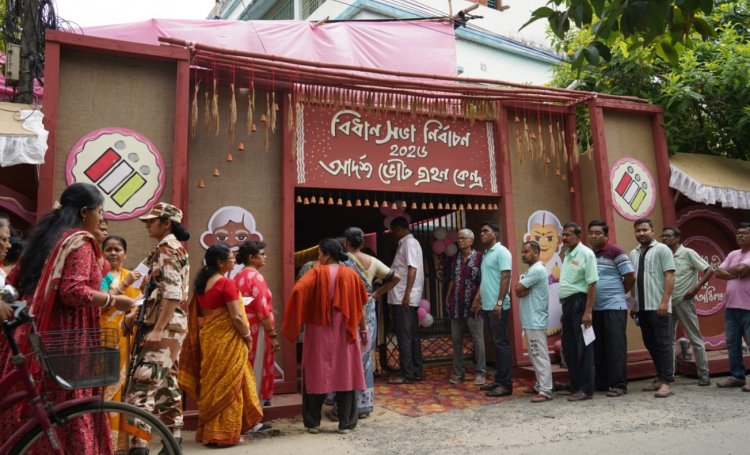
West Bengal and Tamil Nadu witnessed unprecedented voter participation in their 2026 Assembly elections, recording the highest turnout since Independence. While West Bengal registered an impressive 92.47% polling in the first phase for 152 seats, Tamil Nadu reported a remarkable 85.05% turnout across all 234 constituencies, reflecting strong public engagement and intense political contests in both states. In the 2021 Assembly elections, West Bengal recorded a voter turnout of 85.2 per cent while Tamil Nadu recorded 76.6 per cent.
In West Bengal, the first phase of polling concluded with an impressive voter turnout of 92.47%, according to the latest figures released by the Election Commission of India. Several districts crossed the 90% mark, with Dakshin Dinajpur leading at 94.85%, followed by Cooch Behar (94.54%), Birbhum (93.70%), Jalpaiguri (93.23%), and Murshidabad (92.93%).
Chief Minister Mamata Banerjee expressed confidence that the high turnout reflected strong public support for the Trinamool Congress (TMC). Addressing an election rally in Kolkata, she said the large-scale voting indicated that her party was moving toward victory.
“If my assessment is correct, based on today’s polling, I believe we are already in a strong position to win,” Banerjee said.
She attributed the high participation to what she described as a people’s struggle to protect their rights.
“This election is a fight to safeguard people’s rights, and that is why voters came out in such large numbers,” she said.
Banerjee also alleged that if the Bharatiya Janata Party (BJP) comes to power, it would implement the Citizenship Amendment Act (CAA) and the National Register of Citizens (NRC), which, she claimed, motivated people to vote in greater numbers.
Meanwhile, BJP state chief Nitin Nabin countered the TMC’s optimism, saying, “Today’s sunset marks the end of the Trinamool Congress.”
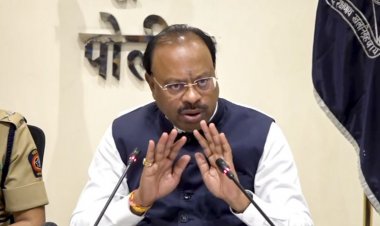
West Bengal Chief Electoral Officer Manoj Agarwal said polling was conducted peacefully and without fear, with security at polling booths fully managed by the Central Armed Police Forces (CAPF).
“People came out to vote without fear. Security at polling stations was entirely under CAPF control, and this time, webcasting was 100 per cent foolproof,” Agarwal said.
Special Poll Observer N.K. Mishra emphasized that the Election Commission remained committed to ensuring peaceful, free, and intimidation-free elections in a state often associated with poll-related violence.
He said special attention was given to sensitive districts such as Cooch Behar, Malda, Murshidabad, and Birbhum, with extensive deployment of the Central Reserve Police Force (CRPF) to maintain law and order.
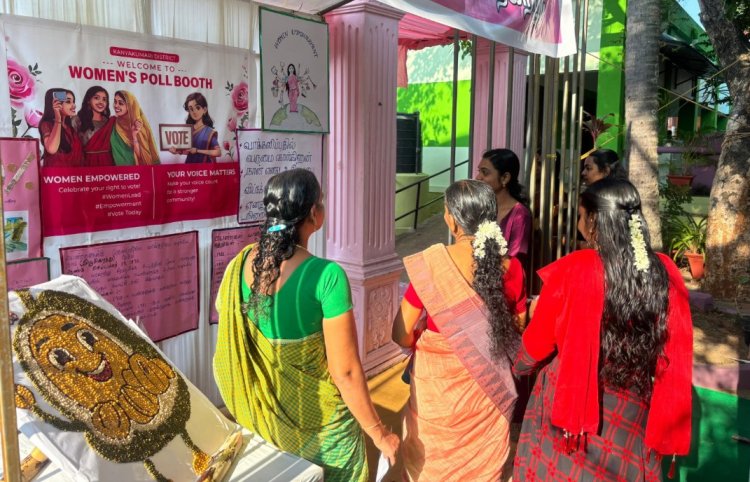
Tamil Nadu witnesses record turnout
In Tamil Nadu, polling for all 234 Assembly constituencies also witnessed a historic turnout of 85.05%, with voting passing off peacefully and without any major incidents.
The election turned into a high-stakes three-cornered contest involving the ruling Dravida Munnetra Kazhagam (DMK), the opposition All India Anna Dravida Munnetra Kazhagam (AIADMK), and the Tamilaga Vettri Kazhagam (TVK), led by actor-turned-politician Joseph Vijay.
The ruling DMK mounted an aggressive campaign centered around delimitation concerns and targeted the AIADMK-BJP alliance, while the AIADMK attacked the government over issues such as rising state debt and alleged deterioration in law and order.
TVK, despite being a new entrant, emerged as a significant force in the electoral landscape, alongside Tamil nationalist Seeman’s Naam Tamilar Katchi (NTK), which continues to hold strong regional influence.
Both the DMK and AIADMK expressed confidence in forming the next government, making Tamil Nadu one of the most closely watched electoral battlegrounds of 2026.