
WMO Sees 80% Probability of El Niño in June-August 2026, Flags Rising Threat to Monsoons and Global Climate
The World Meteorological Organization has warned that El Niño conditions are developing rapidly, with an 80% probability during June-August 2026 and over 90% likelihood of persisting until November. The climate phenomenon is expected to raise global temperatures, intensify extreme weather events and disrupt rainfall patterns across several regions.

 Join the RuralVoice whatsapp group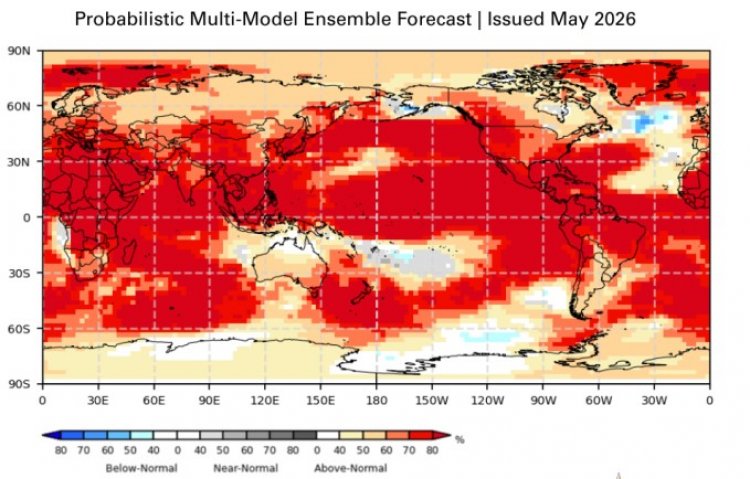
The World Meteorological Organization (WMO) has warned that El Niño conditions are rapidly developing in the tropical Pacific Ocean and could significantly alter global weather patterns over the coming months, increasing the likelihood of heatwaves, droughts, floods and other extreme weather events across different parts of the world.
According to the latest WMO El Niño/La Niña Update released on Tuesday, there is an 80% probability that El Niño conditions will emerge during the June-August 2026 period. The likelihood of the phenomenon continuing through at least November is estimated at close to or above 90%, with most climate models indicating that the event could reach moderate or even strong intensity.
The United Nations weather agency said unusually warm ocean waters in the central and eastern equatorial Pacific are driving the development of El Niño. Observations from late April to mid-May showed sea surface temperatures approaching El Niño thresholds, while subsurface ocean temperatures were more than 6°C above normal in several areas, providing a substantial reservoir of heat capable of sustaining further warming.
WMO Secretary-General Celeste Saulo said the world should prepare for a potentially strong El Niño event that could aggravate drought conditions, trigger episodes of heavy rainfall and increase the occurrence of heatwaves over land and oceans.
“We need to prepare for a potentially strong El Niño event, which will exacerbate drought and heavy rainfall and increase the risk of heatwaves,” Saulo said, noting that the previous El Niño episode in 2023-24 was among the five strongest on record and contributed to record global temperatures observed in 2024.
UN Secretary-General António Guterres described the developing event as an urgent climate warning, emphasizing that El Niño would intensify the impacts of an already warming planet.
“The science is clear: El Niño is arriving on our doorstep in the coming months with 90% certainty,” Guterres said in a video statement. He urged governments to strengthen climate action, accelerate the transition to renewable energy, protect vulnerable communities and expand early warning systems.
El Niño is one phase of the El Niño-Southern Oscillation (ENSO), one of the most influential naturally occurring climate systems on Earth. It occurs when ocean surface temperatures in the central and eastern Pacific become significantly warmer than average. Typically developing every two to seven years, El Niño events generally last between nine and twelve months and often reach peak intensity between November and February.
Although climate scientists have found no evidence that climate change increases the frequency or intensity of El Niño events, WMO noted that a warmer atmosphere and ocean can amplify their impacts by providing additional heat and moisture that fuel extreme weather.
The organization’s complementary Global Seasonal Climate Update projects above-normal temperatures across nearly all parts of the globe during the June-August period. Such conditions could increase heat stress, accelerate drought development in rainfall-deficient regions and compound climate-related risks.
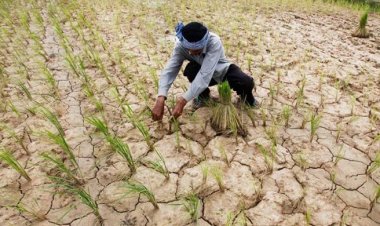
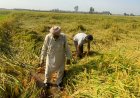
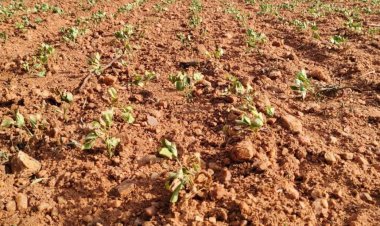
Rainfall forecasts also reflect a classic El Niño pattern. South Asia is expected to receive below-average monsoon rainfall, raising concerns for agriculture and water resources in the region. The Greater Horn of Africa is also likely to experience below-normal rainfall during its crucial June-September rainy season, while Central America is expected to face warmer and drier conditions.
Conversely, El Niño is often associated with increased rainfall in parts of southern South America, the southern United States, central Asia and sections of the Horn of Africa. The phenomenon can also influence tropical cyclone activity, typically enhancing hurricane formation in the eastern and central Pacific while suppressing activity in the Atlantic basin.
WMO said continuous monitoring and seasonal forecasting will be critical in helping governments, humanitarian agencies and climate-sensitive sectors such as agriculture, health, energy and water management prepare for potential impacts. The agency stressed that early warnings and informed planning remain the most effective tools for reducing risks to lives, livelihoods and economies as El Niño strengthens in the months ahead.