
US Launches $500 Million Program to Boost Domestic Fertilizer Production Amid Hormuz Crisis
Amid fertilizer supply disruptions caused by the West Asia conflict and restrictions on shipping through the Strait of Hormuz, the US has launched a $500 million program to expand domestic fertilizer production and reduce import dependence.

 Join the RuralVoice whatsapp group
The conflict in West Asia has created fertilizer supply challenges for several countries, including the United States. Amid global supply disruptions and rising fertilizer prices, the US has announced a new $500 million program to expand domestic fertilizer production.
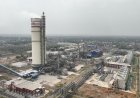
The initiative by the US Department of Agriculture (USDA) comes in response to disruptions in fertilizer trade following the Iran conflict and mounting pressure on farmers from rising production costs. The program aims to support the construction of new fertilizer plants, expand existing production facilities and reduce US dependence on imports.
US Agriculture Secretary Brooke Rollins, while announcing the initiative, said financial support would be provided for the construction of new fertilizer plants and expansion of existing facilities under the Fertilizer Investment and Expansion for Long-Term Domestic Supply (FIELDS) Program.
The government will prioritize projects that can begin production relatively quickly or have already secured private-sector investment.
Under the program, domestic production of nitrogen, phosphate, potash, sulfur and other critical plant nutrients will be supported. Individual projects could receive financial assistance ranging from $15 million to $150 million.
Hormuz Crisis Raises Supply Concerns
The US decision comes as the conflict in West Asia has severely disrupted global fertilizer supply chains. With shipping through the Strait of Hormuz nearly halted, more than 30% of global fertilizer exports have been affected.
US fertilizer imports from ports in the affected West Asian region fell to zero in May, highlighting the growing impact of the supply disruption.
The crisis has added to cost pressures on US farmers, who are already struggling with weak grain prices and rising costs of fuel, seeds and other agricultural inputs.
Meanwhile, the US has also temporarily removed tariffs on certain phosphate fertilizer imports from Morocco. The Federal Trade Commission (FTC) is investigating the sharp increase in fertilizer prices.
India Faces Challenges
The global supply crisis is also important for India, one of the world's largest consumers and importers of fertilizers. The situation has renewed questions about how quickly the country can expand domestic production capacity, diversify raw material and fertilizer supply sources, secure long-term import agreements and promote more balanced nutrient use.
Before the West Asia crisis, India sourced around 20% to 30% of its urea imports and nearly 30% of its DAP imports from the Gulf region. The country has also depended on West Asia for nearly half of its LNG requirements. Natural gas is a key feedstock for the production of nitrogen-based fertilizers.
Following the escalation of supply disruptions in West Asia, India has sought to increase fertilizer supplies from countries including Russia, Morocco, Australia, Indonesia, Malaysia, Jordan, Canada, Algeria, Egypt and Togo. Indian companies have also entered into long-term supply agreements to strengthen fertilizer security.
The severity of the situation was underlined in April 2026, when India contracted a record 2.5 million tonnes of urea through a single import tender. The volume was equivalent to nearly one-fourth of the approximately 10 million tonnes of urea imported by the country in 2025.
The price of the contracted urea was nearly double the level paid just two months earlier, reflecting the impact of the West Asia crisis on global fertilizer prices and availability.
India to Expand Domestic Capacity
India is also working to increase domestic fertilizer production. Two new fertilizer plants are expected to begin production soon, potentially adding around 2.54 million tonnes of annual urea production capacity.
The fertilizer supply shock has highlighted the strategic importance of domestic production capacity for major agricultural economies. While the US has responded with a $500 million investment program, India is also seeking to strengthen fertilizer security through new production capacity, diversified sourcing and long-term supply arrangements.
Meanwhile, government of India has maintained that the fertilizer supply situation in the country remains under control. According to the Ministry of Chemicals and Fertilizers, despite disruptions in West Asia, 15 vessels carrying urea, DAP and sulfur to India have crossed the Strait of Hormuz. Domestic fertilizer production has also exceeded the target.