Sustainable Palm Oil Production Key to India's Long-Term Edible Oil Security
India must improve domestic palm oil productivity rather than expand cultivation indiscriminately to reduce its heavy dependence on imports, the article argues. It advocates climate-smart farming, higher yields, sustainable production standards, and responsible imports through the IPOS framework to strengthen edible oil security while safeguarding natural resources and meeting future demand.
 Join the RuralVoice whatsapp group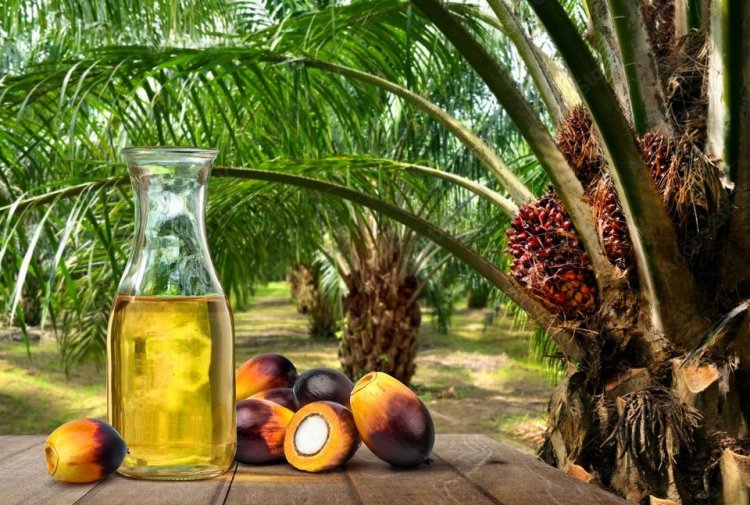
Sumit Roy & Nishat Shirin Barbhuiya
Agriculture serves as the economic backbone for India’s rural population. It feeds a country of 1.4 billion people. It is key to India’s food security. But when it comes to edible oil, India faces a widening gap between growing consumer demand and production capacity. Driven by rising disposable income, and increased consumption of fat-rich processed foods, the average Indian’s annual edible oil intake has gone up from 8.2 kg in 2001 to 23.5 kg now.
This, in turn, accounts for a deep and critical dependence on foreign imports to fulfil the country’s growing appetite for edible oils, leaving its domestic food security susceptible to the volatile fluctuations of international pricing markets and putting pressure on the state exchequer.
Of all the edible oils, palm oil, because of its affordability, has emerged as the dominant oil in India’s import basket. As consumption rises and domestic oilseed productivity stays below the global average, the country’s dependence on imported palm oil has become both an economic necessity and a strategic vulnerability. India is the world’s largest importer of palm oil. It sources 8-10 million metric tonnes (mmt) of palm oil every year, which makes up for 21 percent of the global palm oil imports. This is nearly twice the European Union’s palm oil imports.
To check this dependence, the government has instituted the National Mission on Edible Oils – Oil Palm (NMEO-OP) to aggressively scale up domestic production. But the real question is not if India should produce more palm oil, but if it can do so sustainably while maintaining ecological integrity. To reconcile food security with climate commitments, India’s national strategy must focus on enhancing vertical productivity, and not simply horizontal land expansion.
Productivity Problem: Fix the Palm Oil Yield
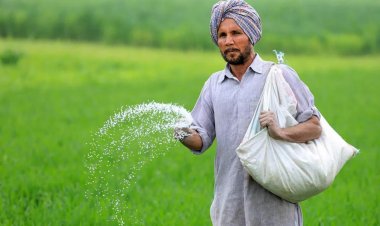
Currently, oil palm is grown in less than half a million hectares in India (which is 0.2 percent of gross cropped area). While it is the world’s most efficient oilseed crop, India’s domestic oil palm yields remain severely low compared to the global benchmark.
|
Country |
Palm Oil Yield (tonnes/hectare) |
Oil extraction Rate (OER) |
|
India |
2.4 |
17.6% |
|
Indonesia |
3.4 |
19 – 20% |
|
Malaysia |
3.4 |
19 – 20% |
|
Global Highest |
5.0 |
19 – 20% |
Source: Agriculture Statistics - At a Glance | Official website of Directorate of Economics and Statistics, Department of Agriculture and Farmers Welfare, Ministry of Agriculture and Farmers Welfare, Government of India; ReportLinker: Global Palm Oil Yield by Country; OER: Charting the Path of Palm Oil Self-Sufficiency in India, September 2025, Solidaridad Asia.
The productivity gap indicates that every tonne lost to lower yields directly widens India’s import dependency. This gap is compounded by a lower domestic Oil Extraction Rate (OER), which is the ratio of crude palm oil extracted from processed Fresh Fruit Bunches (FFBs). India’s OER hovers at 17.6 percent, whereas producer countries like Indonesia and Malaysia maintain an efficient 19-20 percent. Closing this efficiency gap through better planting stock, farmer training, and mill modernisation could significantly improve domestic output without expanding cultivated area. This is vital to bridging the import-domestic production gap in oil palm.
Future Demand and the Limits of Self-Sufficiency
According to a Solidaridad-Solvent Extractors Association-Asian Palm Oil Alliance report, India’s palm oil demand is expected to reach 21.6 mmt by 2047. Even with the government’s ambitious domestic expansion plans, India cannot eliminate palm oil imports in the near future. If India achieves the milestone of producing 50 percent of its palm oil requirement, domestically, by 2047, it will still need to import the remaining amount to feed its people. Self-sufficiency is also restricted by environmental and geographical constraints. Land is limited, and oil palm requires a specific tropical climate and assured irrigation to thrive. Therefore, ensuring edible oil security requires India to strike a deliberate balance between optimised domestic production and sustainably managed imports.
This shifts the focus from the simplistic ‘produce at home versus import’ debate to a more strategic question: how can India secure its long-term edible oil needs without externalising environmental and social costs? If palm oil remains central to India’s edible oil basket—whether domestically grown or internationally sourced—the urgent challenge is ensuring that its production and procurement align with sustainability principles.
The Environmental Case for Palm Oil
The sustainability lens used for palm oil often overlooks a critical reality: replacing palm oil with alternative vegetable oils may shift or even intensify global environmental pressures.
- Land efficiency: Because of its high productivity, the land footprint of oil palm is exceptionally low. To produce an equivalent volume of oil from alternative seeds like soybean, a country would require more than two to five times the amount of land. Eliminating palm oil would simply shift intense deforestation and land-clearing pressures onto lower-yielding edible oil crops elsewhere globally.
- Water use efficiency: Globally, the water footprint of oil palm fruit stands at 719 cubic meters per tonne. This is less than half the water footprint of soybean (1,601m3/ton) and significantly lower than traditional domestic choices like mustard seeds, which demand an intensive 3,658 m3/tonne. Since the oil content is higher in fresh fruit bunches (oil palm is extracted from FFBs), the water footprint per unit of edible oil is even less in palm oil than the oil derived from soybean and mustard seeds, making it the most water-efficient edible oil crop.
- Lower lifecycle GHG emissions: When cultivated outside carbon-rich peatlands—as is strictly the case in India’s domestic plantations—oil palm exhibits lower lifecycle greenhouse gas emissions per unit of oil than rapeseed, sunflower, or soybean. By executing methane capture technologies to tackle Palm Oil Mill Effluents (POME), direct emissions in palm oil can be further reduced.
The climate case for palm oil, therefore, depends less on the crop itself and more on how and where it is cultivated.
The Architecture for Sustainable Palm Oil in India
To sustainably manage domestic production, India has its homegrown solution: the Indian Palm Oil Sustainability (IPOS) Framework. IPOS is India’s first nationally contextualised, sustainability framework for palm oil, built around legality, traceability, environmental safeguards, and smallholder inclusion. Developed by the Solvent Extractors’ Association (SEA) of India with technical support from Solidaridad and the Indian Institute for Oil Palm Research (IIOPR), IPOS translates global environmental principles into standard practices tailored to smallholders with average land holdings of 2 hectares. By formalising and embedding the IPOS framework directly within national missions like the NMEO-OP, the government can mandate biodiversity conservation, soil health improvement and regenerative farming at the outset. Concurrently, India must leverage its immense ‘buyer power’ on the global stage. Domestic sustainability alone will not be enough. As the world’s largest importer of palm oil, India also has the power to shape sustainability beyond its borders. By introducing minimum import standards that favour IPOS-aligned, globally-available certified palm oil (Malaysia Sustainable Palm Oil, Indonesia Sustainable Palm Oil and Roundtable on Sustainable Palm Oil), India can turn its import dependency into an environmental influence at scale, on the global stage.
Ensuring Edible Oil Security for India
India's path to edible oil security does not have to come with an environmental burden. By committing to a model of ‘sustainability-by-design’, where vertical productivity gains are prioritised, expansions are focussed on low-return agricultural lands, marginal paddy fields, and culturable wastelands, and homegrown IPOS framework is operationalised, India can meet its sustainable palm oil demands smartly. It is not only about how much land is brought under oil palm cultivation, but how India improves productivity, ensures standards implementation and secures sustainable imports.
(Sumit Roy is Assistant General Manager - Palm Oil Programme at Solidaridad Asia. Nishat Shirin Barbhuiya is a Post Graduate and an advocate for sustainable commodity value chains. She contributes to Solidaridad Asia’s Sustainable Palm Oil initiatives. All opinions expressed here are authors’ own)