
Why Many Small Food-Processing Units Stall Before Year Three?
Government model project reports for 40 agri and food-processing businesses reveal that fewer than half project profits from the first year. Inadequate working capital, outdated price assumptions, slow initial returns and the absence of assured buyers can undermine small units. Entrepreneurs should verify local prices, funding needs and market demand before investing.

 Join the RuralVoice whatsapp group
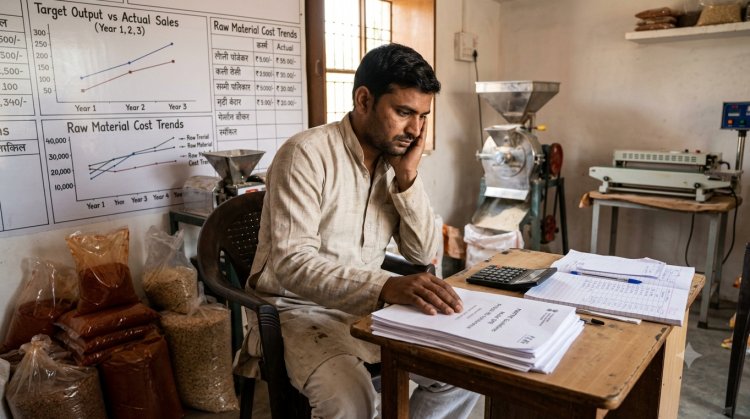
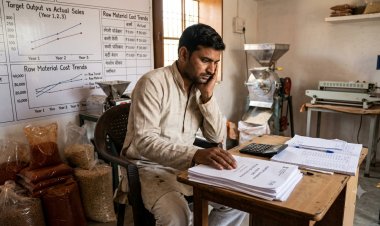
Ask a first-time rural entrepreneur what worries them about starting a small food-processing unit, and the answer is almost always the machine: which brand, what capacity, how much it costs. Yet when small units run into trouble in the first two or three years, the machine is rarely the reason. The trouble usually comes from things that were never written into the project file: the cash needed to run the unit, the price of raw material, and the question of who will actually buy the product.
At Utkrishi we have read government model project reports for 40 agri and food-processing businesses, from PMFME, KVIC, NABARD, NHB/MIDH and MANAGE, and turned each into a plain-language guide. The models are a useful starting point. But read closely, they also explain why so many small units struggle early.
What the models themselves say
Of the 40 models we checked, only 16 show a profit from the first year. Seven show a loss in year one and turn profitable later. Thirteen give no profit figure we could rely on, often because their price assumptions look out of date. And four still show a loss in year three at their own prices; onion dehydration and honey processing are among them. In other words, even on paper, fewer than half of these businesses make money from day one. This is not an argument against these schemes. It is an argument for reading the numbers before the brochure.
Problem one: A thin first year
Many viable businesses have a slow start that the entrepreneur does not plan for. An idli-dosa mix unit of 150 tonnes a year costs about ₹10.5 lakh and gets a PMFME subsidy of about ₹2.8 lakh. Its model shows a first-year profit of only about ₹29,000, rising to about ₹5.2 lakh by year three. The business works, but the first year leaves almost no room for a delayed payment or a bad batch.
Some models start in the red. A 2,000-litre-a-day milk chilling centre costs about ₹11.8 lakh, with 3% interest relief under AHIDF but no capital subsidy. Its model shows a loss of about ₹2.5 lakh in the first year before a profit of about ₹1.4 lakh in year three. A family that has borrowed against everything it owns cannot easily survive that first year.
Problem two: Working capital that nobody budgeted
Machinery is visible; working capital is not. In the PMFME model for a chilli powder unit of 400 kg a day, the total project cost is about ₹14.7 lakh. Of this, about ₹4.7 lakh, roughly 32%, is not machinery at all. It is the money tied up in buying chillies, packing material, wages, electricity and credit given to shops.
When a project file leaves this out, the unit is built but cannot run. The machine stands idle while the owner looks for money to buy raw material. Banks look at working capital separately, so it has to be in the DPR from the start, not added after the machinery is paid for.
Problem three: Prices that belong to another year
Model reports are written at a point in time, and prices move. For several products, including fried onion and fruit pulp, the selling prices in the models looked too high to us for today's market, so we did not rely on their profit figures. In one bakery model, the capacity is stated as annual sales (about ₹27.7 lakh) rather than as output, which makes the numbers hard to check.
An entrepreneur who copies a model without checking district prices can end up with a bank file that looks profitable and a business that is not. The fix is simple but rarely done: visit the local mandi, note today's price of raw material and finished product, and rebuild the numbers on that basis.
Problem four: No buyer before production
A potato or banana chips unit of 150 kg a day costs about ₹14.6 lakh and, in its model, earns about ₹3.8 lakh in the first year. That profit depends on two things outside the factory: the price of potatoes or bananas, and steady orders from shops. The same is true for millet flour, which has a short shelf life. A unit that produces before it has two or three committed buyers ends up selling at a discount or throwing stock away.
Know which scheme gives what
Much of the early stress also comes from misreading the schemes. PMFME gives a 35% credit-linked capital subsidy on food-processing units, up to ₹10 lakh. PMEGP gives 15% to 35% depending on category and location. The Agriculture Infrastructure Fund gives no capital subsidy at all; it offers 3% annual interest relief on loans up to ₹2 crore, with a credit guarantee.
In each case the subsidy is linked to a bank loan and usually arrives after the unit is running. The owner typically puts in about 10% of the project cost, the bank lends the rest, and the subsidy is adjusted against the loan later. Applicants who expect cash in hand before construction often stall halfway. It is also worth checking whether a scheme is open before applying: PMFME's current period ran until September 2026 and an extension has been proposed, so applicants should confirm on the PMFME portal.
Three checks before taking a loan
Price check. Rework the model's numbers with this month's district prices for raw material and finished product. If the profit disappears at local prices, pick another business or another scale.
Cash check. Make sure the DPR includes working capital, and keep enough cash to carry a slow first year. Count the months until the subsidy is actually adjusted.
Buyer check. Before ordering machinery, get two or three buyers, such as retailers, hotels, traders or an FPO, to agree in writing to take a first lot.
The honest part
Banks decide loans and subsidies; we only help people prepare. No adviser can promise a sanction. What an entrepreneur can control is the choice of business, the honesty of the numbers and the buyer lined up before production. Government models are a good place to start that work. They are not a substitute for it.
(Malvika Lal is co-founder of Utkrishi (Eldew Digital Pvt Ltd, Pune), an agritech startup incubated at Pusa Krishi (ICAR-IARI) under RKVY-RAFTAAR)