
Haryana Farmers Show Unity, Halt Cane Supplies to Mills Over Rs. 600 Price Demand
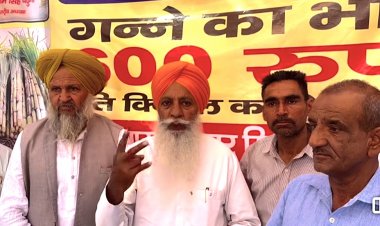
Haryana's sugarcane farmers have united to demand Rs. 600 per quintal, halting supplies to sugar mills and disrupting crushing at Yamunanagar's Saraswati Sugar Mill. The agitation, which has spread across several districts, reflects growing discontent over the meagre increase in cane prices and rising cultivation costs.

 Join the RuralVoice whatsapp group
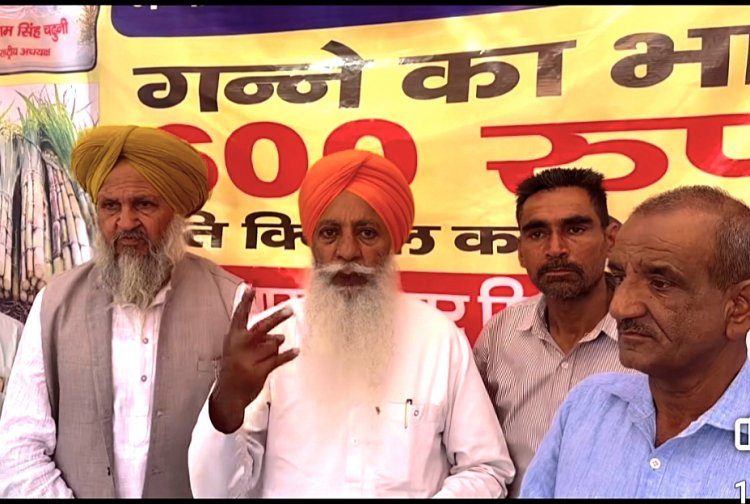
Sugarcane farmers in Haryana have adopted a different strategy in their ongoing agitation for higher sugarcane prices, announcing that they will not supply sugar mills until the state government raises the State Advised Price (SAP) to Rs. 600 per quintal. The agitation, which began in Yamunanagar, has spread to Kurukshetra, Karnal, Kaithal and other sugarcane-growing districts.
Unlike conventional protests limited to demonstrations and sit-ins, farmers have decided to refuse supplying sugarcane to mills until their demand is met. The strategy has already affected crushing operations. Despite the commencement of the crushing season on 17 November, farmers did not bring sugarcane to Saraswati Sugar Mill in Yamunanagar, leaving its crushing operations stalled.
Farmer leader Gurnam Singh Charuni has appealed to farmers not to harvest sugarcane until the government announces a higher price. He said the issue concerns sugarcane prices for two consecutive years. Farmers have started a sit-in protest at the Narayangarh Sugar Mill in Ambala district, where crushing is scheduled to begin on 23 November. Similar protests will be organised at other mills.
Sandeep Topra, Youth District President of the Bharatiya Kisan Union (Charuni) in Yamunanagar, told Rural Voice that despite the commencement of operations at Saraswati Sugar Mill on Tuesday, farmers did not bring sugarcane to the mill due to the ongoing agitation. As a result, crushing could not begin and the machinery remained idle. He added that farmers will not supply sugarcane to mills until the government increases the price.
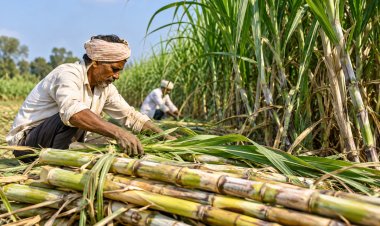
Farmers argue that sugarcane prices have increased only marginally over the past several years, while cultivation costs have continued to rise. The cost of sugarcane harvesting labour alone has reached Rs. 70 per quintal.
The Haryana government has increased the SAP by Rs. 15 per quintal this year, fixing it at Rs. 430 per quintal. Chief Minister Nayab Singh Saini has also announced that the price will be increased to Rs. 450 per quintal next year.
However, farmer organisations have dismissed these increases as inadequate and are demanding Rs. 600 per quintal. Since sugarcane is the most important raw material for sugar mills, the farmers' collective decision to withhold supplies could disrupt the crushing season.
Protest Spreads Across Several Districts
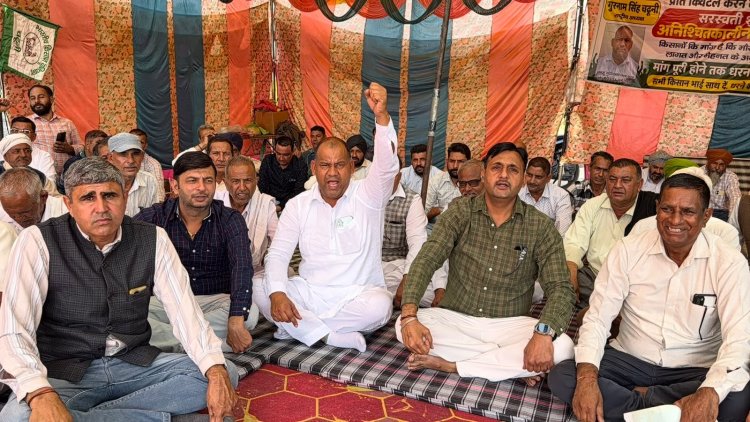
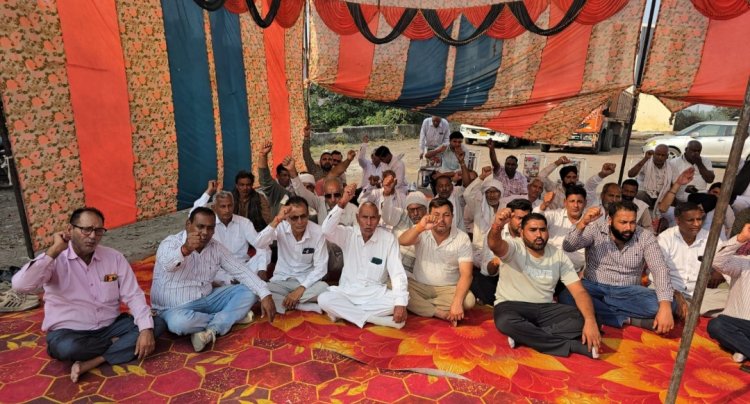
The sugarcane yard of Saraswati Sugar Mill in Yamunanagar has emerged as the main centre of the agitation. At a farmers' meeting held there on 13 November, it was decided that sugarcane supplies to mills would remain suspended until the demand for a higher price was met. The Bharatiya Kisan Union (Charuni) launched an indefinite sit-in at the mill's sugarcane yard on 15 November.
The agitation has subsequently spread from Yamunanagar to other sugarcane-producing districts, including Kurukshetra, Kaithal and Karnal. Farmers are staging protests at five sugar mills. Besides the BKU (Chaduni), the Bharatiya Kisan Union (Tikait), the Ganna kisan Sangharsh Samiti and organisations associated with the Samyukt Kisan Morcha have joined the movement.
Farmer organisations have also announced plans to gherao Chief Minister Nayab Singh Saini's residence in Kurukshetra on 2 December. The BKU (Tikait) has also announced a sit-in outside the residence of state Agriculture Minister Shyam Singh Rana.
Sugar Prices Rise, but Farmers See Little Benefit
The rising retail prices of sugar have further fuelled farmers' anger. Over the past year, retail sugar prices have increased from around Rs. 45 to as much as Rs. 65 per kg, whereas the sugarcane price has risen by only 15 paise per kg.
Ratan Mann, state president of the Bharatiya Kisan Union (Tikait), said an increase of just 15 paise per kg in the sugarcane price is cruel joke. He argued that farmers were not receiving a fair share of the benefits arising from higher sugar prices or the production of alcohol, ethanol and other products from sugarcane.
According to him, continuing sugarcane cultivation at the existing price is becoming increasingly difficult for farmers.
Rs. 600 Demand Justified: Bhupinder Singh Hooda
The farmers' demand for a higher sugarcane price has also received support from opposition parties. Former Haryana Chief Minister and Leader of the Opposition Bhupinder Singh Hooda has termed the demand for Rs. 600 per quintal fully justified.
Hooda said that between 2004 and 2014, the Congress government in Haryana increased the sugarcane price from Rs. 117 to Rs. 310 per quintal, an average annual increase of around 17%. In contrast, during the BJP's 12 years in power, the price has increased from Rs. 310 to Rs. 430 per quintal, an average annual increase of approximately 3.25%, he claimed.
Small Sugarcane Base, but a Major Farmers' Movement
Haryana accounts for less than 2% of India's total sugarcane and sugar production. The state has 14 sugar mills, including 10 in the cooperative sector and three in the private sector. Despite not being among the country's leading sugarcane-producing states, Haryana has emerged as a major centre of agitation over sugarcane prices this season.
Interestingly, neighbouring Uttar Pradesh has not yet announced its sugarcane price for the current season. Even in western Uttar Pradesh, traditionally a stronghold of sugarcane politics, farmers have been demanding Rs. 450-500 per quintal, but the issue has not gained as much traction as it has in Haryana.
Sugarcane Area and Crushing Volumes Decline
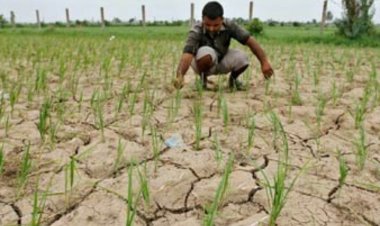
Sugarcane cultivation has been declining in Haryana in recent years. The area under the crop fell from approximately 1.08 lakh hectares in 2022-23 to around 72,000 hectares in 2024-25.
Sugarcane crushing by the state's mills has also declined steadily. Around 77 lakh tonnes of sugarcane were crushed in 2022-23, compared with approximately 48 lakh tonnes in 2025-26.
Low returns relative to cultivation costs, inadequate increases in sugarcane prices and farmers gradually moving away from the crop are considered the major reasons behind the decline in acreage.
Insufficient cane supplies often force sugar mills to close their crushing operations ahead of schedule, affecting their overall operational efficiency.
Farmers' Unity Gains Significance
The current agitation in Haryana is also significant because several farmer organisations are coming together around a common demand. The participation of the BKU (Charuni), BKU (Tikait) and organisations associated with the Samyukt Kisan Morcha has given the movement a wider base.
Following the historic farmers' agitation against the three farm laws in 2020-21, divisions among farmer organisations had gradually increased, with several unions and fronts emerging and subsequently splitting. After several years, the sugarcane price issue appears to be bringing different organisations together again in an attempt to build collective pressure on the government.
Unlike many other agricultural commodities, sugarcane farmers have some flexibility in delaying harvesting and collectively negotiating better prices. Farmers are often compelled to sell other crops immediately after harvesting, limiting their bargaining power. Sugarcane, however, can remain in the field for some time, and the harvested crop does not deteriorate as quickly as many other agricultural commodities. This makes it possible for farmers to temporarily withhold supplies.
Moreover, the jaggery and khandsari industries also provide alternative demand for sugarcane. However, sustaining a prolonged supply blockade could become difficult for farmers.
The next major development is expected on 2 December, when farmer organisations plan to gherao the Chief Minister's residence in Kurukshetra. The government's response to the farmers' demand for Rs. 600 per quintal will determine how the agitation unfolds and whether sugarcane crushing operations across Haryana face further disruption.