
Argentina Overtakes Indonesia as India’s Largest Vegetable Oil Supplier; Malaysia Ranks Second
Higher biodiesel demand in Indonesia, competitive Argentine soybean oil exports and increased shipments from Malaysia have reshaped India's edible oil import basket.

 Join the RuralVoice whatsapp group
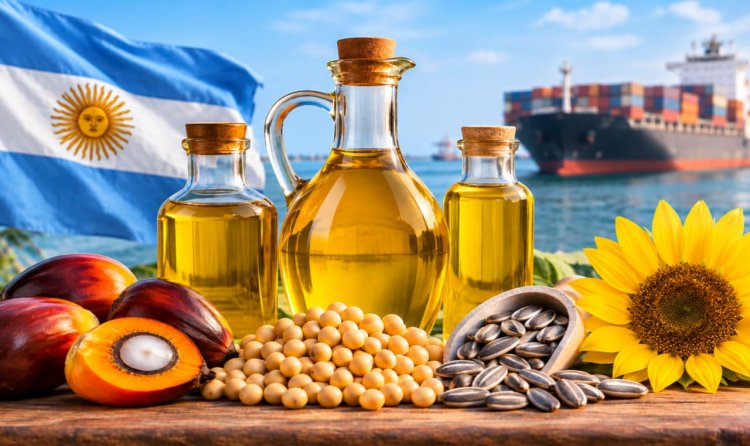
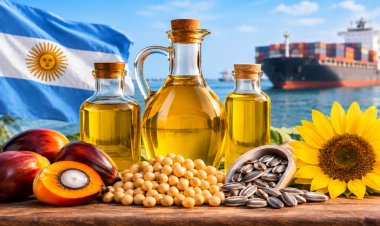
Argentina has emerged as India's largest vegetable oil supplier, signalling a major shift in the country's edible oil import market. Indonesia, which dominated India's vegetable oil imports for decades, has slipped to third place, while Malaysia has moved up to second in marketing year (MY) 2025–26 (October–September).
The shift reflects changing global trade flows, driven in part by Indonesia's rising domestic palm oil consumption to meet its expanding biodiesel blending requirements, alongside increased shipments from Argentina and Malaysia.
According to the United States Department of Agriculture's (USDA) Foreign Agricultural Service (FAS), in its November 2026 Oilseeds: World Markets and Trade report, Argentina and Malaysia have overtaken Indonesia as India's leading vegetable oil suppliers.
Argentina's Soybean Oil Exports Drive the Shift
Argentina's rise has been driven primarily by strong soybean oil exports, supported by competitive prices and cuts in export taxes. The USDA said lower export taxes have enhanced the competitiveness of Argentine soybean oil in the Indian market.
India has also stepped up its purchases of sunflower oil from Argentina. Since July 2026, Argentina has emerged as India's leading sunflower oil supplier, offsetting reduced shipments from Ukraine and Russia. Competitive prices have helped India double its sunflower oil purchases from Argentina compared with the previous marketing year.
Import Data Confirms Argentina's Lead
Data from the Solvent Extractors' Association of India (SEA) underline the scale of this shift. Between November 2025 and September 2026, India imported 3.44 million tonnes of edible oils from Argentina, making it the country's largest supplier.
Malaysia ranked second, supplying 2.98 million tonnes, while Indonesia slipped to third place with 2.91 million tonnes.
Argentina accounted for around 22.7% of India's total edible oil imports during the 11-month period. Malaysia contributed approximately 19.7%, while Indonesia's share stood at around 19.2%.
Indonesia's Biodiesel Policy Reshapes Trade Flows
Indonesia's declining share in India's import market is closely linked to its domestic biofuel policy.
The country has progressively raised its biodiesel blending requirements, diverting a larger share of domestically produced palm oil towards the domestic energy market. This has reduced exportable supplies, affecting shipments to major importing countries, including India.
According to the USDA, Indonesia's domestic palm oil consumption is forecast to rise to 23.38 million tonnes in 2026–27, compared with 22.83 million tonnes in 2025–26 and 19.13 million tonnes in 2022–23.
In contrast, Indonesia's palm oil exports are projected to fall to 21.6 million tonnes in 2026–27 from an estimated 25.03 million tonnes in 2025–26.
Malaysia Strengthens Its Position in India's Palm Oil Market
Malaysia has gained from Indonesia's declining dominance, increasing its palm oil shipments to India during 2025–26.
The USDA attributed the increase to stronger production compared with the previous year and the competitive pricing of Malaysian palm oil against Indonesian supplies.
Palm oil remains India's largest imported vegetable oil. Consequently, changes in the availability and prices of supplies from Indonesia and Malaysia have a significant bearing on India's overall import basket.
Thailand has also increased its palm oil shipments to India, pointing to a gradual diversification of sourcing within the global palm oil market.
India's Vegetable Oil Imports Expected to Reach Record High
India is the world's largest vegetable oil importer and relies heavily on international markets to meet its domestic demand.
The USDA has forecast India's vegetable oil imports at 17.39 million tonnes in 2026–27, up from 16.85 million tonnes in 2025–26, potentially setting a new record.
Palm oil imports are projected to increase to 8.4 million tonnes from 8.1 million tonnes. In contrast, soybean oil imports are expected to decline to 5 million tonnes from 5.6 million tonnes, owing to lower exportable supplies in the global market.
Sunflower oil imports are forecast to rise to 3.85 million tonnes from 3 million tonnes, supported by improved global availability of sunflower seed supplies.
Rising import dependence leaves India exposed to international price fluctuations, export restrictions, biofuel policies and currency movements.