
ICRISAT-Led Study Maps Peanut Genetic Diversity, Identifies Key Genes for Climate Resilience
ICRISAT and international research partners have analysed 2,320 peanut accessions from 87 countries, uncovering previously unknown genetic variations. Published in Nature Genetics, the study identifies genes linked to flowering time and dwarf plant architecture, opening new possibilities for climate-resilient peanut breeding.

 Join the RuralVoice whatsapp group
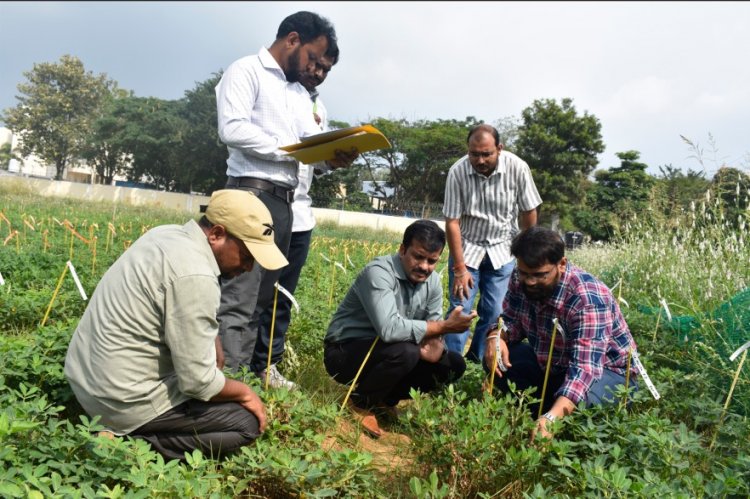
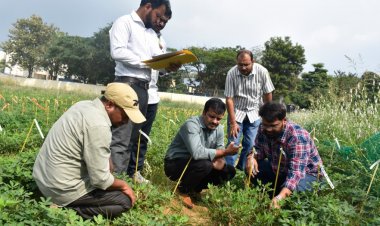
The International Crops Research Institute for the Semi-Arid Tropics (ICRISAT), in collaboration with agricultural research institutions in China and Australia, has conducted the world's most comprehensive genomic study of cultivated peanut. The research analysed 2,320 accessions from 87 countries, uncovering previously unexplored genetic diversity and identifying genes that could help accelerate the development of high-yielding and climate-resilient varieties.
Published in the international scientific journal Nature Genetics, the study, titled Pan-genome-based resequencing of 2,320 accessions reveals structural variations and accelerates breeding advances in cultivated peanut, provides a major genomic resource for global peanut research and crop improvement.
The research was co-led by Dr Manish K. Pandey, Principal Scientist at ICRISAT's Genebank and Trait Discovery programme, Centre for Pre-breeding Research. The collaborating institutions included the Shandong Academy of Agricultural Sciences and Henan Academy of Agricultural Sciences in China, and Murdoch University's State Agricultural Biotechnology Centre in Australia.
The 2,320 peanut accessions analysed in the study represent 88.03% of ICRISAT's core collection and 59.21% of the United States Department of Agriculture's peanut collection. The research drew upon genetic material conserved in ICRISAT's Genebank, highlighting the importance of germplasm conservation in expanding the genetic resources available for crop breeding.
A key finding was the identification of previously undetected structural variations and homoeologous exchanges across the peanut genome. Researchers also identified genes associated with important agricultural traits, including AhTFL1, which is linked to flowering-time regulation, and Ah12g032500, identified as a dwarfing gene in cultivated peanut.
These findings could have practical implications for developing varieties suited to changing climatic conditions and more efficient cultivation systems. Dwarf plant architecture, for instance, can facilitate mechanised harvesting and allow higher planting densities. The genomic resource could also support the identification of desirable genetic variations associated with seed size and pod number.
ICRISAT Director General Dr Himanshu Pathak said the publication marked another milestone in the institute's efforts to use genomics research and Genebank resources to develop improved crops for smallholder farmers in dryland regions.
Dr Raman Babu, Global Research Program Director, Accelerated Crop Improvement at ICRISAT, said identifying genes linked to flowering time and dwarfing would provide valuable resources for breeding climate-resilient peanut varieties.
Dr Pandey noted that peanut breeding had faced challenges because of its narrow genetic base. He said the newly developed graph-based pan-genome would serve as a public resource to accelerate the development of high-yielding, nutritionally superior and climate-resilient varieties.
The study underlines the potential of combining genetic conservation with advanced genomic research to broaden breeding opportunities and develop peanut varieties better suited to diverse agricultural environments.