Several key issues emerged at a national consultation on the country's sugarcane economy held in New Delhi on Tuesday. Farmers raised the issue of crop pests and declining productivity. Regarding mechanization in agriculture, farmers argued that machinery should be tailored to smallholder farmers. Experts participating in the consultation offered several solutions, including some alternatives to sugarcane variety 0238. The seminar aimed to develop a proposal based on farmer input and expert suggestions, leading to the formulation of a robust national sugarcane policy.
The consultation was divided into four sessions. Shivraj Singh Chouhan, Minister of Agriculture, Farmers Welfare, and Rural Development, addressed the first session. Dr. M.L. Jat, Secretary, DARE and Director General, ICAR, offered some suggestions to farmers. Experts also offered their opinions. The second technical session focused on "Variety Development and Sustainable Intensification/Diversification," the third on "Natural Resource Management, Mechanization, Micro-Irrigation, AI, and Future Technologies," and the fourth and final session on "Sugarcane Policy and Pricing."
Dr. M.L. Jat, Secretary, DARE and Director General, ICAR and other dignitaries did the lamplighting and started the seminar.
The event was organized by Rural Voice, a media platform dedicated to agriculture and rural areas, and the National Federation of Cooperative Sugar Factories (NFCSF) in collaboration with the Indian Council of Agricultural Research (ICAR).
Moderating the event, Rural Voice Editor-in-Chief Harvir Singh said, "Sugarcane is a huge economy in itself. Many concerns have been raised recently. Sugarcane acreage and yields have declined. Several sugarcane varieties are now causing losses to farmers. This national consultation has been organized to find a solution to this problem."
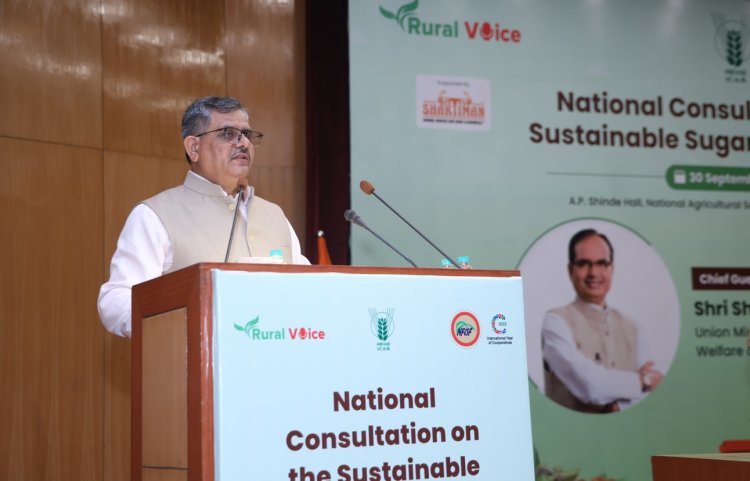
Harvir Singh, Editor-in-Chief Harvir Singh moderating the event.
He said that sugarcane is no longer just a sugar crop. It is also important for green fuel (ethanol), green energy (electricity and CBD), and byproducts such as distillery ash potash (PDM) and fermented organic manure (FOM). Molasses, previously used to produce country liquor and potable alcohol, is now a key raw material for ethanol and several chemical-based products.
The farmers spoke first, set the tone
Anurag Shukla, a farmer from Udharanpur village in Hardoi district, Uttar Pradesh, said that the 0238 sugarcane variety has definitely been beneficial, and that more such varieties should be developed. Like Maharashtra, grants should be provided for mechanization, with the money directly deposited into the accounts of sharecroppers. Avtar Singh, a farmer from Punjab, pointed out the need to reduce seed and other production costs. He also said that no good variety has been found after the 0238 variety. More such varieties should be developed. Vinod Saini, a farmer from Meerut, Uttar Pradesh, who cultivates sugarcane using the trench method, spoke about the importance of intercropping. Saini intercrops peanuts with sugarcane. He reported that this has increased sugarcane production by 10-12 percent and reduces the likelihood of pest infestation on sugarcane.
Umesh Kumar from Bhainswal village in Shamli district, Uttar Pradesh, said that no variety after 0238 has been able to increase production. Due to inflation, farmers are becoming disillusioned with sugarcane. Consequently, acreage has also decreased. Only lower costs, less labor, and higher production will benefit farmers. He said that fertilizer prices have more than doubled in the last 10 years, but sugarcane prices haven't increased in the same way. Sugarcane farmers' income has fallen below even the MNREGA support. He urged greater mechanization of farming and a focus on small harvesters.
First Session: Experts' suggestion on sugarcane varieties
Mechanization Needed for Sugarcane Sowing and Harvesting: Ketan Patel
Ketan Patel, Vice President of the National Federation of Cooperative Sugar Factories Limited, said that sugarcane is like a divine tree for farmers. Besides sugar, many other by-products are produced.
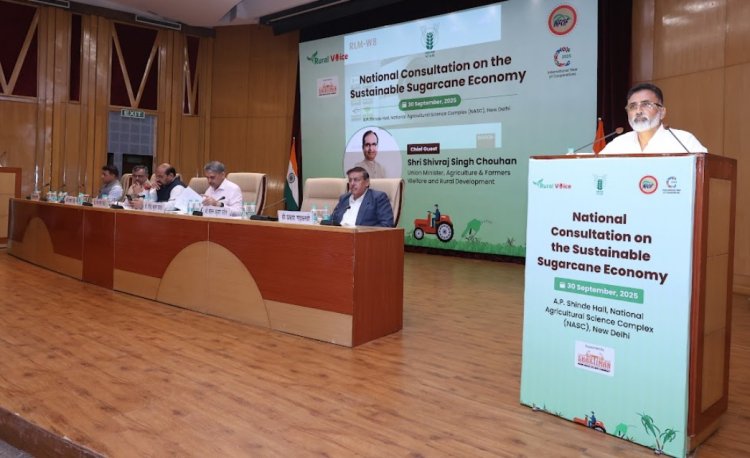
He said that in Gujarat, sharecroppers are registered and paid for sugarcane. This should be implemented in other states, including Uttar Pradesh. He added that mechanization is needed for sugarcane sowing and harvesting. However, in India, farmlands are small, making it difficult to operate small machines. If farmers with neighboring farms cultivate together, mechanization will be easier.
Establish a National Sugarcane Development Board: Deepak Ballani
Indian Sugar and Bio-Energy Manufacturers Association (ISMA) Director General Deepak Ballani said that to increase yields, new varieties need to be made available to farmers as quickly as possible. Currently, it takes 10-12 years, but this needs to be reduced to 6-7 years. Along with developing disease-resistant varieties, it's important to ensure that seeds reach farmers quickly. This requires developing tissue culture facilities. Farmers in Uttar Pradesh should increase drip irrigation. AI is being used in some areas of the state, which is expected to increase yields by 30-40 percent. He said that FRP needs to be increased, but at the same time, sugar prices should be allowed to rise. SBI Coimbatore has started work on gene editing. This should be expanded. Small harvesters should be expanded. He also suggested the establishment of a National Sugarcane Development Board.
Second Session: Varietal Development and Sustainable Intensification/Diversification
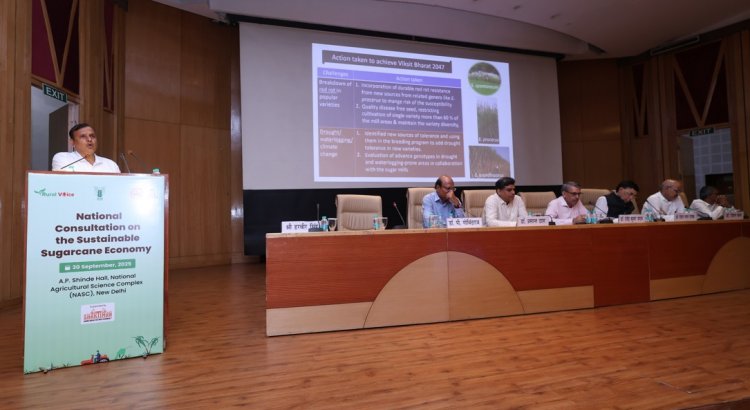
Variety 238 Promotes Monocropping: Dr. Devendra Kumar Yadava
Dr. Devendra Kumar Yadava, Deputy Director General of Crop Science at ICAR, said that sugarcane variety 238 was initially well-received by farmers, but it encouraged monocropping. This isn't to say that there aren't alternatives to this variety. Many varieties have emerged, but it takes time for new varieties to emerge. He explained that each variety undergoes three-year testing, during which disease and pest problems are also monitored. Yield gap studies are also necessary for most crops. Dr. Yadav said that the suggestions presented at this seminar will be considered and how they can be used to address farmers' problems.
Dr. Yadava also addressed the previous session. He said that farmers complain that sugarcane prices are not rising in line with input costs. This issue will be raised with Union Agriculture Minister Shivraj Singh Chouhan. He said that those practicing inorganic farming receive the benefit of various subsidies. Organic farmers do not utilize these subsidies. It should be addressed to ensure that farmers benefit from these subsidies. Mechanization is an important component of farming, but how can mechanization be successful on small farms?
Mechanization will reduce farmers' costs: Shakti Singh
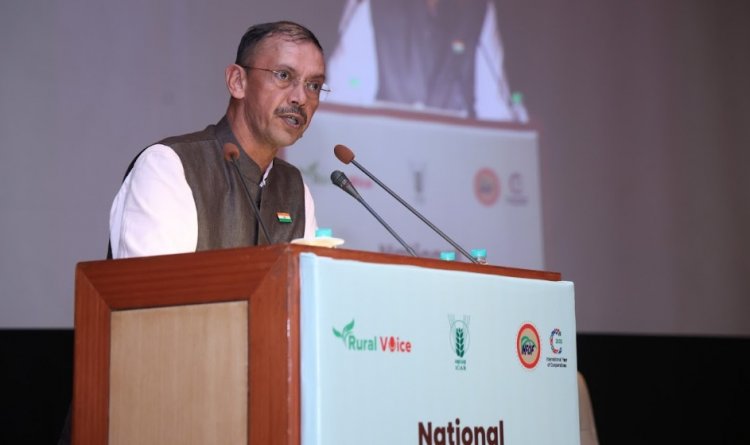
Haryana Sugar MD Shakti Singh said that varieties with higher sugar content are more prone to diseases. Those with lower sugar content will be less profitable for farmers. He stressed the need to find ways to reduce sugarcane farmers' costs and ensure higher prices. He said that 15 percent of the sugarcane crop's cost is spent on harvesting and peeling. Therefore, ICAR should also focus on agricultural engineering. Mechanical harvesting could be a solution, increasing farmers' income. Furthermore, emphasis should be placed on other mechanization initiatives.
Small harvester should be developed for the convenience of farmers: Roshan Lal Tamak
Roshan Lal Tamak, CEO and ED of DCM Shriram Limited and former President of UP-ISMA, questioned the discrepancy between the performance reported by scientists and field performance. He stated that this gap is currently too wide and should be reduced. ICAR should consider how to expedite and simplify the variety release process. A lot of work is being done on variety development in the country, but this work is being done in silos and in isolation. He emphasized the need for farmer and industry participation in prioritization. Referring to mechanization, he said that developing a small harvester is essential to facilitate farmers. There is a need to promote tissue culture for seed production. Climate change is rapidly changing the landscape. Therefore, tissue culture should be developed as a special project.
Third Session: Natural Resource Management, Mechanisation, AI, and Future Technologies
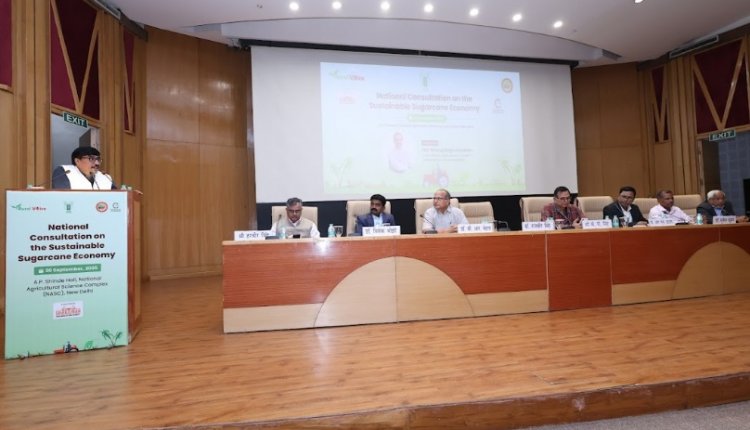
Dr. Rajbir Singh, DDG, Agricultural Extension, ICAR presided this session.
Despite the availability of machines, mechanization in sugarcane remains low: Dr. C.R. Mehta
Dr. C.R. Mehta, Director of the ICAR-Central Institute of Agricultural Engineering, Bhopal, described the progress made in sugarcane harvesting in the country. He described the machines used for seedbed preparation, planting, transplanting, and rotuning. He also provided information about tractor-operated machines. He stated that currently, harvesting machines are large, making them difficult for small-scale farmers to use. In some states, these machines have been introduced with the help of sugar mills. The whole cane harvester performs all operations simultaneously. It is currently undergoing licensing. Its cost is five to six lakh rupees. He also said that despite the availability of machines, mechanization in sugarcane is low.
Scope for Intercropping Pulses and Oilseeds with Sugarcane: Dr. Sunil Kumar
Dr. Sunil Kumar, Director of the ICAR-Indian Institute of Agricultural Systems Research (ICAR-IIFSR), Modipuram, Meerut, explained the importance of intercropping in sugarcane. He stated that intercropping of oilseeds and pulses will also reduce their imports into the country. He noted that intercropping is particularly low in western Uttar Pradesh.
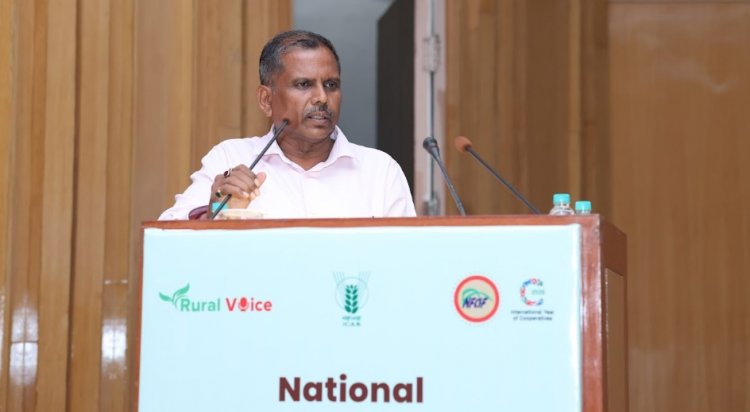
He stated that growing just one crop presents problems such as excessive water consumption, pest and disease management, small land holdings, declining soil health, and commercialization of by-products. In addition to the CO-0238 variety of sugarcane, CO-0118 and 15023 are also facing increasing disease and pest infestations. Costs are also rising.
He stated that intercropping involves cultivating mung beans, black gram, chickpeas, mustard, potatoes, onions, garlic, cabbage, cauliflower, kidney beans, and pumpkins in Uttar Pradesh. Intercropping facilitates nitrogen fixation, reduces water requirements, and allows for shorter-duration crops. He cited numerous examples to illustrate this.
Sugarcane production increased with the use of AI: Dr. Vivek Bhoite
Dr. Vivek Bhoite, scientist at KVK Baramati, Pune, explained the use of artificial intelligence in sugarcane. He explained that AI helps in the adoption of research. It has been used on sugarcane in Baramati.
He said that a hub-and-spoke model was adopted. Devices were installed in every farmer's field to provide information on soil moisture. Satellite images (mapping) are taken daily. Algorithms developed based on this information were used in the fields. Farmers associated with all cooperative and non-cooperative mills in Maharashtra are being informed about this. These devices have been installed at 5,000 farmers' farms. This has successfully achieved a production of over 100 tons per acre. However, farmers will need to understand the technology. AI is also being used in horticulture and floriculture. AI can predict disease in advance. He said that with the help of AI, the yield increased by 40 percent and the labor required was 20-40 percent less.
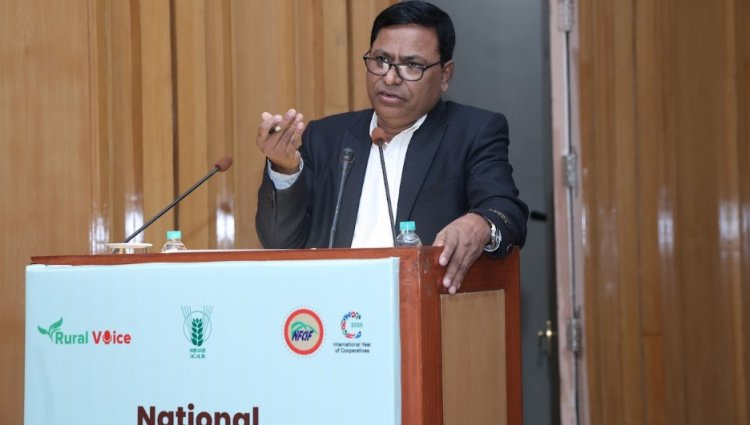
Dr. R.S. Dowle, NFCSF's Chief Advisor (Sugarcane), said that in the future, policy will rely on AI. All information will be available on a mobile app. Farmers can save water by using AI and drip irrigation. He added that input costs are rising, so there is a need for on-farm management.
Dr. K.P. Singh of the Agricultural Engineering Department of the Indian Council of Agricultural Research said that using AI can reduce input costs and reduce water usage by half. In India, irrigation uses the most drinking water, 700-800 billion cubic meters. Therefore, farmers should consider how to use AI along with mechanization. Dr. P. Soman, Senior Vice President and Chief Agronomist of Jain Global, also addressed the session.
Fourth Session: Policy and Pricing
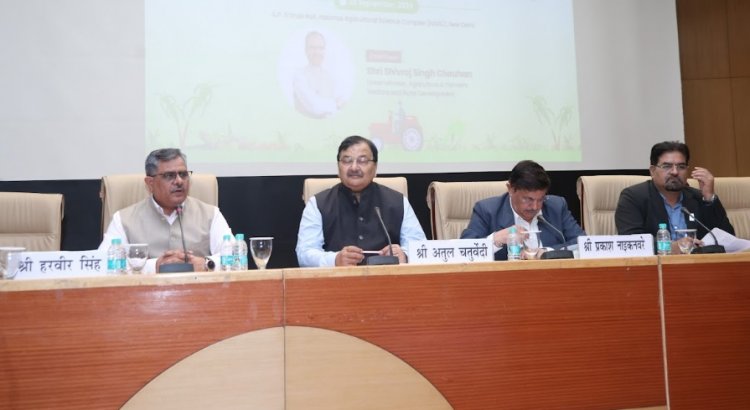
UP has the highest sugarcane payment arrears: Prakash Naiknavare
NFCSF Managing Director Prakash Naiknavare explained how sugarcane and other crop prices are determined. He explained that each subject has a parent ministry. For sugarcane, this is the Ministry of Agriculture and Food. Policy development begins with the parent ministry, which issues a note. It is then sent to a committee of secretaries, consisting of 12 secretaries. After their recommendations, the proposal goes to an inter-ministerial committee. It is then sent to a group of ministers.
Currently, the committee is headed by Cooperative Minister Amit Shah. Besides him, the committee includes the Agriculture Minister, Commerce Minister, Food Minister, and Finance Minister. Recently, Road Transport Minister Nitin Gadkari has also been included. He explained that representatives from the National Sugar Federation and ISMA are called before the parent ministry prepares the note. In response to a question, he said that this year, sugarcane arrears total approximately ₹6,500 crore, with Uttar Pradesh accounting for the highest amount.
Ethanol prices need to be raised: Atul Chaturvedi
Atul Chaturvedi, Executive Chairman of Shri Renuka Sugars Limited, said that if the farmer's health is good, the factory's health will be good, and if the factory's health is good, the farmer's situation will also be good. The year 2025 has been very bad for sugar. Sugar mills in Uttar Pradesh, which used to run for 200 days, closed after 150 days.
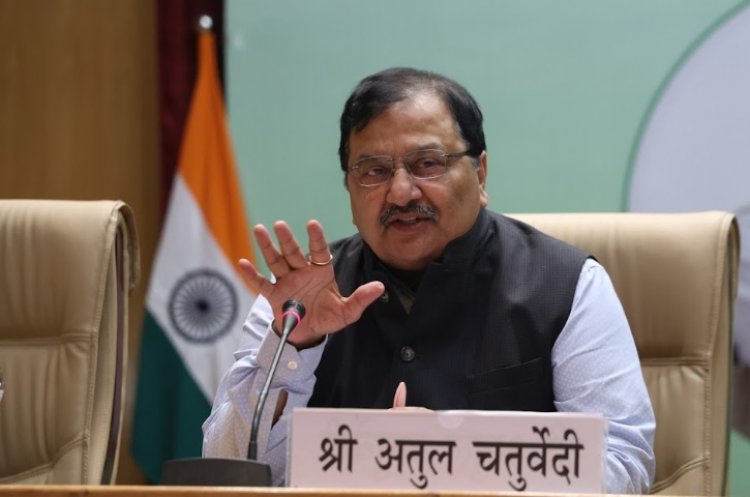
The situation is similar in other states. He said that the price of ethanol has not increased for three years, while sugarcane prices have increased. He raised another issue: oil companies are purchasing corn ethanol at a higher price, while paying 5-7 rupees less for sugarcane ethanol. NITI Aayog had stated that ethanol should come from 55 percent sugar and the rest from grains. Today, only 35% of ethanol comes from sugar, and the remaining 65% comes from grains. In response to a question, he said that the cost of producing sugar from sugarcane is 40-41 rupees per kg. Ethanol production is no longer profitable. Its price should be raised.
Policy should be formulated keeping ground conditions in mind: U.S. Tewatia
Indian Potash Limited (IPL) CGM U.S. Tewatia emphasized the importance of considering ground conditions in policy formulation and highlighted the problems faced in operating harvesters for sugarcane harvesting in Uttar Pradesh.
He urged farmers to test a machine on the farm to see if it is successful. Whether it's variety development or machine development, it won't be successful unless it works in the field. He questioned how many studies have been published in research journals, but how many have benefited farmers. This is because farmers haven't been involved in the research.