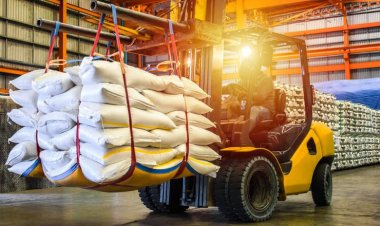

Iran Crisis Disrupts Rice Exports, Exporters Seek Urgent Government Relief Amid Freight Surge and Shipping Delays
India’s rice exporters are facing severe disruption due to the Iran crisis, with container shortages, vessel cancellations and soaring freight and insurance costs. The Indian Rice Exporters Federation has urged APEDA to provide urgent relief measures, including port charge waivers, banking support and recognition of the situation as a force-majeure event.

 Join the RuralVoice whatsapp group
The ongoing Iran crisis has begun to significantly disrupt India’s rice export trade, prompting exporters to seek urgent intervention from the government. The Indian Rice Exporters Federation (IREF) has submitted a formal representation to the Agricultural and Processed Food Products Export Development Authority (APEDA), highlighting severe disruptions in shipping, logistics and export operations due to instability across key maritime routes.
Exporters say the crisis has created multiple operational challenges, including shortages of shipping containers, vessel cancellations to the Middle East and a sharp rise in freight, fuel and insurance costs. These disruptions are affecting cargo movement, delivery schedules and exporters’ contracted realisations.
Shipping disruptions and rising costs
According to the federation, the crisis has severely impacted global shipping logistics. One of the most immediate problems is the non-availability of containers for Middle East destinations, which has also created spill-over shortages for shipments to other markets. Disrupted trade flows have affected the circulation and repositioning of empty containers, making it difficult for exporters to secure cargo space.
Freight costs have also risen sharply. International bulk freight rates have increased by around 15-20 percent, while container freight charges have surged even more steeply.
Indicative market estimates show that container freight rates for shipments from Asia to the Middle East have jumped from about USD 1,200-1,800 per FEU before the crisis to USD 3,500-4,500 per FEU currently, representing an increase of 80-150 percent.
In addition, the cost of marine fuel oil used by shipping vessels has risen significantly. Bunker fuel prices have increased from roughly USD 520 per metric tonne to around USD 700, pushing up shipping expenses further. Exporters say these sudden cost increases are making it difficult to maintain existing export contracts and profit margins.
Insurance and risk charges escalate
Shipping through the Gulf region has also become more expensive due to a steep increase in war-risk insurance and related surcharges. War-risk insurance premiums, which were earlier around 0.10-0.125 percent of a vessel’s value, have reportedly risen to around 1 percent, representing nearly a tenfold increase.
Similarly, insurance premiums for Gulf transit routes have increased from around 0.125–0.20 percent earlier to as high as 0.20–1 percent, depending on the risk assessment. Shipping companies have also introduced additional war-risk surcharges, with exporters reporting charges of around USD 1,500 per container in some cases.
These additional costs are placing a heavy financial burden on exporters, especially when shipments are delayed or rolled over due to vessel cancellations.
Basmati prices fall amid uncertainty
The disruption has also begun affecting the domestic rice market. According to exporters’ inputs, basmati rice prices in India have declined by around 7-10 percent since the crisis began, putting further pressure on exporters’ working capital and profitability.
Industry representatives say the combined impact of falling prices, higher freight costs and delayed shipments is creating significant cash-flow stress for exporters.
Cargo stuck at multiple stages
Exporters report that cargo is currently stuck at different stages of the export chain. Some shipments are stranded at loading ports due to vessel cancellations or rescheduling, resulting in rising storage, demurrage and ground-rent charges. Others are stuck in transit because of route disruptions or rerouting decisions taken by shipping companies. In some cases, cargo has reached destination ports but deliveries have been delayed due to port congestion and logistical uncertainty.
Transit times have also increased significantly. Shipments that previously took around 25-30 days via the Suez route are now taking 35-45 days in some cases, as vessels are forced to take longer routes to avoid high-risk areas.
Exporters seek urgent government support
In response to these challenges, the Indian Rice Exporters Federation has requested several urgent relief measures from the government and APEDA.
One key demand is the waiver of port-related charges, such as storage, demurrage and ground rent, for cargo delayed due to vessel cancellations or other crisis-related disruptions beyond exporters’ control.
Exporters have also asked authorities to facilitate the return or diversion of cargo in transit to alternative destinations where feasible. This would require coordination with customs authorities and the Reserve Bank of India to allow necessary documentation and payment adjustments.
Another major request is for the government to issue an official advisory recognising the current disruption as a force-majeure-type event. Exporters say such recognition would help them manage contractual obligations and prevent buyers from imposing penalties or demanding price reductions for delays beyond exporters’ control.
Demand for banking and working capital relief
The federation has also urged banks to provide temporary working-capital support to exporters affected by delayed shipments and payments. Exporters have suggested measures such as ad-hoc credit limits and temporary relaxations similar to the financial relief extended during the COVID-19 period.
Industry representatives say such support is crucial to maintain export operations and protect India’s export commitments during the ongoing crisis.
Exporters warn of wider trade impact
Exporters believe the situation could worsen if the crisis continues or escalates further. With freight costs rising, cargo movement uncertain and insurance risks increasing, India’s rice export supply chain may face prolonged disruption.
The federation has urged the government to take up the issue on priority with relevant ministries and shipping authorities to stabilise logistics operations and protect exporters from escalating losses.
Industry leaders warn that without timely intervention, the crisis could affect not only exporters’ financial stability but also India’s ability to meet its commitments in key international rice markets.