
Maharashtra New CBG Policy 2026 to Drive Circular Economy, Gains Support from IFGE
Indian Federation of Green Energy has welcomed Maharashtra’s CBG Policy 2026, calling it a comprehensive roadmap for waste-to-energy transition. The policy promotes biogas production, supports farmers, improves waste management, and offers financial incentives, aiming to boost investments, reduce emissions, and strengthen the bioenergy ecosystem in the state.
 Join the RuralVoice whatsapp group
The Indian Federation of Green Energy (IFGE) has welcomed the Government of Maharashtra’s Compressed Biogas (CBG) Policy 2026, calling it a progressive and well-structured initiative that positions the state at the forefront of India’s waste-to-energy transition. The policy provides a clear roadmap for converting organic waste into clean energy while strengthening urban waste management systems, enhancing public health, and reducing greenhouse gas emissions.
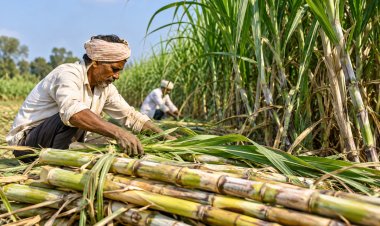
By empowering Urban Local Bodies (ULBs) to drive waste segregation, collection, and processing, the policy integrates CBG production with municipal solid waste management, thereby reducing landfill dependency and promoting a circular economy. Its emphasis on utilizing diverse feedstocks - including municipal waste, agricultural residues, livestock waste, and agro-industrial by-products - ensures a reliable and sustainable raw material base while creating additional income streams for farmers and generating rural employment.
Key Highlights of the policy
The policy designates the Urban Development Department as the nodal agency responsible for its implementation. It promotes compressed biogas (CBG) production using a wide range of feedstocks, including municipal solid waste, agricultural residues, livestock waste, and agro-industrial by-products, while strongly integrating CBG development with municipal waste management systems to reduce landfill burden and improve urban sanitation.
To enhance project viability, the policy provides Viability Gap Funding (VGF) of up to Rs 75 lakh per tonne per day (TPD), with a cap of Rs 15 crore per project and a dedicated outlay of Rs 500 crore for FY 2026–27. Additionally, a 2.5% SGST reimbursement will be offered post-commissioning. Concessional land allocation will be facilitated through Urban Local Bodies (ULBs) at 0.7% of the Ready Reckoner rate, subject to defined land norms and lease conditions, including cancellation if the project is not operational within two years. Land allocation norms specify approximately one acre per tonne of capacity, with a minimum of one acre and a maximum of 20 acres per project.
CBG projects will be classified as priority infrastructure, ensuring access to essential utilities such as electricity and water. The policy also introduces a single-window clearance mechanism along with district-level facilitation cells to improve ease of doing business. To address feedstock challenges, it ensures supply security through defined catchment areas, long-term agreements, and support to Farmer Producer Organizations (FPOs), which, along with cooperative societies, will be encouraged to act as waste aggregators—typically one per Panchayat Samiti.
The policy promotes Public-Private Partnership (PPP) models and competitive bidding for project development, with developers selected based on the waste processing fee they propose to charge ULBs per tonne of segregated waste. It also envisions the creation of CBG clusters and hubs in regions with high biomass availability and aligns with national initiatives such as SATAT, GOBAR-Dhan, Swachh Bharat Mission, and the National Bioenergy Mission.
Further, the policy encourages the utilization of by-products such as bio-fertilizers, prioritizing their distribution through registered sale centres via the Agriculture Department. It also proposes the development of Key Performance Indicators (KPIs) based on parameters such as project efficiency, gas production, waste processing, and carbon emission reduction. For effective implementation and monitoring, a three-tier institutional framework at the State, Executive, and District levels will be established.
Mr. Sanjay Ganjoo, Director General, IFGE, stated that the Maharashtra CBG Policy 2026 provides a strong and enabling framework for scaling up the CBG sector. He highlighted that the focus on feedstock security, cluster-based development, and utilization of agro-industrial residues will enhance project viability, support rural incomes, and promote a circular economy.
Mr. Dilip Patil, Co-Chairperson, IFGE Sugar Bioenergy Forum, noted that the policy is a significant step for strengthening the bioenergy ecosystem, particularly in agriculture- and sugar-linked regions. He emphasized that the combination of financial incentives, streamlined approvals, and institutional support will accelerate investments and project implementation, while its alignment with national initiatives strengthens its overall impact.