
West Asia Conflict Puts India’s Farm Trade at Risk
The West Asia conflict threatens India’s agricultural trade by disrupting key export markets and raising energy-linked costs. With heavy dependence on the region, sectors like cereals and buffalo meat face price risks. The crisis highlights the need for diversified markets, resilient value chains, and cost management to protect farm incomes and trade stability.


 Join the RuralVoice whatsapp group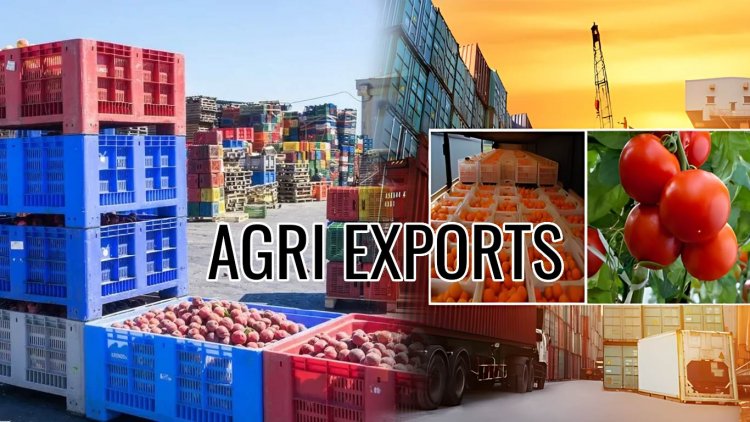
The ongoing conflict in West Asia is extensively discussed through the lens of oil and fertilizers. While these are important, for Indian agriculture the concern also lies in how disruptions affect agricultural trade flows, market access, and domestic price dynamics. West Asia is not just another export destination; it is one of India’s most important agricultural markets, accounting for about 22% of India’s total agricultural exports. Out of USD 66.86 billion of India’s exports to the region (average of 2023-24 and 2024-25), nearly 16% comprises agricultural and allied commodities (HS Chapters 1-23). This makes the region central to both farm incomes and trade stability. At the same time, West Asia serves as a key transit corridor for shipments to Europe and beyond. Disruptions here therefore affect not only direct exports, but also the wider trade architecture India depends on.
Value Chains, Energy and Cost Pressures
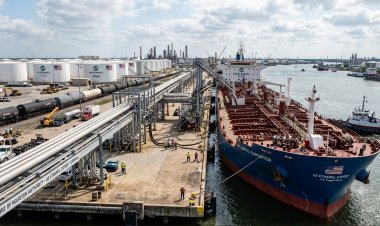
West Asia remains central to India’s energy import basket, with nearly 78% of imports from the region concentrated in mineral oils and precious metals and stones. About 31% of India’s fertilizer imports also originate from the region. The concern, however, is not one of immediate supply disruption, but rising landed costs due to higher energy prices and shipping risks. These costs filter through agricultural value chains. Beyond farm-level operations, energy is critical in post-harvest handling such as drying, storage, and processing. For crops like maize, drying is essential to maintain quality and meet market standards, and often relies on fuel or gas-based systems. Rising energy costs or uncertainty can therefore increase handling costs and create operational constraints, affecting both domestic supply chains and export readiness. These are not sudden shocks, but incremental pressures that matter in already tight-margin commodities, especially when export markets themselves become uncertain.
Agri-Exports: High Dependence, Limited Domestic Absorption
India’s agricultural exports to West Asia are concentrated in a few key commodity groups - cereals, meat products (particularly buffalo meat), and coffee, tea and spices, together accounting for 66% of exports to the region. These are sectors where external demand plays a critical role in price realisation.
For cereals, the issue is structural. India already operates with periodic surpluses, and domestic demand is relatively inelastic. When export flows are disrupted or become less viable, the adjustment does not come through higher consumption, but through downward pressure on domestic prices. Past policy responses, including export restrictions to manage domestic inflation, also reflect how closely export channels are tied to price outcomes. The concern is sharper for buffalo meat exports, which are overwhelmingly export-oriented with limited domestic absorption. Any disruption in key markets like West Asia therefore has a more direct impact on prices and value chains. In crops such as tea and spices, the effects may be less abrupt but still significant, particularly where quality-sensitive exports depend on timely shipments and stable demand.
Food Security Interdependence and India’s Role
The importance of this trade is not one-sided. West Asia is structurally dependent on food imports, particularly for staples like rice and for protein sources. India’s role as a supplier is therefore embedded in a broader food security context. Stable supplies from India contribute to availability and price stability in the region. For instance, Iran meets nearly 30% of its domestic rice consumption through imports, of which about 43% is supplied by India. Disruptions in trade flows can therefore have implications not only for exporters, but also for food security in importing countries.
Farmers as Enablers of Economic Engagement
An important but often understated dimension of this relationship is that India’s position in West Asia is fundamentally built on the capacity of its farmers to generate surplus. This surplus production has enabled India to emerge as a reliable supplier of essential food commodities to the region. In effect, farmers are not just participants in domestic markets, they are enablers of India’s external economic engagement. Trade relationships in essential commodities are sustained not only through policy or agreements, but through the credibility of consistent and timely supply. It is this production base that allows India to maintain trust across diverse countries in the region. However, this position is not automatic. It depends on maintaining competitiveness, managing costs, and ensuring reliability, each of which becomes more challenging when trade conditions are disrupted.
Conclusion
The current conflict in West Asia highlights that disruptions in agricultural trade are less about immediate shortages and more about uncertainty, rising costs, and pressures on price realisation.
For India, the primary concern is the impact on farm incomes. In commodities such as cereals and buffalo meat, where domestic absorption is limited, disruptions in export markets can quickly translate into downward pressure on prices.
For West Asia, the concern is different but equally significant - food security, given its structural dependence on imports for essential commodities.
This interdependence stresses the need for a calibrated response. On the production and value chain side, reducing vulnerability to energy shocks through greater adoption of renewable energy in irrigation, processing, and post-harvest operations, along with increased use of bio-fertilizers and green manures, can help moderate cost pressures over time.
On the trade side, there is a need to diversify export baskets and destinations. Heavy concentration of a few commodities in specific markets increases vulnerability. When disruptions occur, it is not easy to quickly find alternative large markets or absorb surplus domestically without affecting farm incomes.
In an increasingly uncertain global environment, sustaining agricultural trade will require not just production strength, but resilience in both value chains and market access to safeguard farm incomes at home and food security in partner regions.
(Smita Sirohi is ICAR National Professor, MS Swaminathan Chair. Luv Tyagi is Young Professional, ICAR- NIAP)