
Disasters Cause $3.26 Trillion Loss to Global Agriculture; FAO Highlights Digital Tech as Key to Future Resilience
A new FAO report shows disasters have caused $3.26 trillion in agricultural losses over 33 years, reducing global food supplies and worsening hunger. Asia, the Americas and Africa were hit hardest. The study highlights how digital tools such as AI, remote sensing, early warning systems, and parametric insurance are helping farmers anticipate risks. FAO urges inclusive digital access to build resilient agrifood systems.

 Join the RuralVoice whatsapp group
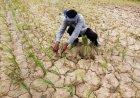
Global agriculture has suffered an estimated $3.26 trillion in losses from disasters over the past 33 years, according to a new report by the Food and Agriculture Organization of the United Nations (FAO). The report, titled The Impact of Disasters on Agriculture and Food Security 2025, presents the most comprehensive assessment yet of how droughts, floods, pests, storms, and marine heatwaves are undermining global food security. FAO emphasizes that digital technologies are transforming the world's response from reactive crisis management to proactive and data-driven risk reduction.
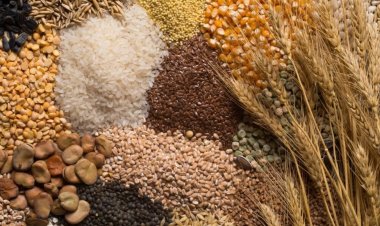
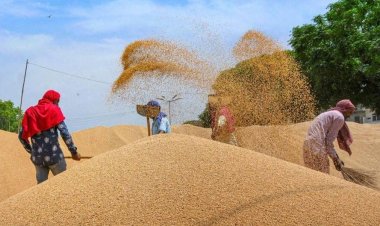
The FAO found that between 1991 and 2023, disasters wiped out 4.6 billion tonnes of cereals, 2.8 billion tonnes of fruits and vegetables, and 900 million tonnes of meat and dairy products. These losses translate into a daily per capita reduction of about 320 kilocalories, equal to roughly 13 to 16 percent of an average person’s energy needs. The scale of destruction has severely deepened food insecurity across vulnerable regions, especially where agriculture is the backbone of livelihoods.
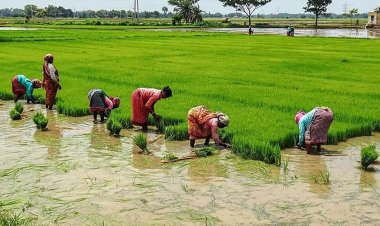
Asia accounted for the largest share of global agricultural losses at 47 percent, amounting to $1.53 trillion. This reflects both the region’s vast agricultural output and its high exposure to floods, storms and prolonged droughts. The Americas represented 22 percent of total global losses, around $713 billion, driven by recurrent droughts, devastating hurricanes and extreme heat events affecting major crop systems. Africa recorded losses of $611 billion, but suffered the largest proportional impact, losing 7.4 percent of its agricultural GDP to disasters. In many African economies where farming remains central to employment and income, such losses have had far-reaching consequences for food security and rural stability.
Small Island Developing States also remain among the world’s most vulnerable regions. Although their agricultural output is limited, the share of disaster-related losses relative to agricultural GDP is disproportionately high due to frequent cyclones, floods and climate-driven sea level rise. The FAO additionally highlights that marine heatwaves resulted in $6.6 billion in losses between 1985 and 2022, affecting 15 percent of global fisheries. These losses remain largely invisible in standard disaster assessments, despite the fact that fisheries provide livelihoods for 500 million people.
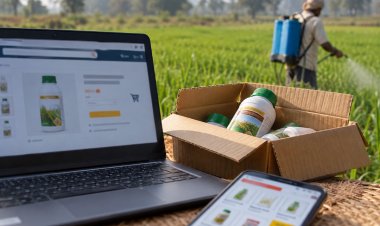
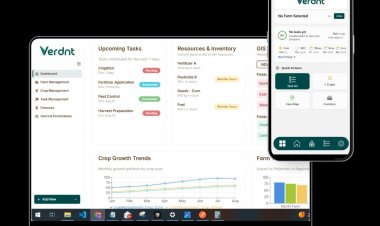
The report stresses that digital technologies are emerging as a turning point in disaster risk management. Tools such as artificial intelligence, drones, sensors, mobile-based monitoring systems, remote sensing platforms and predictive analytics are enabling farmers and governments to monitor risks in real time, anticipate impacts and act before losses occur. FAO Director-General QU Dongyu noted that digital transformation is enabling a fundamental shift from reactive response to proactive risk reduction. According to FAO, more than 9.1 million farmers are already accessing parametric insurance through digital platforms, and communities using early warning systems have been able to evacuate up to 90 percent of at-risk populations before disasters strike.
The report showcases several examples of digital innovation. FAO’s Climate Risk Toolbox integrates global datasets to guide agricultural planning in more than 200 projects. The Rift Valley Fever Early Warning Decision Support Tool has accurately forecasted outbreaks in East Africa, enabling timely vaccination campaigns. FAO’s SoilFER platform matches soil and fertilizer data to promote sustainable and efficient farming. The Fall Armyworm Monitoring and Early Warning System is helping countries track pest infestations across more than 60 nations. The Global Information and Early Warning System supports anticipatory action, yielding returns of up to seven dollars for every dollar invested. At FAO headquarters, the organization now operates its first integrated Risk Monitoring and Situation Room to coordinate global early detection and response. FAO’s Financing for Shock-Driven Food Crisis Facility is also helping countries respond before food emergencies escalate.
Despite rapid advancements, the report warns that more than 2.6 billion people remain offline, many of them rural farmers most exposed to climate and disaster risks. FAO argues that the full potential of digital transformation can only be realized through human-centred design supported by strong institutional capacity, policy reforms and targeted investments. It calls for governments, international partners and the private sector to expand digital infrastructure, strengthen digital literacy and integrate these technologies into national agricultural strategies. Ensuring that women, youth, smallholder farmers and Indigenous communities have access to these tools is critical to building resilient agrifood systems worldwide.
FAO concludes that scaling digital innovation, improving connectivity and aligning policy frameworks will be key to protecting livelihoods, strengthening food systems and reducing disaster-driven hunger in the decades ahead.