
US House Panel Advances New Farm Bill After Eight Years, Sparks Debate Over Pesticides, Ethanol and Food Aid
After nearly eight years without a new farm law, the US House Agriculture Committee has approved a draft of the 2026 Farm Bill. The proposal now moves to the full House amid debates over pesticide regulations, ethanol fuel policy and food assistance work requirements, while the Senate prepares its own version.

 Join the RuralVoice whatsapp group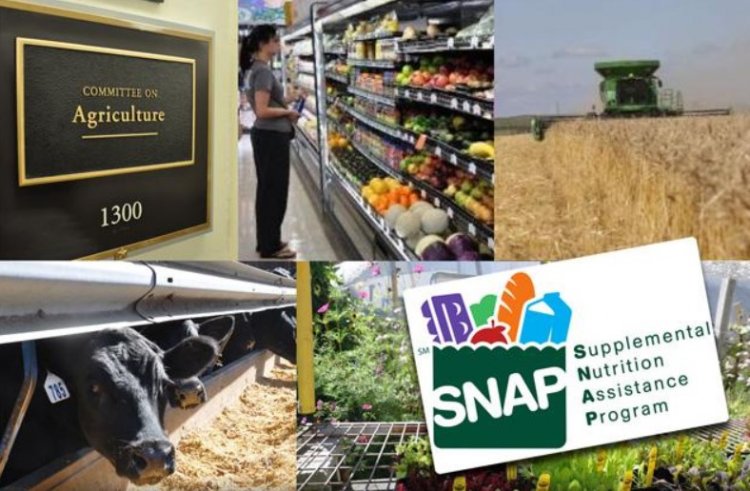
After years of delays and extensions, the United States has taken the first formal step toward adopting a new farm law. The US House Agriculture Committee has approved a draft of the proposed legislation, renamed the Farm, Food and National Security Act of 2026, setting the stage for debate in the full House of Representatives.
The farm bill is one of the most important pieces of legislation governing the US agricultural sector. It allocates hundreds of billions of dollars over several years to support farm income programs, crop insurance, conservation initiatives and nutrition assistance schemes such as food aid for low-income households. Traditionally renewed every five years, the legislation has faced repeated delays in recent years due to political disagreements.
The most recent law, the 2018 Farm Bill, expired earlier but has been extended twice to keep programs running. Lawmakers now face pressure to finalize a replacement before the current extension ends.
On March 4, the House Agriculture Committee voted 34-17 to approve the new draft bill. The vote saw support from most Republicans and a handful of Democrats, while the remaining Democratic members opposed it. With the committee stage completed, the bill will now move to the full House of Representatives for debate and voting.
Meanwhile, the Senate Agriculture Committee is preparing its own version of the farm bill. Both chambers must eventually reconcile their drafts and pass a unified version before it can be sent to the president for final approval. If lawmakers fail to pass the bill before September 30, Congress may again extend the 2018 legislation for a third time.
Changes in the provisions related to pesticides spark debate
The committee’s proposal broadly continues many existing programs but introduces several policy adjustments. One of the most contentious provisions concerns legal protections for pesticide manufacturers. The draft states that companies cannot be held liable if farmers use pesticides strictly according to the instructions approved by federal regulators.
The proposal would also prevent state and local governments from imposing additional restrictions on pesticide use beyond those set by the US Environmental Protection Agency (EPA). Supporters argue that a unified federal standard would reduce regulatory confusion for farmers, while critics say it could weaken local environmental protections.
Another debated issue during the committee discussions involved ethanol-blended gasoline. Representative Eric Sorensen of Illinois proposed an amendment to allow year-round sales of E15 fuel, which contains 15% ethanol and is primarily made from corn.
Sorensen argued that expanding E15 sales would boost domestic demand for corn at a time when farmers are struggling financially. According to him, US corn growers are facing their fourth consecutive year of negative profitability, with estimated losses averaging about $125 per acre during the current marketing season.
He said allowing E15 sales throughout the year could increase corn demand by more than two billion bushels annually, potentially supporting farm incomes and rural economies.
However, the proposal was rejected by committee leadership. Agriculture Committee Chair GT Thompson ruled that the amendment fell outside the committee’s jurisdiction and removed it during the bill’s markup process.
Currently, E15 gasoline cannot be sold nationwide during the summer months because of provisions in the Clean Air Act. While gasoline blended with 10% ethanol (E10) has a regulatory waiver, E15 does not. Regulators have historically argued that higher ethanol blends can evaporate more quickly in hot weather, potentially increasing smog levels.
Earlier in the year, lawmakers also discussed forming an E15 Rural Domestic Energy Council aimed at developing policy solutions for both farmers and fuel producers. However, disagreements among industry groups and lawmakers prevented the idea from advancing in the funding legislation.
Debate over food assistance initiatives
Nutrition programmes, which account for the largest share of farm bill spending, have also sparked political debate. More than three-quarters of the bill’s funding typically goes toward food assistance initiatives such as the Supplemental Nutrition Assistance Program (SNAP).
The proposed legislation retains stricter work requirements introduced in a previous law passed in 2025. Under these rules, able-bodied adults without dependents must meet work requirements up to the age of 64, compared with the earlier limit of 54. At the same time, the age of dependents that qualifies individuals for an exemption from work requirements would be reduced from 18 to 14 years.
Several lawmakers attempted to modify or roll back these requirements during committee discussions but failed to secure enough support.
With the committee vote completed, attention now shifts to the full House and the Senate, where negotiations are expected to intensify. The outcome will determine the direction of US agricultural policy, farm income support and food assistance programs for the coming years.