
Strengthening India’s Energy Security through Bioenergy in an Era of Geopolitical Uncertainty
India is strengthening energy security through bioenergy amid global geopolitical uncertainties. Government policies have accelerated ethanol blending, compressed biogas production, and biomass use, reducing crude oil dependence and supporting farmers. Strategic policy support, financial incentives, and technological expansion are essential to scale bioenergy and ensure sustainable, resilient, and self-reliant energy systems.


 Join the RuralVoice whatsapp group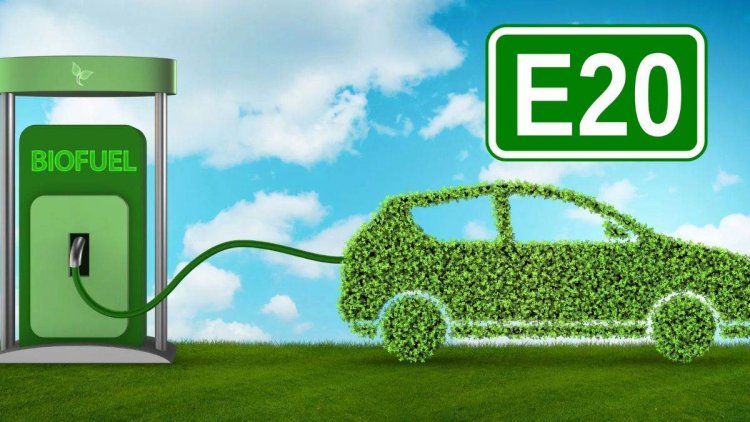
Key policy interventions by Government of India have resulted as turning points for scaling up certain Bioenergy sectors like Ethanol, CBG & Biomass. Such proactive and forward-looking interventions are essential to mainstream the different Bioenergy options and strengthen our energy security.
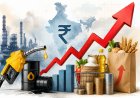
Geopolitical conflicts, particularly in the Middle East, continue to expose the fragility of global energy systems through supply disruptions, trade uncertainties, and price volatility. For India—importing nearly 85% of its crude oil and around 50% of its natural gas—these disruptions translate into inflationary pressures, rising fuel costs, and an expanding import bill, impacting transport, industry, and agriculture. In this context, domestically produced biofuels are emerging as strategic buffers to enhance energy security and economic resilience.
Ethanol: A Proven and Scaled Success
India’s Ethanol Blending Programme (EBP), launched in 2003, has achieved the 20% blending target ahead of 2025–26, establishing itself as a global success.
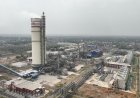
Enabled by the National Policy on Biofuels, interest subvention schemes and amendment to the Industries (Development & Regulation) Act, the programme leveraged feedstock diversification, GST reduction from 18% to 5%, supportive pricing and long-term offtake mechanisms. It has resulted in foreign exchange savings of ₹1.63 lakh crore, income support of over ₹1.44 lakh crore to farmers, and substitution of 277 lakh metric tonnes of crude oil. Ethanol supply has grown from 38 crore litres in 2013–14 to over 1,050 crore litres in 2025–26, supported by nearly 380 distilleries with an annual capacity exceeding 2,000 crore litres. Feedstock diversification—from C-heavy molasses to B-heavy molasses, sugarcane juice, surplus rice, maize, and damaged grains—along with streamlined procurement, has been central to scaling production.
Compressed Biogas: The Next Growth Engine
Compressed biogas (CBG) offers significant potential as a domestic substitute for natural gas. Produced from agricultural residues, cattle dung, press mud, and municipal organic waste, it can be directly used in transport, industry, and city gas distribution.
To promote the sector, the Government of India launched the SATAT initiative in 2018, targeting 5,000 CBG plants with an annual production capacity of 15 MMT. These measures, along with blending mandates and gas grid expansion, have strengthened feedstock supply, financial viability, and offtake, leading to 1,645 registered projects, 201 commissioned plants, and 319 under construction as of mid-March 2026.
Biodiesel and Biomass: Addressing the Gaps
Under the National Policy on Biofuels, India has set a 5% biodiesel blending target. However, progress has been limited due to challenges in mobilising feedstocks such as used cooking oil and non-edible oilseeds at a certain price point. This can be overcome by a progressing pricing mechanism driven by an strategic thinking and environmental commitments.
Densified biomass, including pellets and briquettes, is emerging as a viable coal substitute. Under the SAMARTH Mission, a 5% co-firing target has been set for thermal power plants. With India’s large coal consumption base, biomass demand could reach nearly 150 million tonnes annually. NTPC has co-fired 3.72 million tonnes of biomass till November 2025, supported by pricing benchmarks and financial incentives, while also addressing stubble burning.
Learning from Turning Points and the Way Forward
In the past we have achieved progress in some of the Bioenergy sectors including Ethanol, CBG & Biomass due to certain important turning points in policy, pricing support and financial incentives:
- Although the Ethanol Blending Programme (EBP) was launched in 2003, it gained momentum with the reintroduction of the administered pricing mechanism introduced in 2014, opening of alternative pathways for ethanol production allowing multiple feedstocks though National Biofuel Policy 2018, along with subsequent schemes and incentives.
- The growth in CBG Sector though sluggish in the initial years picked up since last couple of years by key interventions of Government, including CBG–CGD Synchronization (2021), Central Financial Assistance under the National Bioenergy Programme Phase-I (₹998 crore), the Biomass Aggregation Machinery (BAM) scheme (₹564.75 crore), the Development of Pipeline Infrastructure (DPI) scheme (₹994.5 crore), and Market Development Assistance (₹1,500/ton of FOM).
- For biomass, the SAMARTH mandate of 5% co-firing from FY 2025–26 has created a strong and assured demand signal. The benchmarking of off-take price proved a major turning point in streamlining the tendering process.
Such interventions helped in bringing viability in these sectors, which resulted in investor confidence. A similar out of box approach is required to make all options of Bioenergy sustainable and viable. A pricing support & financial incentive is extremely essential to make the Bioenergy sector successful. Other immediate steps that Government should take is to expand usage of Ethanol and explore options of higher blending, introduce Flex Fuel Vehicles, test its applicability for cooking and blending with diesel. Speed up Iso Butanol, DME testing and field trials. Promote usage of Biomass & Biogas in rural areas to replace LPG.
(Sanjay Ganjoo is Director General, Indian Federation of Green Energy. Dr Nidhi Sahu is Deputy General Manager, Indian Federation of Green Energy. Dr. Bini Samal, Chief Manager - Corporate Strategy, Praj Industries also contributed to this article.)