
ICRISAT Decodes Genetic Basis of Groundnut Blanchability, Boosting Processing Efficiency
ICRISAT scientists have identified key genetic markers controlling groundnut blanchability, improving seed coat removal for food processing. The breakthrough supports precision breeding and industry needs. The study highlights high-performing varieties and strengthens development of market-oriented, high-quality groundnut crops through global research collaborations and advanced genomic tools.

 Join the RuralVoice whatsapp group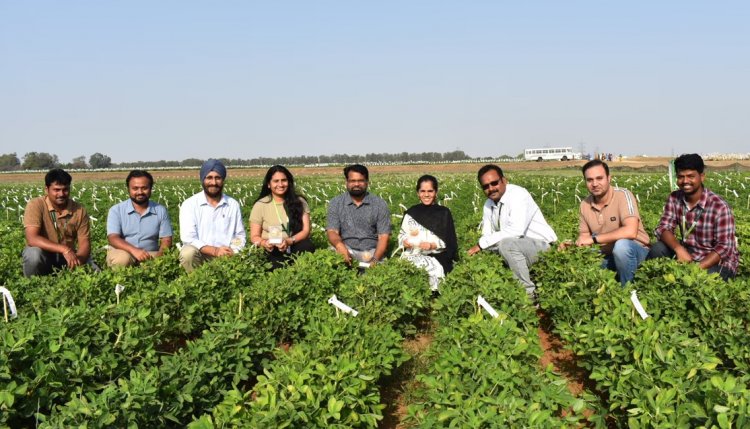
International Crops Research Institute for the Semi-Arid Tropics (ICRISAT) scientists have achieved a major breakthrough in groundnut research by decoding the genetic basis of blanchability — a key trait that enables easy removal of the seed coat and is critical for food processing industries.
Blanchability plays a vital role in the production of consumer products such as chocolates, peanut butter, and breakfast bars, where efficient removal of the seed coat is essential. However, many existing groundnut varieties pose challenges in processing due to poor blanchability, resulting in lower efficiency and compromised product quality.
A recent study conducted by ICRISAT, published in leading scientific journals Communications Biology and BMC Plant Biology, provides the first high-resolution insights into the genetic mechanisms governing this trait. The research analyzed 184 groundnut accessions from the institute’s genebank and identified key genomic regions associated with blanchability.
The study successfully validated six genetic markers, including a highly reliable marker region, “S17_133752226,” which consistently showed strong association with high blanchability across multiple varieties. These findings are expected to accelerate precision breeding efforts.
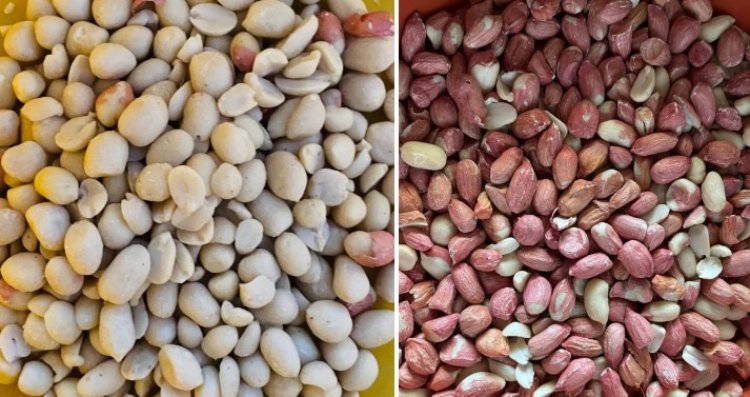
Goundnuts with high blanchability (left) and low blanchability (right).
Speaking on the development, Dr Himanshu Pathak, Director General of ICRISAT, said, "It reflects our broader approach of working hand-in-hand with partners to deliver solutions that are both practical and impactful. In line with this, we recently launched CATALYST (Collaboration for Agricultural Transformation through Advanced Learning, Science & Technology) to foster deeper partnerships with industry and co-create solutions that are not only scientifically robust but also commercially relevant,”
Dr Stanford Blade, Deputy Director General – Research & Innovation, ICRISAT, emphasized the importance of industry alignment, stating, “Private industry and markets are key players in the agri-food value chain. Breeding efforts must align with industry requirements alongside farmers and consumers to maximize impact. This breakthrough demonstrates how research can address real challenges faced by the food industry.”
Further genome-wide analysis identified several genes linked to blanchability, particularly those involved in cell wall modification and seed coat loosening. The study also highlighted high-performing landraces across seasons, with Spanish bunch types consistently achieving over 60% blanching efficiency.
According to Dr Manish K. Pandey, Principal Scientist at ICRISAT, “The addition of blanchability further strengthens this pipeline. This work ensures that future groundnut varieties are not only high-yielding and nutritionally superior, but also aligned with industry and market needs,”
The study was supported through strong national and international collaborations, including the Indian Council of Agricultural Research, with additional funding from Council of Scientific and Industrial Research (CSIR)- University Grants Commission (UGC), Mars Inc., USA, and the Gates Foundation, USA. This research work underscores the growing need for industry-aligned agricultural research and highlights the importance of partnerships in advancing innovations that benefit farmers, processors, as well as consumers.