
ISMA Backs Sugar-Ethanol Policy, Cautions Against Preference for Dedicated Ethanol Plants
ISMA has welcomed the Centre’s calibrated approach to sugar and ethanol policy for ESY 2026–27 but urged a review of preferential allocations for dedicated ethanol plants in future years.

 Join the RuralVoice whatsapp group
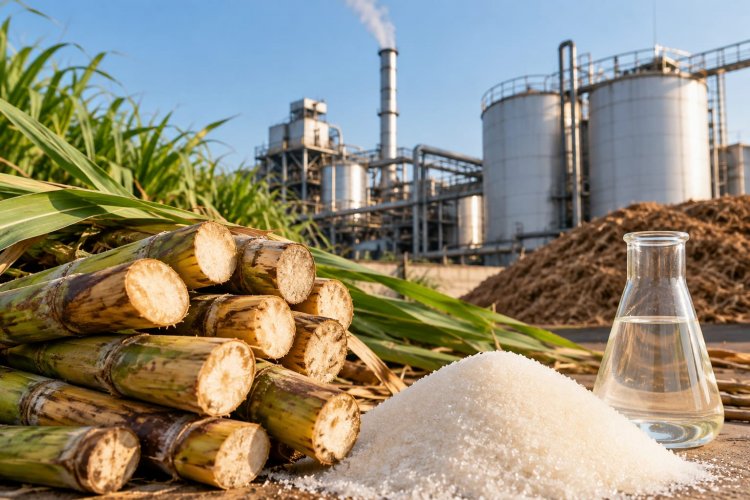
The Indian Sugar & Bio-Energy Manufacturers Association (ISMA) has welcomed the Centre’s calibrated approach to balancing domestic sugar availability with ethanol-blending targets for the Ethanol Supply Year (ESY) 2026–27, but has urged the government to reconsider preferential allocations for dedicated ethanol plants in future procurement cycles.
Under the government’s ethanol procurement tender for ESY 2026–27, ethanol produced from sugarcane juice, sugar syrup and B-heavy molasses has been excluded, while C-heavy molasses-based ethanol remains eligible. ISMA said the move would help safeguard domestic sugar supplies amid uncertainty over the upcoming sugarcane crop.
The industry body highlighted emerging El Niño conditions and weather variability in key sugarcane-growing regions as potential risks to crop yields and sugar production. It said ethanol production should be aligned with actual crop availability and the prevailing sugar balance to ensure adequate domestic supplies while supporting the national ethanol-blending programme.
Flags Concerns Over Preferential Allocation to Dedicated Ethanol Plants
While accepting the current tender framework, ISMA cautioned that preferential allocation to Dedicated Ethanol Plants (DEPs) holding Long-Term Offtake Agreements (LTOAs) should not be extended to subsequent supply years.
The association argued that sugar production is cyclical, with output fluctuating between surplus and deficit seasons. During surplus years, diverting excess sugar towards ethanol helps prevent oversupply in the domestic market, which can depress sugar prices and reduce ex-mill realisations.
If dedicated ethanol plants continue to receive preferential access to procurement opportunities, sugar mills could lose an important revenue stream during surplus seasons. According to ISMA, this could worsen the financial position of mills and affect their ability to make timely payments to sugarcane farmers.
Deepak Ballani, Director General of ISMA, said the continuation of preferential allocation in subsequent years could seriously prejudice the interests of the sugar industry. He added that restricting sugar mills’ access to ethanol procurement during surplus seasons could undermine their financial viability and adversely affect farmers by making timely payments against the Fair and Remunerative Price (FRP) more difficult.
ISMA said the preferential allocation framework should be reviewed for future ethanol supply years to ensure that sugar mills have adequate opportunities to divert surplus sugar towards ethanol production.
C-Heavy Molasses Ethanol Price Remains Unchanged
ISMA has also raised concerns over the unchanged procurement price of C-heavy molasses-based ethanol, which remains at Rs. 57.97 per litre, or Rs. 57,970 per kilolitre, for ESY 2026–27.
The association said the price has not increased despite rises in sugarcane FRP and the costs of chemicals, labour, fuel and regulatory compliance. This, it argued, is putting pressure on producers’ margins and weakening the incentive to supply ethanol.
ISMA has called for a transparent pricing formula that links ethanol procurement rates to sugarcane FRP. Such a mechanism would ensure that increases in cane prices are reflected in ethanol prices, reduce uncertainty for producers and lenders, and support medium-term production planning.
The association has requested that the procurement price of C-heavy molasses-based ethanol be increased to Rs. 62.23 per litre, based on prevailing molasses prices and conversion costs. It has also sought the allocation of 100% of the C-heavy molasses-based ethanol quantities offered by the sugar industry.
Industry Seeks Assured Offtake and Remunerative Pricing
According to ISMA, full allocation at a remunerative price would enable sugar mills to make better use of their existing distillery capacity and available molasses while generating additional resources for timely payments to sugarcane farmers.
The association warned that without viable pricing and assured procurement, a substantial portion of existing distillery capacity could remain idle or underutilised.
ISMA said a balanced ethanol policy should protect domestic sugar availability in seasons of potential shortage while allowing mills to divert surplus sugar towards ethanol when production exceeds domestic requirements.