Booster for Agri Sector: GST Reduction on Tractors, Farm Machinery and Inputs
Under the approval of the new rates in the GST Council meeting, there has been a big cut in GST rates on tractors and their components, raw material for fertilizers, bio fertilizers, solar pumps, sprinkler and drip irrigation equipment, agricultural implements, storage, dairy products, processed vegetables, fish products to forest produce including honey and tendu leaves

 Join the RuralVoice whatsapp group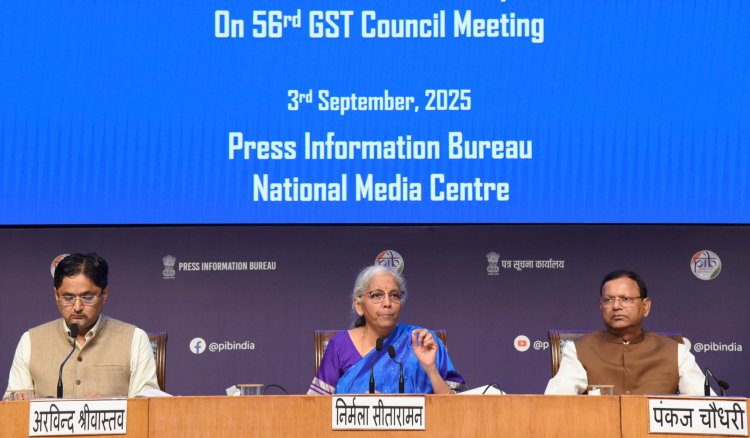
The government has given major relief to farmers by significantly reducing Goods and Services Tax (GST) rates for the agriculture and allied sector. With the approval of new rates in the 56th GST Council meeting, GST has been slashed on tractors and their components, raw materials for fertilisers, bio-fertilisers, solar pumps, sprinkler and drip irrigation equipment, agricultural implements, storage, dairy products, processed vegetables, fish products, and forest produce including honey and tendu leaves.
This decision will lower the prices of agricultural equipment, machinery, inputs, and infrastructure-related products. While reducing farmers’ input costs, it is also expected to boost demand for agricultural products due to price reduction, benefiting farmers, the cooperative sector, and Farmer Producer Organizations (FPOs).
The new GST rates and provisions will be implemented from 22 September 2025.
Sources in the Ministry of Agriculture and Farmers’ Welfare said the changes will make domestic products more competitive against imports and act as a booster for the agriculture sector.
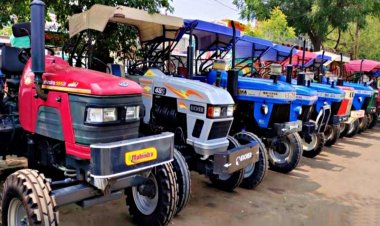
As a step to promote mechanisation, the GST rate on tractors below 1800 cc has been reduced to 5%. This will lower tractor prices, particularly benefiting small and marginal farmers, who account for about 86% of India’s farming community. With rising labour costs in agriculture, affordable tractors are expected to accelerate mechanisation.
Similarly, GST on tractor components including tyres, tubes, hydraulic pumps, and other parts has been reduced from 18% to 5%. GST on sprinklers, drip irrigation, harvesting machinery, and other tractor parts has been cut from 12% to 5%. These measures will encourage water-efficient irrigation methods while reducing farmers’ expenses on machinery. GST on solar power machinery has also been reduced from 12% to 5%, supporting irrigation through solar energy.
The fertiliser industry had been demanding that GST on inputs be reduced from 18% to 5% to bring parity with GST on fertilisers. Under the new provisions, GST on inputs such as ammonia, sulphuric acid, and nitric acid has been reduced to 5%, correcting the inverted duty structure.
In line with the government’s Natural Farming Mission, GST on bio-pesticides and several micronutrients has been reduced from 12% to 5%. This will directly benefit organic farmers and promote natural farming practices. Micronutrients listed under Serial 1(g), Schedule 1, Part (A) of the Fertiliser Control Order, 1985 will also now attract 5% GST instead of 12%.
GST on processed fruits, vegetables, and nuts has been cut from 12% to 5%. This move is expected to boost value addition, attract investment in cold storage and food processing, reduce losses of perishable produce, and enhance agricultural exports.
In the dairy sector, long-standing demands for lower GST have been met. GST on milk and paneer has been abolished, while butter and ghee will now attract 5% instead of 12%. To encourage dairy processing, GST on steel and aluminium milk cans has also been reduced from 12% to 5%.
To support aquaculture, GST on prepared and preserved fish has been reduced from 12% to 5%. The GST on natural honey has also been cut, benefiting beekeepers. Tendu leaves, important for tribal livelihoods in states like Odisha, Madhya Pradesh, and Chhattisgarh, will now attract 5% GST instead of 18%.
GST reductions have also been extended to commercial goods vehicles to make transportation cheaper, lowering logistics costs for agricultural products.