
'State of Marginal Farmers in India 2025’ Report Highlights Income Gains for Cooperative-Linked Farmers
Report finds 45% of marginal farmers associated with cooperatives report income growth; examines cooperative access across six states

 Join the RuralVoice whatsapp group
On Kisan Diwas (December 23), the Forum of Enterprises for Equitable Development (FEED) released its report, State of Marginal Farmers in India 2025, offering a ground-level assessment of the challenges and opportunities facing India’s marginal farmers. The study, conducted across Andhra Pradesh, Bihar, Himachal Pradesh, Maharashtra, Tripura, and Uttarakhand, assesses the reach and effectiveness of agricultural cooperatives at a time when India is renewing its focus on farmer-centric growth.
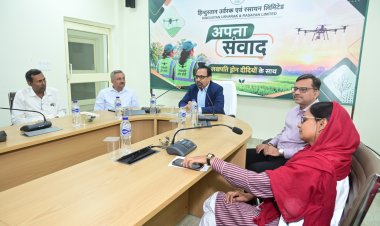
The report was launched in New Delhi at the Institute of Social Sciences by Dr. Sanjeev Chopra (Retd. IAS), Former Director-LBSNAA & Chairperson, FEED, Dr K. K. Tripathi, Joint Secretary, Economic Advisory Council (EAC–PM), NITI Aayog, in the presence of Dr Sudhir Mahajan, Chief Executive, NCUI, and Harvir Singh, Editor-in-Chief, Rural Voice.

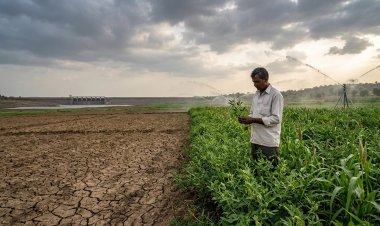
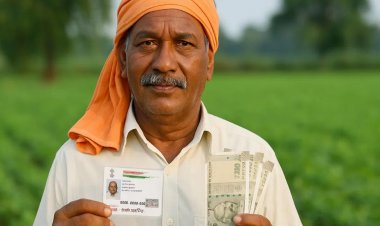
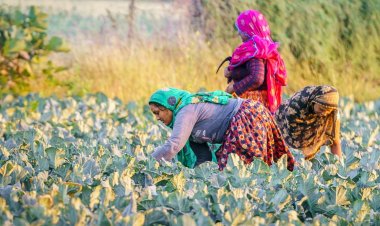
Marginal farmers constitute nearly 60–70% of India’s agricultural households, yet remain among the most vulnerable within the rural economy. The report finds that fewer than 25% of marginal farmers surveyed are active members of agricultural cooperatives. Farmers outside cooperative networks are more dependent on informal markets, experience slower income growth, and face higher exposure to climate and market shocks. These findings carry added significance on Kisan Diwas and during the International Year of Cooperatives.
Beyond institutional analysis, the report foregrounds the voices of marginal farmers, documenting their lived experiences and expectations from cooperative systems.
Limited cooperative participation
-
Less than 25% of marginal farmers surveyed are cooperative members, with particularly low participation in Bihar, Tripura, and Himachal Pradesh.
-
Barriers include complex procedures, distance from Primary Agricultural Credit Societies (PACS), limited capital availability, and social exclusion.
Positive outcomes where cooperatives function
-
About 45% of cooperative-linked marginal farmers reported an increase in household income.
-
Nearly 42% reported improvements in crop yields.
Expanding role of PACS
-
PACS are increasingly evolving into multi-service rural hubs rather than remaining limited to credit provision.
-
Across states, PACS support input supply, procurement and marketing, Public Distribution System delivery, and access to digital and public services.
-
States where PACS function as integrated service centres show better outcomes for marginal farmers.
Digital adoption and gaps
-
Digital adoption remains limited in Bihar and Tripura, with its impact largely informational rather than transformative.
-
In Tripura, 77.8% of cooperatives reported not using any digital tools, while 25% of cooperatives in Bihar reported no digital tool usage.
-
Limited digital literacy, particularly among women and older farmers, continues to restrict the benefits of digitisation.
Gender and leadership gaps
-
While 21.25 lakh women are registered as cooperative members nationwide, only 3,355 women serve as directors on cooperative boards.
-
Social norms, mobility constraints, and unpaid care responsibilities contribute to the gap between women’s membership and leadership.
-
Despite growing awareness of gender inclusion, decision-making remains concentrated among a small, predominantly male leadership.
Voices from the margins
Marginal farmers interviewed for the study stressed the need for stronger awareness and outreach, simplified membership and service-access processes, improved access to credit, better infrastructure and storage facilities, hands-on digital literacy support, and deliberate gender-inclusive mobilisation.
Highlighting the need for systemic reform, Dr K. K. Tripathi emphasised the importance of digitising PACS and strengthening human resource policies to build professional, accountable, and future-ready cooperative institutions. He noted that digitisation must be backed by skilled personnel to enable cooperatives to effectively serve marginal farmers and respond to evolving rural needs.
Dr Sanjeev Chopra, Chairperson, FEED, said the impact of cooperatives depends on how accessible, inclusive, transparent, and responsive they are to the everyday realities of marginal farmers. He added that while the New Cooperative Policy (NPC) 2025 presents an ambitious vision, its success will depend on effective convergence across government departments and schemes, as well as stronger collaboration between cooperatives and Farmer Producer Organisations (FPOs).
Harvir Singh (Rural Voice) said the report underlines the continued relevance of cooperatives as a distinct institutional model for India. He noted that cooperatives, rather than purely market-driven mechanisms, have the potential to deliver sustainable change for smallholder farmers and should be viewed beyond farming alone, in line with the broader vision of the New Cooperative Policy.