
U.S. Pledges Major Support for Soybean Farmers as China Boycott Deepens Trade Crisis
China’s refusal to buy U.S. soybeans amid a trade war has plunged American farmers into crisis, forcing them to seek smaller markets worldwide. Prices remain low, exports are down, and storage costs are rising. Treasury Secretary Scott Bessent promised major federal support to be announced Tuesday, as President Trump prepares for key talks with China’s Xi Jinping.

 Join the RuralVoice whatsapp group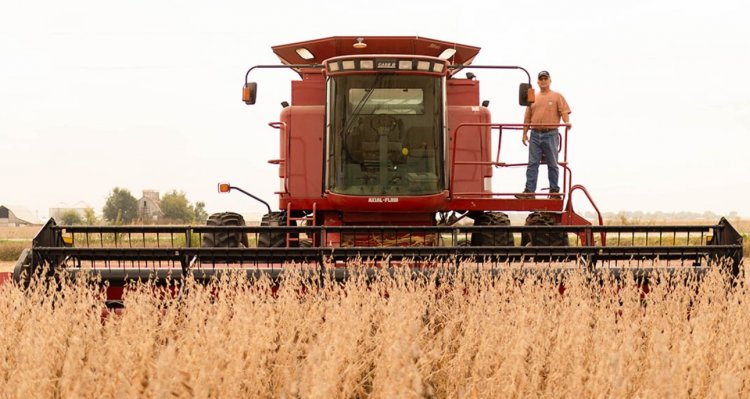
The U.S. government is preparing a significant aid package for soybean farmers suffering heavy losses from China’s ongoing refusal to purchase American crops, Treasury Secretary Scott Bessent announced on Thursday. He said the announcement will come on Tuesday, aimed at helping producers weather one of the worst agricultural trade crises in decades.
“We’ve got their backs,” Bessent declared, blaming Beijing for using U.S. farmers — particularly soybean growers — as “pawns” in trade negotiations. He added that President Donald Trump and Chinese President Xi Jinping will meet in four weeks, where soybeans will be a key topic of discussion. “With President Trump’s leadership and the respect Xi has for him, this fifth round of talks should show a significant breakthrough,” Bessent said.
But experts say a government bailout won’t undo the damage that Donald Trump’s tariffs have wreaked on America’s soybean farmers. American Soybean Association President Caleb Ragland said that a bailout wouldn’t be the golden ticket that Trump has made it out to be, as American farmers still need a market to sell their products.
“Right now, our largest export market in China is a zero buyer,” Ragland said. “They buy as many soybeans as all of our other export markets combined. And right now, with them having not entered into purchase U.S. soybeans, it is hurting prices and it is causing lots of uncertainty as a whole.”
Soybeans are the largest agricultural product that is exported from the United States, with the most beans grown in Illinois. The U.S. has been the number one supplier of soybeans to China.
Even when U.S. farmers produce crops that are priced competitively, China has steadily reduced its reliance on the United States, turning instead to Brazil, Argentina and other suppliers. The slowdown of sales in 2025 is not an isolated event: it is part of a longer trajectory in which China is diversifying away from American agriculture. For U.S. farmers, this shift has meant fewer sales, a growing agricultural trade deficit and greater uncertainty about the future role of China as a market for American agriculture.
Soybean markets have become the clearest signal of stress in U.S. agricultural trade. From January through August 2025, U.S. soybean exports to China totaled just 218 million bushels, down sharply from 985 million bushels in 2024, when China purchased about half of all U.S. soybean exports. During June, July and August, the U.S. shipped virtually no soybeans to China and China has not purchased any new-crop soybeans for the upcoming marketing year.
The trade war has effectively shut U.S. soybeans out of their largest market. For the first time in over 20 years, Chinese importers have not purchased a single shipment from the autumn harvest. As a result, U.S. farmers are grappling with prices at five-year lows, billions in lost sales, and mounting storage costs. Exports to China plunged 39% by volume and 51% by value between January and July, costing farmers billions of dollars.
Desperate to offset the losses, U.S. trade groups and the administration are scrambling to build new markets. Efforts include trade missions to Nigeria and memorandums with Vietnam, as well as rising purchases from Bangladesh, Egypt, and Thailand. However, these markets remain too small to replace China, which accounts for over 60% of global soybean imports. Even a significant commitment by Taiwan to purchase $10 billion worth of U.S. farm goods over four years falls short of filling the gap.
Once known as the “soy capital of the world,” Decatur, Illinois, is now watching that title shift to Brazil, which — along with Argentina — has become a top supplier to Chinese buyers. The crisis is most acute in Illinois, America’s largest soybean-producing state, where farmers face losses of up to $8 per acre. Despite a price advantage of nearly $0.90 per bushel over Brazilian soybeans, U.S. shipments remain uncompetitive due to China’s 23% import tariff, which adds about $2 per bushel. Beijing’s purchases from Argentina surged in September after the government temporarily suspended export taxes, further sidelining U.S. exporters.
With the farm sector’s economic pain growing, Trump gears up for high-stakes talks with Xi. The outcome could determine whether U.S. soybeans regain their dominant market — or remain on the sidelines of global trade.