
Agriculture at a Turning Point: Structural Shifts and Unfinished Reforms in Budget 2026-27
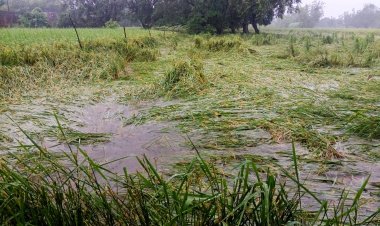
While the Budget 2027 framework is looking forward, several current developments and structural challenges still need more attention. A significant gap is the lack of a broad climate adaptation and resilience structure for agriculture


 Join the RuralVoice whatsapp group
The Union Budget 2027 marks a crucial moment for India’s agriculture and related sectors. This area is a key part of the country's socio-economic structure, contributing nearly 18 percent of GDP and supporting about 46 percent of the workforce. Over the last decade, agriculture has grown at an average rate of around 4.4 percent, but the sources of this growth have shifted. The Economic Survey 2025-26 notes that allied sectors like livestock, fisheries, and horticulture are driving this momentum, surpassing traditional crop agriculture and stabilizing rural income. The government’s decision to allocate ₹1.3 lakh crore for agriculture and related activities in FY 2027 not only shows ongoing public investment but also a strategic move toward high-value production, entrepreneurship, technology integration, and structural diversification.
Plantation Push
One major highlight of Budget 2027 is the program to revitalize old, low-yielding orchards and expand high-density cultivation of walnuts, almonds, and pine nuts. India's orchard sector, especially for dry fruits, has long faced challenges due to aging plantations, low productivity, and high import reliance, evident in recent price increases for orchard products. The focus matches trends noted in the Economic Survey 2025-26, which reveals that horticulture now makes up nearly one-third (about 33 percent) of agricultural Gross Value Added.
Horticulture output has grown from about 281 million tonnes in 2013-14 to over 360 million tonnes in 2024-25. By targeting high-value dry fruits with strong domestic and export demand, the Budget aims to position regions like Jammu & Kashmir, Himachal Pradesh, and Uttarakhand as specialized value areas, creating income and job opportunities across the orchard value chain. The Coconut Promotion Scheme and the dedicated Indian Cashew & Cocoa Programs extend the high-value crop strategy into plantation and coastal agriculture. India is among the largest coconut producers globally, with millions of small-hold farmers relying on the crop.
However, productivity has suffered due to aging plantations, pest issues, and fragmented value addition. The Budget’s plan for replanting, improved varieties, and linked processing aims to shift coconut from a basic commodity market to a value-added, export-ready ecosystem that includes food, fibre, and industrial uses. Similarly, the cashew and cocoa programs focus on boosting local production, enhancing processing capabilities, and creating branding so that Indian products can compete in premium global markets by 2030. These efforts align with the Economic Survey’s focus on crop diversification and growth based on value chains instead of only providing input-heavy support for low-margin staples.
Farm Livelihood through Livestock
The FY27 Budget emphasizes entrepreneurship and private involvement in allied sectors, particularly livestock. A loan-linked capital subsidy program has been introduced to support private veterinary and para-veterinary colleges, hospitals, diagnostic labs, and breeding facilities. This step is crucial since livestock has become one of the fastest-growing parts of agriculture. Trends from the Economic Survey show that livestock Gross Value Added grew nearly 195 percent between FY15 and FY24, averaging around 12 to 13 percent annually and acting as a stable source of rural income.
However, animal health services, quality breeding options, and diagnostic networks are still uneven and lacking in many districts. By encouraging private investment, expanding training options, and improving service delivery, the Budget aims to increase productivity in dairy, poultry, and smaller livestock while creating skilled jobs in rural and peri-urban areas. The budget allocation for the Department of Animal Husbandry & Dairying increases from ₹5,302.83 crore to ₹6,153.46 crore (about 16 percent), with Central Sector and Centrally Sponsored Schemes also receiving notable boosts to speed up sector modernization.
Fostering the Fisheries Sector
Water resources and fisheries get enhanced policy attention through the proposed development of 500 reservoirs and Amrit Sarovars, along with improving inland and coastal fisheries value chains. This strategy connects water body improvement with aquaculture expansion, market access, and support for startups, women-led businesses, and Fish Farmer Producer Organisations (FPOs). The budget reflects this focus, with the allocation for the Department of Fisheries increasing from ₹1,732.95 crore to ₹2,761.80 crore, a 59 percent rise. Funding for Centrally Sponsored Schemes grows from ₹1,500 crore to ₹2,500 crore—an increase of roughly 67 percent, showing accelerated investments in fisheries infrastructure, seed systems, cold chains, and blue economy initiatives.
Fisheries remain one of the fastest-growing allied sectors, with production rising by over 140 percent since the mid-2010s, and exports gaining strong momentum. By combining water infrastructure, institutional support, and value chain development, this initiative aims to improve farmer incomes, nutritional security, rural jobs, and competitiveness in exports, especially in reservoir-rich and coastal areas.
Agri Data Matters
Lastly, one of the most significant announcements is combining AgriStack portals and ICAR’s package of agricultural practices with AI systems. AgriStack forms a digital backbone that combines farmer identities, land records, soil data, cropping history, and service delivery platforms. When paired with ICAR-validated agronomic packages and AI analytics, this ecosystem can provide tailored advice on crop selection, nutrient management, pest risks, irrigation schedules, and market timing. With increasing yield gaps, climate changes, and uneven irrigation affecting productivity, AI-driven advisory systems could help reduce uncertainties with real-time, personalized support. The long-term possibilities include lower input costs, better risk management, improved yields, and more consistent farm incomes, assuming last-mile adoption challenges are resolved.
Missing Link to Leverage
The DARE allocation fell from ₹10,280.83 crore (RE FY 2025–26) to ₹9,967.40 crore (BE FY 2026–27), a decrease of ₹313.43 crore, or about 3 percent. This is significant at a time when science-led agricultural competitiveness is crucial to national strategy. DARE supports ICAR and the national agricultural research system that fosters varietal innovation, climate adaptability, productivity gains, and compliance with standards. In GDP terms, India’s public agricultural R&D spending is well below 0.5% of Agri-GDP, while many modern agricultural economies invest 1 to 3 percent of Agri-GDP in agricultural research.
In a global trade environment influenced by both tariff and non-tariff barriers, like SPS standards, traceability, carbon metrics, and quality protocols. The reduced research funding raises worries about innovation capacity and testing abilities. Questions about trade competitiveness remain, alongside an ageing farmer population, highlighting the need to connect research, standards, youth involvement, and agricultural trade strategy more closely in fiscal planning.
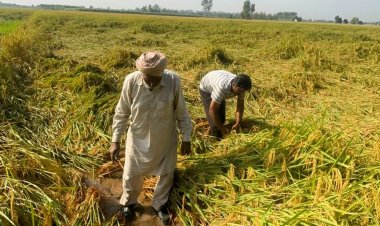
While the Budget 2027 framework is looking forward, several current developments and structural challenges still need more attention. A significant gap is the lack of a broad climate adaptation and resilience structure for agriculture. Rising climate volatility, heat stress, unpredictable rainfall, and extreme events threaten yields and income stability. Although reservoir and water body development is encouraged, broader climate initiatives, like area-specific adaptation plans, drought-resistant seed systems, climate-based insurance redesign, and improved micro-irrigation, are not well featured as dedicated budget priorities.
Another overlooked area is reforming input pricing and subsidies, especially for fertilizers. There is a pressing need to shift from price-distorted fertilizer systems to nutrient-balanced, direct support methods, including adjusting urea prices while also providing per-acre transfers to farmers. Additionally, productivity gaps in staples like cereals, pulses, oilseeds, and maize, compared to global standards, continue to be a concern, yet no specific national productivity mission for these crops has been proposed. Gender inclusion and nutrition ties are further themes that require stronger emphasis. State initiatives to empower women farmers through digital and climate-smart agriculture and women-led FPOs are growing, but a large-scale national gender-focused agricultural mission is urgently needed. Rising concerns about increased consumption of ultra-processed foods and their long-term health implications suggest the need to align agricultural incentives with nutrition outcomes, an approach that has not been adequately considered.
In conclusion, the Union Budget 2027 sets a solid base for changing the agricultural and allied sectors, supported by a ₹1.3 lakh crore allocation and a clear focus on high-value crops, growth in allied sectors, entrepreneurship, water-related fisheries, skills improvement, and AI-driven agriculture. However, the next phase of reform will need deeper engagement with climate resilience, input rationalization, productivity in staple crops, inclusion of youth and gender, nutrition linkages, and effective digital tools. Addressing these gaps will be key to turning the Budget’s strategic goals into long-term, inclusive, and resilient agricultural prosperity.
(Dr Naveen P Singh is a former Member Official, CACP, MoA&FW, and presently Principal Scientist at ICAR-NIAP, New Delhi, and Dr Shiv Kumar is Director, ICAR-NIAP, New Delhi. Views expressed are personal.)