Agri GVA Growth to Remain Under 1.4% in FY27 as Weak Monsoon, El Niño Threaten Kharif Prospects: ICRA
ICRA has warned of downside risks to its FY2027 agricultural GVA growth forecast of 1.4

 Join the RuralVoice whatsapp group
India's agricultural sector faces growing downside risks in FY2027 as an exceptionally weak start to the southwest monsoon and the increasing likelihood of El Niño conditions threaten kharif production, prompting ICRA to warn that its projected 1.4% growth in the Gross Value Added (GVA) of agriculture, forestry and fishing could come under further pressure if rainfall remains below normal during the critical July-August period.
In its latest thematic report on the southwest monsoon and agriculture, ICRA said the agricultural outlook has deteriorated after India received only 60% of the Long Period Average (LPA) rainfall in June 2026, representing a rainfall deficit of 40%. The shortfall was significantly worse than the India Meteorological Department's (IMD) forecast of below-normal rainfall at less than 92% of LPA for the month.
ICRA warned that if El Niño intensifies and below-normal rainfall persists through July and August, its current FY2027 agricultural GVA growth forecast of 1.4% could face further downward revision. It was 3% in FY2026, 4.2% in FY2025 and 2.6% in FY2024. The agency expects agricultural GVA growth to moderate to 1.5% in the first quarter of FY2027, compared with 4.4% in the corresponding quarter last year, underscoring the importance of rainfall performance over the coming weeks.
The weak monsoon has already affected farm activity. As of June 25, cumulative kharif sowing declined 22.7% year-on-year to 18.3 million hectares, compared with 23.6 million hectares during the same period last year. Simultaneously, reservoir storage levels slipped to 26% of live storage capacity by the end of June, down from 36% a year earlier, raising concerns over water availability not only for kharif crops but also for the upcoming rabi season.
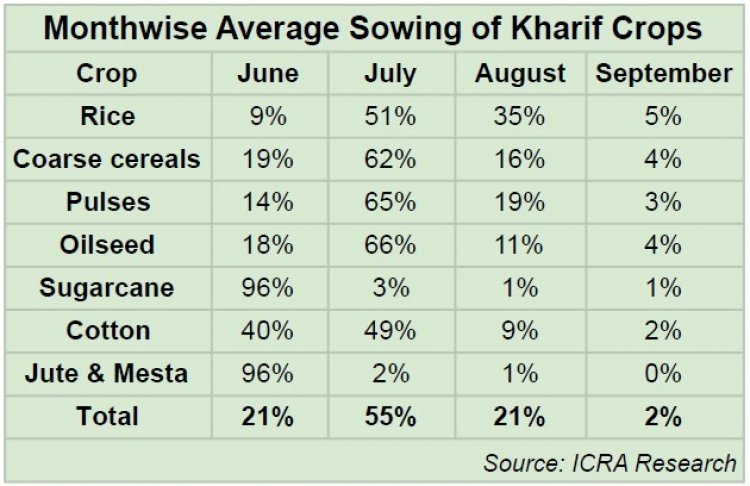
ICRA noted that July will be decisive for the farm economy because nearly 32% of India's seasonal southwest monsoon rainfall and around 55% of total kharif sowing typically occur during the month. The situation becomes more concerning as the IMD has projected below-normal rainfall of less than 94% of LPA for July as well.
According to the agency, the rainfall received during July and August will determine the extent of crop losses and the final impact on agricultural output, rural demand and overall economic activity.
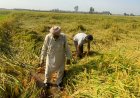
The report highlighted that the delayed onset of the monsoon and prolonged dry spells have resulted in broad-based declines across major kharif crops. Oilseed acreage has fallen by 53.3%, cotton by 34.6%, pulses by 30.5%, rice by 25.2%, and coarse cereals by 11.7% compared with the corresponding period last year. Sugarcane remained the only major crop to register a marginal increase in acreage, rising 1.2%, reflecting its high irrigation coverage and early sowing pattern.
ICRA also cautioned that the impact of an El Niño year is likely to be concentrated in India's Monsoon Core Zone (MCZ), comprising states such as Rajasthan, Maharashtra, Karnataka, Odisha and Chhattisgarh. These states together account for roughly 35% of India's kharif cropped area but have irrigation coverage below 55%, making them particularly vulnerable to rainfall shocks. Madhya Pradesh stands out as the only major exception within the MCZ due to its irrigation coverage of around 82%, supported by investments in micro-irrigation and piped water networks.
The report observed that during previous El Niño years—2015, 2018 and 2023—many of these states experienced rainfall deficits ranging from 10% to 40% below normal, which translated into lower reservoir storage and weaker agricultural production. Crops such as pulses, oilseeds, coarse cereals and cotton, which have relatively low irrigation coverage, recorded output declines of between 3% and 14.5% at the national level during those years. Rice production, however, remained comparatively resilient because it is largely cultivated in better-irrigated states.
ICRA further pointed out that these vulnerable MCZ states contribute significantly to India's agricultural production. Together they account for 72% of kharif pulses output, 67% of coarse cereals production and 64% of oilseed output, indicating that any prolonged weather disruption could materially affect national food supplies and prices.
The implications may extend beyond the kharif season. Weak monsoon rainfall reduces reservoir replenishment, limiting irrigation water availability for rabi crops. Historical evidence presented in the report shows that reservoir storage in several MCZ states remained well below historical averages during major El Niño years, adversely affecting winter crop production in states such as Maharashtra, Karnataka, Chhattisgarh and Odisha.
Beyond field crops, horticulture may also face some pressure. Although most fruits and vegetables are grown under irrigated conditions, certain monsoon-dependent crops such as okra and bitter gourd could be affected if rainfall deficiencies persist. Horticulture contributes nearly 33% of India's agricultural GVA, making it an important component of the rural economy.
Despite the risks, ICRA believes that the broader agricultural economy may remain relatively resilient because of the growing contribution from non-crop segments such as livestock, forestry and fishing. These sectors now account for 46% of agricultural GVA, up from 35% in FY2012, and have consistently recorded stronger growth than the crop sector. During previous El Niño-affected years, while crop GVA contracted by 2-4% in three out of four affected fiscals, non-crop activities continued to expand by 5-8%, cushioning the overall agricultural economy.