
Cotton Crop Hit by Rains, Floods and Pests; Farmers Need Relaxation in CCI Quality Norms
The Jodhpur-based South Asia Biotechnology Centre (SABC) has written to Union Textile Minister Giriraj Singh, urging immediate relaxation of FAQ norms for cotton procurement by CCI during the 2025-26 season.

 Join the RuralVoice whatsapp group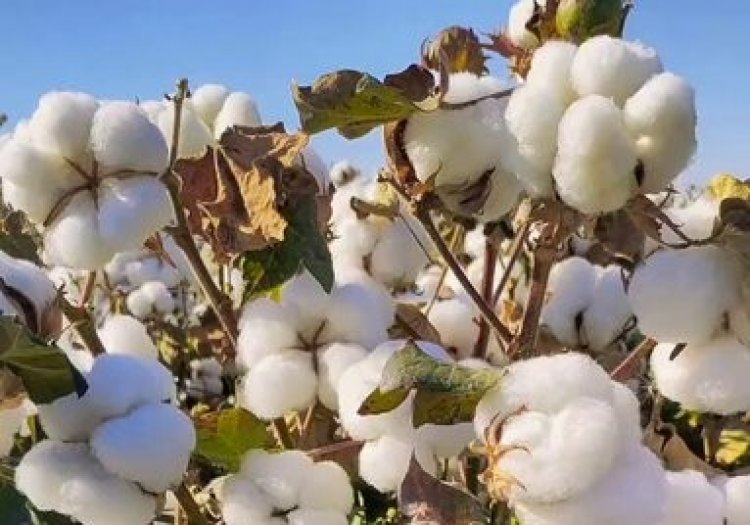
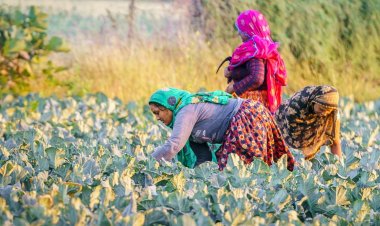
Heavy rains, floods, and pest and disease attacks have severely damaged the cotton crop. With zero import duty on cotton already putting pressure on domestic growers to sell their produce at distress prices, farmers’ livelihoods will be at risk if the new season’s crop fails to meet the Fair Average Quality (FAQ) standards set by the Cotton Corporation of India (CCI), as they will not be able to sell at the Minimum Support Price (MSP). Therefore, there is an urgent need to relax the FAQ norms for cotton procurement from farmers.
The Jodhpur-based South Asia Biotechnology Centre (SABC) has written to Union Textile Minister Giriraj Singh, urging immediate relaxation of FAQ norms for cotton procurement by CCI during the 2025-26 season. Copies of the letter, sent on September 9, 2025, were also marked to Devesh Chaturvedi, Secretary (DA&FW), Dr. M.L. Jat, Secretary (DARE), and Dr. R.S. Paroda, Chairman (TAAS).
The Ministry of Textiles has fixed the MSP for 2025-26 at ₹7,710 per quintal for medium-staple cotton and ₹8,110 per quintal for long-staple cotton. According to the order, procurement will strictly follow FAQ norms, which mandate specific fiber length, strength, micronaire value, and moisture limits. If produce falls short of these standards, deductions will be applied.
Cotton Under Stress
-
Excess Moisture: Continuous rains and waterlogging may push moisture content above 12%.
-
Quality Deterioration: Discolouration, reduced strength, lower grade, and poor seed quality.
-
Fiber Maturity: Waterlogging hampers fiber maturity, affecting micronaire value.
-
Contamination: Partially opened bolls make picking difficult and raise contamination risks.
Dr. Bhagirath Choudhary, Founding Director of SABC, said, “With the removal of import duty on raw cotton, international cotton will be available in the Indian market at cheaper rates. This will worsen the crisis for domestic farmers, who will be forced to sell at throwaway prices. If CCI does not relax FAQ standards this season, small and marginal farmers will face severe losses, endangering their income and livelihoods.”
Former Agriculture Commissioner of India and SABC Chairman Dr. C.D. Mayee added, “Climate change is altering pest and disease patterns in cotton. Sap-sucking pests, boll rot, and pink bollworm are not only reducing yields but also affecting fiber and seed quality. In such conditions, the spread of unauthorized HtBt cotton hybrids is rising. Indian cotton is struggling to compete with imports, forcing farmers to withdraw from cultivation. This has direct implications for India’s cotton production. Policymakers need to act swiftly to address these challenges.”
Relief Measures Demanded
SABC has urged the Textile and Agriculture Ministries to instruct CCI to relax procurement standards for the benefit of farmers. Their key demands include:
-
Procure cotton at MSP regardless of quality deterioration.
-
Raise the permissible moisture limit from 8% to 15%.
-
Relax grading norms based on discolouration and contamination.
-
Provide practical flexibility in fiber strength, micronaire value, and seed quality standards.
-
Allow farmers to sell their entire produce to CCI without quantity restrictions.
Kharif 2025-26 Crop Situation
-
In central cotton-growing regions (except parts of Nanded and Washim in Maharashtra and coastal Gujarat), conditions are slightly better than normal.
-
In northern states (Punjab, Haryana, Rajasthan) and southern states (particularly Andhra Pradesh and Telangana), continuous abnormal rains have caused large-scale waterlogging.
-
Cotton quality (colour, grade, fiber strength) has been adversely affected.
-
Boll rot, root rot, and pink bollworm infestations have further damaged yield and quality.
-
Meeting FAQ standards has become extremely difficult for farmers this season.