
ICAR-NBAIR Transfers Eco-Friendly ‘Shatpada’ Pest Management Technologies to Industry
The Indian Council of Agricultural Research (ICAR) has transferred two eco-friendly “Shatpada” pest management technologies to industry through ICAR–NBAIR, enabling the commercialization of residue-free solutions to control fruit flies and white grubs.

 Join the RuralVoice whatsapp group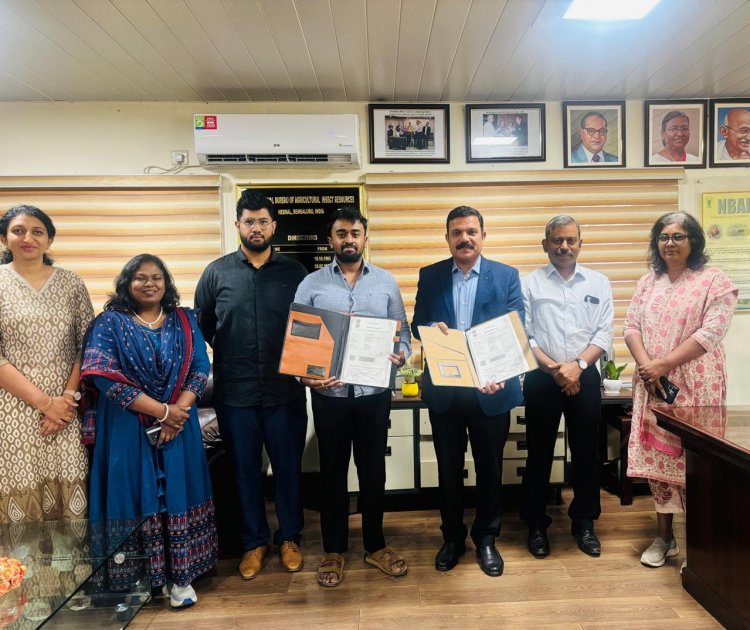
ICAR–National Bureau of Agricultural Insect Resources (ICAR-NBAIR), Bengaluru, has successfully transferred two indigenous, eco-friendly pest management technologies to industry under its flagship “Shatpada” series, marking a key step in translating publicly funded research into on-ground agricultural solutions.
The licensed technologies include the Shatpada Fruit Fly Trap for managing Bactrocera species and the Shatpada White Grub Lure for controlling Holotrichia consanguinea. Developed through extensive laboratory research and multi-location field trials, the innovations target two of the most destructive pest complexes affecting horticultural and field crops, particularly in states such as Rajasthan and Maharashtra.
ICAR said the technologies were designed to address the urgent need to reduce farmers’ dependence on chemical pesticides, which often pose health, environmental, and residue-related risks. The Shatpada solutions are residue-free, cost-effective, and farmer-friendly, offering improved pest control efficiency while lowering input costs.
The technology licensing agreement was signed with HSRP Agro Tech Pvt. Ltd., led by its Director Shashank Ramesh. An industrial engineer by training, Ramesh emphasized that technological advancement in agriculture must align with human health and environmental well-being.
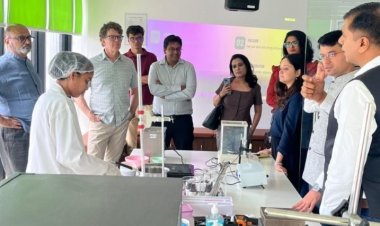
The transfer was facilitated under the leadership of Dr. S. N. Sushil, Director, ICAR-NBAIR, with Dr. Deepa Bhagat and her team playing a central role in technology development, scale-up readiness, and coordination with industry partners.
Aligned with the global “One Health, One World” approach, ICAR said the initiative reflects its broader commitment to science-led innovation, public–private partnerships, and farmer-centric development. The successful commercialization of the Shatpada technologies highlights how agricultural research can effectively bridge the laboratory-to-land gap, delivering tangible socio-economic and environmental benefits to farmers.