
India’s Crop Yields Set to Fall as Extreme Heat Intensifies: UN
Several states, including Rajasthan, Uttar Pradesh, Bihar, Madhya Pradesh, Telangana and Maharashtra, are projected to face near-permanent heat exposure by 2100 under high-emissions scenarios

 Join the RuralVoice whatsapp group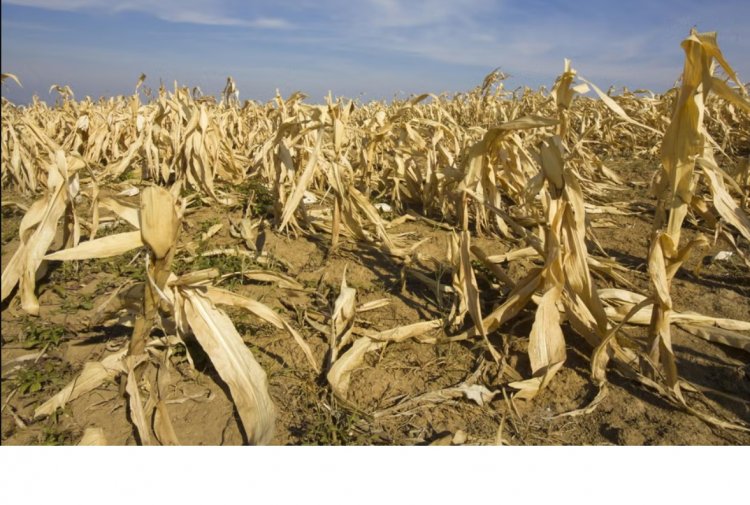
Extreme heat is fast becoming one of the most severe structural threats to India’s agriculture and food security, the United Nations warned on Wednesday in its Asia-Pacific Disaster Report 2025: Rising Heat, Rising Risk. The report underscores that India — home to the world’s largest farming population and one of the most climate-exposed agricultural systems — is entering a period where rising temperatures could reshape farm output, rural incomes and national food stability.
India’s farm belts moving toward chronic heat exposure
ESCAP’s modelling shows that India’s major agricultural zones — from the Indo-Gangetic plains to the Deccan plateau — are set to experience a sharp surge in days that breach severe and extreme heat thresholds (heat index 35°C and 41°C). Several states, including Rajasthan, Uttar Pradesh, Bihar, Madhya Pradesh, Telangana and Maharashtra, are projected to face near-permanent heat exposure by 2100 under high-emissions scenarios.
The warning comes after 2024, the hottest year globally, when prolonged heatwaves swept across India, triggering about 700 heat-related deaths, crop wilting cases, irrigation stress and rural labour disruptions. Many districts in Uttar Pradesh, Bihar and Odisha recorded temperatures above 45°C for consecutive days, damaging standing crops and accelerating soil moisture loss.
Heat dragging down yields of key staples
India’s heat-sensitive crops are already showing measurable declines:
- Wheat yields fall sharply when temperatures exceed 35°C during flowering and grain-filling. Early heat stress in March–April 2022 and 2023 cut output by 5–8% in several states — a trend ESCAP warns will intensify.
- Rice faces reduced grain quality and lower yields as heat accelerates maturation. Eastern India — Bihar, Jharkhand, Odisha and West Bengal — is particularly vulnerable due to high humidity and nighttime temperatures.
- Maize and pulses are at risk from prolonged heat spells that disrupt pollination.
- Sugarcane and cotton, both water-intensive, are seeing reduced productivity as high temperatures push evapotranspiration rates beyond irrigation capacity.
ESCAP notes that the number of days with temperatures above 40°C has doubled in parts of north and central India over the past four decades, directly eroding crop performance.
Livestock under mounting stress
India, the world’s largest milk producer, faces a worsening livestock heat crisis:
- Dairy cattle and buffaloes experience reduced feed intake and lower fertility once temperatures exceed 30–32°C.
- Milk yields can drop by 10–25% during peak heat months.
- Heat-related cattle deaths and disease outbreaks are rising in Rajasthan, Gujarat, Maharashtra, Karnataka and Andhra Pradesh.
For millions of smallholder farmers dependent on mixed crop-livestock systems, this erosion of dairy income compounds crop losses.
Heat cutting rural labour productivity
Agriculture still accounts for nearly 45% of India’s workforce, much of it exposed to outdoor heat. ESCAP warns that working hours lost to heat stress across the region are set to more than double between 1995 and 2030 — with India among the worst affected.
In peak summer months, labour capacity in parts of Uttar Pradesh, Bihar, Telangana and Tamil Nadu drops significantly as heat index levels cross safe thresholds. This affects sowing, transplanting and harvesting windows, delaying operations and reducing yields.
Irrigation and farm infrastructure at risk
India’s food production depends heavily on climate-sensitive infrastructure:
- Irrigation canals and reservoirs face higher evaporation losses as temperatures rise.
- Electricity grids — crucial for pumping groundwater — become vulnerable to heat-driven demand spikes and transformer failures.
- Cold storage units and warehouses struggle to maintain temperatures during prolonged heatwaves, increasing post-harvest losses of perishable crops.
Power cuts during the 2024 heatwaves disrupted irrigation cycles in states like Punjab, Haryana and Maharashtra, worsening crop stress.
Himalayan melt threatens long-term water security
ESCAP highlights that accelerated glacier melt in the Himalayas will alter river flows critical for agriculture in northern India. With 9.3 million people living near potentially dangerous glacial lakes, the risk of glacial lake outburst floods (GLOFs) threatens downstream irrigation networks in Uttarakhand, Himachal Pradesh and parts of Punjab.
India needs heat-ready agriculture
UN Under-Secretary-General and ESCAP Executive Secretary Armida Salsiah Alisjahbana said extreme heat must be treated as a structural agricultural risk rather than an episodic shock. India’s heat-response system remains incomplete: only a limited number of states issue heat-health advisories tailored for farmers.
ESCAP argues that India’s agricultural resilience will require:
- Heat-indexed crop advisories and farm-level early warning systems.
- Heat-responsive social protection, including income support for farm workers during extreme heat spells.
- Investment in heat-tolerant seeds, micro-irrigation and soil-moisture conservation methods.
- Cross-border green cooling corridors to stabilise agro-ecological systems in arid and semi-arid regions.
- Satellite-based heat stress mapping to guide planting decisions and irrigation planning.
A food security challenge intensifying each year
The UN report warns that without urgent heat-specific adaptation, India risks a future where crop yields decline, food prices become more volatile, livelihood insecurity deepens, and rural distress intensifies.
Extreme heat, ESCAP warns, is no longer a seasonal phenomenon — it is becoming a defining, year-round agricultural risk.