BIRC 2025 Targets Rs 25,000 Crore in Rice Export MoUs, Set to Strengthen India’s Global Agri Footprint
The Bharat International Rice Conference (BIRC) 2025, to be held on October 30–31 at Bharat Mandapam, aims to sign Rs 25,000 crore in rice export MoUs and strengthen India’s position in the global rice trade. Organized by APEDA and IREF, the event will showcase AI-driven technologies, women-led agri innovations, and climate-smart farming initiatives.

 Join the RuralVoice whatsapp group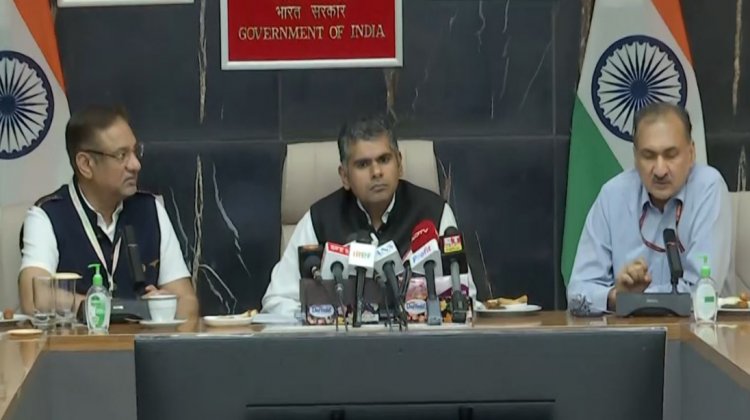
The Department of Commerce, Ministry of Commerce and Industry, has announced that the Bharat International Rice Conference (BIRC) 2025 will be held at Bharat Mandapam, Pragati Maidan, New Delhi, on October 30–31, 2025. The landmark event aims to sign Rs 25,000 crore worth of rice export MoUs and unlock new rice import markets estimated at Rs 1.80 lakh crore, reinforcing India’s leadership in the global rice trade.
A Global Platform for Rice Trade
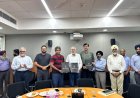
Conceived as a flagship initiative aligned with the Viksit Bharat @2047 vision, BIRC 2025 will serve as a global platform to bring together producers, exporters, importers, policymakers, financiers, researchers, and logistic providers to enhance transparency, resilience, and sustainability in the rice sector. At the curtain raiser event in New Delhi on Friday, APEDA Chairman Abhishek Dev announced that the Foreign Ministers of the Philippines, Ghana, Namibia, and The Gambia will participate in the two-day conference.
India, which exports rice to more than 172 countries, is one of the world’s largest producers and exporters of the staple food. In FY 2024–25, India exported 20.1 million metric tonnes of rice valued at USD 12.95 billion, accounting for nearly 28% of global output. Domestic production touched 150 million tonnes from 47 million hectares, with yields rising to 3.2 tonnes per hectare, up from 2.72 tonnes in 2014–15.
Institutional Collaboration and Broad Participation
The event is being organised by the Indian Rice Exporters’ Federation (IREF) and APEDA, with support from the Ministry of Commerce & Industry, and several other Ministries including Consumer Affairs, Food Processing, Cooperation, and Agriculture. Participating State Governments include Odisha, Telangana, Meghalaya, Assam, and Manipur, while cooperative institutions such as NCEL, NCOL, BBSSL, and Kribhco are lending support. More than 3,000 farmers and FPOs, 1,000 foreign buyers from 80+ countries, and 2,500 exporters and millers are expected to attend.
Over eight technical sessions will feature discussions with policymakers, trade bodies, research organizations, and industry experts. The final Vision Document—coordinated by the Department of Commerce, APEDA, IREF, ICAR, and the International Rice Research Institute (IRRI)—will be finalized over the next six months.
Globally, rice remains the backbone of food security, feeding over four billion people and sustaining around 150 million smallholder farmers across 100 countries. Since 1961, global rice production has surged from 216 million tonnes to 776 million tonnes, with the current market valued around USD 330 billion. Recognizing the environmental challenges—rice cultivation consumes 24–30% of the world’s irrigation water across 167 million hectares—the conference will focus on climate-smart farming, efficient irrigation, certification, and traceability to make rice cultivation more sustainable.
Technology and Innovation Highlights
A major attraction at BIRC 2025 will be India’s first AI-powered rice sorting and grading technology, launched live at the AgriTech Pavilion. Powered by Big Data and Artificial Intelligence, the system conducts simultaneous analysis of grain colour, shape, and structure, offering higher precision, lower energy use, and reduced processing costs.
Another highlight is the Women Entrepreneur, Startup, and MSME Pavilion, showcasing innovations such as climate-resilient agronomy, post-harvest technologies, traceability solutions using blockchain, and digital marketplace tools. Live mentorship and export-onboarding sessions will support emerging agri-businesses.
State Showcases and Cultural Experiences
State pavilions from Jammu & Kashmir, Assam, Bihar, Chhattisgarh, Haryana, Odisha, Meghalaya, Telangana, and Uttar Pradesh will display GI-tagged rice varieties, sustainable cultivation models, and investment opportunities. Meghalaya will spotlight traditional varieties like Pnah Iong, Mynri, Mangsang, Minil, and Khaw Biriun, grown under eco-friendly rain-fed systems. Telangana, whose paddy output has grown fourfold to 277.67 lakh metric tonnes in 2024–25, will promote rice varieties like Telangana Sona (RNR 15048) and Samba Mahsuri (BPT 5204).
Strengthening Cooperative and Research Initiatives
Bharat Organics, under the National Cooperative Organics Limited (NCOL), will launch its Organic Rice Range and Direct-to-Consumer platform at the event. The line will feature traditional and single-origin varieties such as Kala Namak, Indrayani, Gobindobhog, Black Rice, and Red Matta to promote farmer-direct, certified-organic rice.
A key milestone will be the signing of a contract to establish an Incubation and Agricultural Research Centre in New Delhi, promoting innovation in seed research, post-harvest management, and climate-resilient farming. The DGFT’s Trade Connect Portal will also be promoted as a unified digital gateway for exporters. Training sessions by ICAR and IRRI on good agricultural practices and water-efficient methods will further emphasize sustainability.
Going forward, BIRC will be held annually, serving as a flagship global platform for rice trade, policy dialogue, and technological collaboration. Partner countries for the 2025 edition include the Philippines, Myanmar, Niger, Comoros, Jordan, Liberia, The Gambia, and Somalia, with IRRI-SARC, E&Y, and S&P Global acting as knowledge partners.