
Complex Fertiliser Growth Seen Slowing to 2–4% Amid Import Woes, Geopolitical Tensions: Crisil
Crisil said overall volume growth will hinge on the easing of supply constraints and global prices of phosphatic fertilisers. With the government extending additional support for DAP imports, including long-term supply deals with Saudi Arabia and improving trade ties with China, availability is expected to gradually normalise over the rest of the fiscal.

 Join the RuralVoice whatsapp group
Growth in India’s complex fertiliser volumes is expected to slow sharply to between 2% and 4% in the current fiscal year from about 9% last year, as global supply disruptions, high raw material prices, and a strong base weigh on output and imports, according to Crisil Ratings.
Analysts said that despite the moderation in demand and margin pressures, the credit profiles of major fertiliser producers are expected to remain stable, backed by steady profitability, timely government subsidies, and measures to secure long-term raw material supplies.
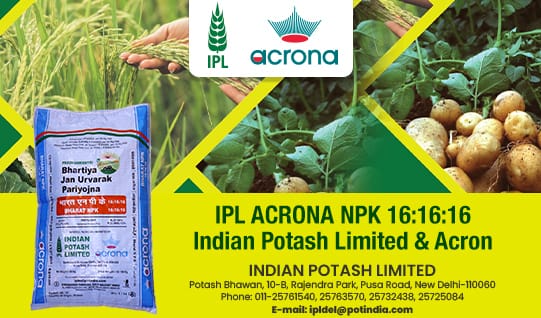
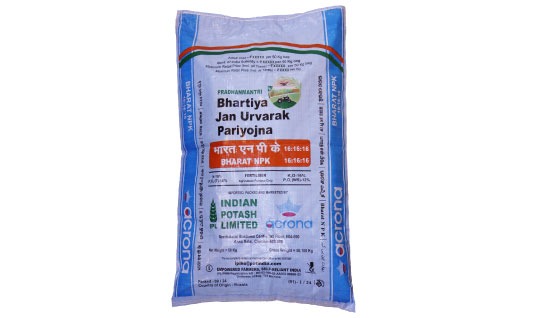
“On the high base of last fiscal, NPK volumes are expected to grow 4–6% this fiscal, supported by an adequate monsoon,” said Anand Kulkarni, Director at Crisil Ratings. “In contrast, DAP volumes are expected to remain flat as prices stay high, though availability is expected to improve due to government support and easing trade tensions.”
Import Dependence and Supply Disruptions
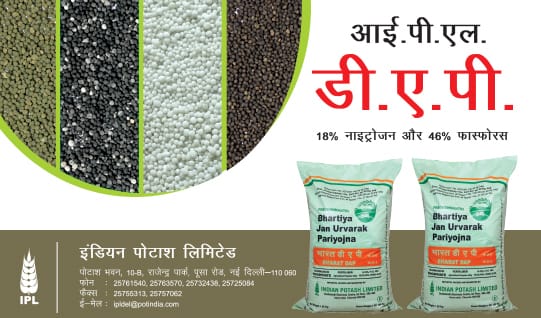
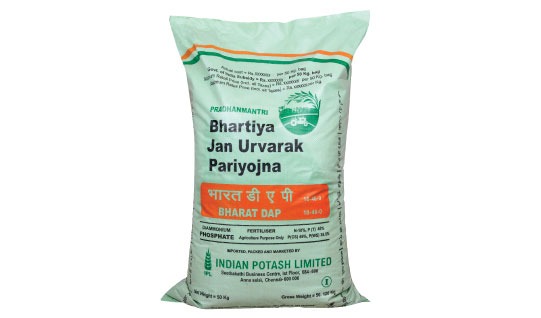
Complex fertilisers — mainly di-ammonium phosphate (DAP) and nitrogen-phosphorous-potassium (NPK) grades — make up about one-third of India’s total fertiliser consumption. While NPK grades are largely produced domestically, nearly 60% of India’s DAP needs are met through imports.
India’s dependence on imported raw materials such as phosphoric acid, ammonia, and potash leaves the sector vulnerable to global price shocks and geopolitical instability. China, which accounts for about one-third of India’s DAP imports, imposed export curbs last year, tightening global supplies and pushing up prices.
The resulting shortage forced Indian producers to ramp up NPK output — which can be substituted for DAP — leading to a 28% surge in NPK volumes last fiscal even as DAP volumes slumped 12%. The trend continued into the first quarter of FY26, with DAP volumes dropping 17% year-on-year while NPK grew 34%, Crisil data showed.
Key Data: Complex Fertiliser Volume Growth
Fiscal Year DAP NPK Total Complex
FY23 +4% +9% +7%
FY24 -12% +28% +9%
FY25 (Proj.) ~0% +4–6% +2–4%
Source: Crisil Ratings, Department of Fertilisers
Price Pressures and Subsidy Support
Geopolitical tensions have also driven up input costs, compelling the government to increase fertiliser subsidies to keep farmgate prices steady. The nutrient-based subsidy (NBS) mechanism, revised twice yearly, has helped buffer producers against sharp cost swings in imported raw materials.
“Despite the rise in raw material prices, profitability for complex fertiliser makers is likely to remain in line with last fiscal, with Ebitda projected at around ₹4,800 per tonne,” Crisil said, adding that several manufacturers are investing in backward integration to stabilise costs and margins.
However, the higher cost base has widened the subsidy requirement for the sector. Crisil estimated a shortfall of ₹8,000–10,000 crore against the initial budget allocation of ₹49,000 crore for FY26.
“There is likely to be incremental subsidy allocation by the government, as seen in the past, which will keep working capital requirements steady and support credit profiles,” said Nitin Bansal, Associate Director at Crisil Ratings. “Net leverage for the sector, which improved to 0.5 times last fiscal on higher subsidy inflows, is expected to remain healthy at around 0.75 times this year.”
Outlook
Crisil said overall volume growth will hinge on the easing of supply constraints and global prices of phosphatic fertilisers. With the government extending additional support for DAP imports, including long-term supply deals with Saudi Arabia and improving trade ties with China, availability is expected to gradually normalise over the rest of the fiscal.
Yet, analysts cautioned that any renewed geopolitical shocks or further spikes in raw material costs could strain the system, particularly if subsidy disbursements are delayed.
“While demand fundamentals remain strong due to healthy monsoon and acreage, the sector’s stability will depend on how effectively India manages its import dependencies,” Crisil said.
According to the agency’s projections, overall complex fertiliser volumes — including both DAP and NPK — are set to rise just 2–4% in FY26, compared to 9% growth in FY25, reflecting a year of consolidation after a volatile, high-growth phase.