
ICRISAT's Breakthrough Could Save Groundnut Farmers from Pre-Harvest Sprouting
The breakthrough study identifies specific varieties and key genes that halt premature sprouting before harvest—a problem that currently costs farmers up to 50% of their yields in severe cases.

 Join the RuralVoice whatsapp group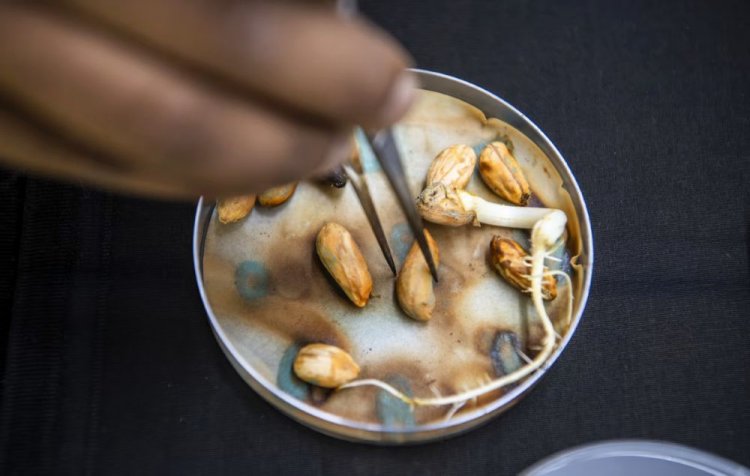
A breakthrough genomic discovery by the International Crops Research Institute for the Semi-Arid Tropics (ICRISAT) promises to help groundnut farmers by preventing pre-harvest sprouting — a long-standing challenge made worse by increasingly unpredictable rainfall.
Unseasonal rains often cause groundnut pods to germinate prematurely while still in the field, leading to severe yield and quality losses. Spanish groundnut varieties, which account for nearly 60 percent of global production, are the most vulnerable. Pre-harvest sprouting can slash yields by 10–20 percent under normal conditions and up to 50 percent during intense early rains.
In a new study, ICRISAT and its global partners have identified groundnut varieties and nine key genes that regulate fresh seed dormancy — a natural mechanism that delays germination for several weeks. This “built-in wait time” prevents sprouting during unexpected rainfall, protecting both yield and farmer income.
Dr Himanshu Pathak, Director General of ICRISAT, said the findings offer a critical tool at a time when climate-related uncertainties are increasingly threatening global food systems.
“Genomic insights into fresh seed dormancy represent a transformative opportunity to support millions of smallholder farmers across the Global South. I encourage groundnut breeders everywhere to apply these findings to develop the next generation of resilient varieties,” he said.
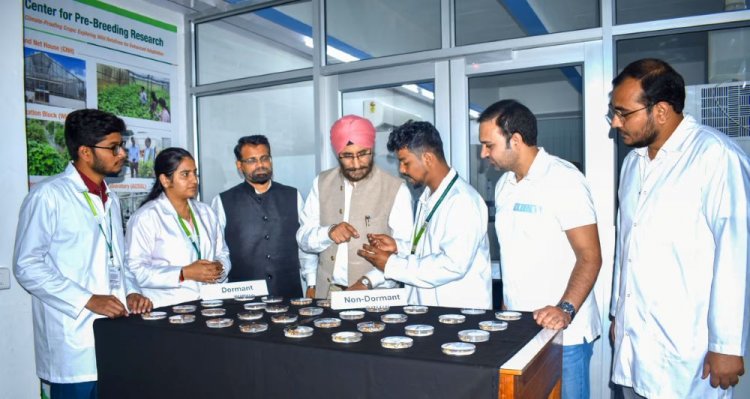
Groundnut crops typically mature 90–120 days after sowing and require a short, dry window for harvest. Even brief showers during this period can trigger sprouting, leaving farmers with heavy losses. To address this, researchers evaluated 184 genotypes from the ICRISAT Genebank across two seasons. They observed significant natural variation: some varieties sprouted within a week, while others remained dormant for more than 30 days.
From these, scientists identified varieties with an optimal dormancy period of 10–21 days — long enough to guard against early rains but short enough to allow timely planting in the next cycle. Genetic analysis of these varieties led to the discovery of nine high-confidence candidate genes associated with seed dormancy and sprouting resistance.
Dr Stanford Blade, Deputy Director General – Research and Innovation at ICRISAT, said the breakthrough has both economic and global relevance.
“Groundnut is a cornerstone of oilseed production and a livelihood crop for farmers in semi-arid regions. Optimizing seed dormancy offers transformative potential by sustaining quality production and reducing losses even as weather patterns continue to shift,” he noted.
The study provides a scientific foundation for breeding groundnut varieties with two to three weeks of seed dormancy, giving farmers crucial flexibility during harvest.
Dr Manish Pandey, Principal Scientist – Genomics & Pre-Breeding at ICRISAT, emphasized that the implications extend beyond groundnut.
“Fresh seed dormancy is vital across multiple crops in the face of unpredictable agricultural seasons. Genomic-level mitigation is the most cost-effective pathway, and we hope these findings spark further research in this critical area,” he said.
This discovery adds to ICRISAT’s recent genomic advances in heat tolerance, disease resistance and blanchability — all central to developing climate-resilient groundnut varieties. The Institute continues to screen global germplasm for priority traits and integrate gene-level insights into its breeding programs.
The study was conducted in collaboration with the University of Agricultural Sciences, Raichur; USDA–ARS Crop Genetics and Breeding Research Unit (USA); Oil Crops Research Institute, Chinese Academy of Agricultural Sciences (China); and Murdoch University (Australia). It received support from the Indian Council of Agricultural Research (ICAR), the Department of Biotechnology (DBT), Government of India, and the Bill & Melinda Gates Foundation (BMGF).