
Understanding the Significance of Bharat Ratna Chaudhary Charan Singh and Kisan Diwas
Chaudhary Charan Singh’s farmer-centric policies, land reforms, and emphasis on rural economy reshaped Indian politics and empowered the peasantry as a decisive force. The growing relevance of Kisan Diwas highlights the enduring significance of his vision, especially at a time when questions of farmers’ livelihoods, agricultural viability, and rural development remain central to India’s future.

 Join the RuralVoice whatsapp group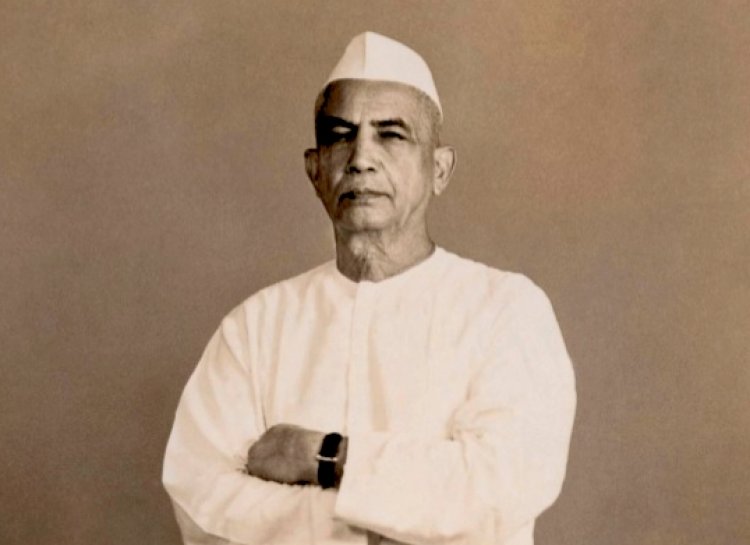
National Farmers’ Day (Kisan Diwas), observed each year on 23 December, is not merely a commemorative date but a representation of the idea that villages and farmers are central to India’s progress and nation-building. It honours the legacy of Bharat Ratna Chaudhary Charan Singh, whose policies and farmer-centric vision strengthened rural India and empowered the working agrarian class.
Chaudhary Charan Singh’s long political career was marked by efforts to embed the aspirations of village prosperity and the well-being of farmers and labourers into national politics and public policy. His focus on prioritising agriculture and rural economy is reflected in transformative initiatives at both central and state levels. Starting his political journey with the Congress in Uttar Pradesh before independence, he later established his own political identity and party, eventually becoming Prime Minister. His political strength flowed from the very rural and farming communities he championed throughout his life.
From land reform measures like abolition of zamindari and land consolidation (chakbandi) to institutional support for agricultural communities, Charan Singh gave farmers confidence and agency. That confidence remains a defining force for India’s rural and hard-working classes to this day. It is for this reason that he remains the only leader in the country whose birthday is officially celebrated as Farmers’ Day—a day that now resonates with widespread respect and emotional connection across India and also serves to honour the efforts and contributions of farmers.
There is no denying that Indian farmers still face many hardships, with rural sectors frequently neglected in policy focus. Yet regardless of which party is in power, governments must project themselves as working on farmer-centric agendas. In times of economic difficulty, Charan Singh’s emphasis on villages and fields continues to serve as a reminder of the path to broad-based progress. It is therefore essential not only to remember him but also to understand his ideas and policies.
Although Charan Singh was awarded the Bharat Ratna in 2024, he had long been recognised by the public as the foremost advocate of farmers and rural development. Senior economists have described him as India’s greatest farmer leader, noting that he never confined himself to narrow identity politics. Today, there is no leader of comparable stature with a national-level vision dedicated to farmers’ interests.
Some media, especially English outlets, tended to portray him as a representative of a specific caste or as a supporter of larger landholders. However, in reality, land reforms such as abolition of zamindari and land redistribution benefitted many agrarian and rural communities, including backward groups who received land rights and later emerged as political forces. Charan Singh also played a key role in establishing the Mandal Commission, which reshaped India’s social justice and political structures—though broader policy recognition of backward groups like Jats at the national level remains limited.
Despite such debates, Charan Singh’s farmer-friendly ideas, policies and decisions firmly establish him as an undisputed leader of India’s farmers. Unlike many politicians, he was a thoughtful figure who believed in sharing his vision through books, helping both the public and policymakers understand rural and economic issues. Few politicians have written so extensively on economic, agricultural and rural matters. His life and work have also been documented by American author and scholar Paul Brass, not just as biography but as an important record of the politics of his era.
Today, as we observe Charan Singh’s birth anniversary as Farmers’ Day, we highlight his contribution to the Indian economy, politics and farmers’ lives. It is heartening to note that not only farmers and political parties but also agribusinesses and connected industries are associating themselves with this day. It would be beneficial if urban society and the industrial sector better understood the struggles of farmers and worked to fairly recognise their efforts, because the prosperity of farmers is ultimately the prosperity of the nation.
Across India, events, discussions and analyses are being held on this day. Farmers’ Day has become an important national occasion. But at its core should be the question: How can the lives of farmers be improved? How can farming become profitable for farmers? And how can Charan Singh’s ideas and policies translate into real changes at the grassroots level?