
Slow Growth in Agriculture Despite Higher Output Signals Stagnant Farm Incomes
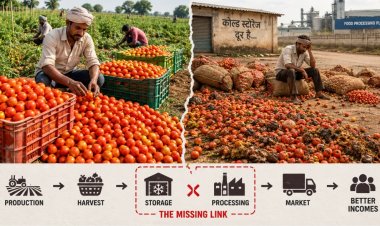
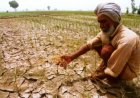
Agricultural production in India has increased, but falling prices of farm produce have prevented farmers from benefiting from higher output. The policy approach adopted by the central government and the Reserve Bank of India to control food prices has put the agriculture sector under pressure. The latest economic data reveals this.

 Join the RuralVoice whatsapp group
Despite a better monsoon and higher agricultural output, the economic condition of farmers in India continues to weaken. This reality is underscored by the government’s Gross Domestic Product (GDP) estimates for the current financial year (2025–26). According to the First Advance Estimates released by the Central Statistical Office (CSO) on January 7, GDP is projected to grow at 7.4 percent during the year, while Gross Value Added (GVA) is expected to rise by 7.3 percent. GVA is calculated by subtracting net taxes and subsidies from GDP and serves as an indicator of total production.
However, for agriculture and allied sectors, GVA growth at constant prices (2011–12 base year) is estimated at only 3.1 percent in the current financial year, down from 4.6 percent in 2024–25. What is even more concerning is that at current prices, GVA growth for agriculture and allied sectors is projected at just 0.8 percent. In contrast, the sector had recorded a growth of 10.4 percent at current prices in the previous year.
The gap between GVA at constant prices and current prices reflects the impact of inflation. For the agriculture and allied sectors, this gap has turned negative at -2.3 percent, indicating deflation rather than inflation in agricultural produce prices. Simply put, when crop prices are not rising, farmers’ incomes cannot increase.
As a result, Indian agriculture finds itself in a situation where production is increasing, but due to stagnant or falling crop prices, growth in GVA at current prices has slipped to below one percent. This points to stagnation and sluggishness in the farm sector, an alarming signal for the broader economy.
Government data consistently reinforce this trend. Food inflation has remained low, and prices of agricultural commodities in markets across the country have been lower than last year. During the kharif season, farmers were forced to sell most crops at prices below the Minimum Support Price (MSP). This trend is clearly reflected in the GDP and GVA figures for agriculture and allied sectors.
To control inflation, the government has taken several measures to keep food prices in check. These include large-scale imports of commodities such as edible oils and pulses, where domestic production falls short of consumption needs. The outcome has been that for most kharif crops, farmers have struggled to even realise MSP.
For farmers’ incomes to rise, growth in production alone is not sufficient; prices of agricultural produce must also increase. While agricultural output has grown, falling prices have prevented farmers from benefiting. The policy approach adopted by the central government and the Reserve Bank of India to control food prices has placed the agriculture sector under pressure, a fact highlighted by the latest economic data.
When the overall economy is growing at 7.3 percent, agriculture and allied sectors expanding at just 3.1 percent should be a cause for concern for any government, especially when nearly 46 percent of India’s working population still depends on agriculture and allied activities for employment.
Agriculture’s share in GDP during the current year is estimated at around 17 percent, while manufacturing is expected to account for 14 percent. Yet, manufacturing employs less than 12 percent of the workforce. Financial services, other tertiary sectors, construction, and government services make up the remaining key components of the economy.
Manufacturing GVA growth is projected at 7 percent this year, up from 4.5 percent last year. Meanwhile, GVA growth in the tertiary sector, including trade and services, is expected to rise from 7.2 percent last year to 9 percent this year. This clearly shows that the bulk of overall economic growth is coming from non-agricultural sectors.
While faster growth in non-agricultural sectors is both normal and necessary, it is equally important to assess whether people dependent on agriculture are finding employment in these expanding sectors. At present, this does not appear to be happening. Nearly 46 percent of the working population continues to depend on agriculture and allied sectors.
In essence, these figures highlight the widening gap between the rural and non-rural economy and confirm that incomes of those dependent on agriculture are not increasing. The implications go beyond farmers’ distress alone. Weak consumer demand from rural economy is another sign of this underlying stress.
As the government prepares to present the Union Budget for 2026–27 on February 1, it will be crucial to see whether concrete steps are taken to strengthen the agriculture sector. While every budget claims to prioritise agriculture and rural development, ground realities suggest a different picture.