
Why Farmers Are Turning Against India’s Ethanol Expansion?
Once promoted as a major income booster for farmers, the ethanol policy now faces water scarcity concerns, limited gains for farmers, and little benefit to fuel consumers. The situation highlights how rapid expansion, policy ambiguity, and economic imbalance are undermining the ethanol push.

 Join the RuralVoice whatsapp group
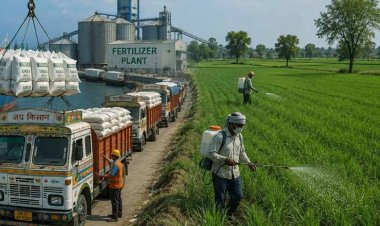
The protest by farmers in Tibbi, Hanumangarh district of Rajasthan, against the establishment of an ethanol plant has raised serious questions about the success of India’s ethanol policy. Ethanol was projected as a major tool to enhance farmers’ income, yet the strong opposition to the very same ethanol plant indicates that the benefits of the ethanol policy are not reaching farmers at the grassroots.
The Central government achieved the target of blending 20% ethanol with petrol in a very short span. However, this rapid progress has also triggered several questions, the most significant being the farmers’ resistance to ethanol plants.
The Ethanol Blending Programme (EBP) was originally launched by the government to address the challenges facing the sugar industry and sugarcane farmers. Following the Brazilian model, ethanol production was preferred over sugar during years of surplus sugarcane production. For this purpose, the government simplified distillery regulations, approvals and provided financial incentives.
Simultaneously, large-scale investments were made to expand grain-based ethanol production facilities. As a result, the country’s ethanol production capacity has now risen to almost double the requirement of oil marketing companies.
In the current Ethanol Supply Year (ESY 2025-26), against the demand of about 1050 crore litres, suppliers have offered around 1776.49 crore litres of ethanol. Of this, 1304.86 crore litres have been offered by grain (maize and rice)-based ethanol producers, while 471.63 crore litres have been offered by sugarcane-based producers.
Consequently, the sugar industry— for which the ethanol programme was originally designed— now gets to supply only 27.5% ethanol, while the rest will be supplied through grain-based plants. However, grain-based ethanol production is also falling short of its installed capacity, and many companies are beginning to face financial distress. This could pose a serious economic challenge for the sector.
It would have been better if the government had encouraged ethanol production by distilleries established by the sugar industry, rather than standalone distilleries. Ideally, these distilleries should have been encouraged to use a dual feedstock system, operating on sugarcane juice or molasses during the crushing season and utilising grain as feedstock during the off-season. However, this did not happen, and the rapid establishment of grain-based distilleries is now proving to be a problem.
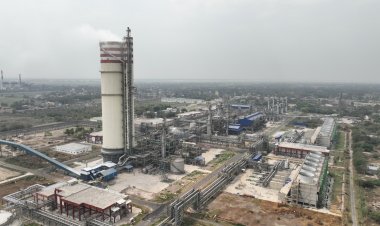
In this backdrop, the ethanol plant in Tibbi, Hanumangarh, has become a critical issue. Water for agriculture in this region is sourced from outside, and groundwater levels are extremely low. Experts believe that producing one litre of ethanol requires around six litres of water. Therefore, questions over setting up a large ethanol plant in a water-scarce state like Rajasthan are natural. With farmers’ protests intensifying, it has become difficult for the government to push this project forward.
Maize Prices Crash, Farmers’ Hopes Shattered
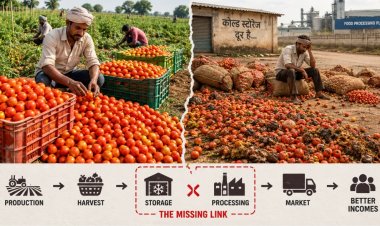
The use of maize for ethanol boosted demand and attracted farmers towards maize cultivation. Two years ago, maize farmers in Punjab, Bihar, Madhya Pradesh, and Uttar Pradesh were getting prices above MSP, touching as high as Rs 2600 per quintal. But this year, due to higher maize production and a lack of strong price-support mechanisms, prices have fallen well below MSP.
For the current marketing year, the MSP for maize is Rs 2400 per quintal, whereas farmers are being forced to sell maize at Rs 1200 to Rs 1800 per quintal. This has led to deep frustration among farmers.
The assumption that rising maize demand for ethanol would increase farmers’ income has proved incorrect. A major factor behind this is the Food Corporation of India (FCI) selling broken rice to ethanol producers. This rice, which cost more than Rs 4100 per quintal to produce, was first offered at Rs 3200 per quintal but found no buyers. Later, the price was slashed to Rs 2250 per quintal.
Overall, maize farmers are also being deprived of ethanol-related benefits. Unless ethanol prices are linked to proof of MSP payments by distilleries, farmers cannot expect better rates. But currently, there is no such policy.
Consumer-Level Challenges
The ethanol industry wants the blending ratio to be increased to 24%, but public perception is not favourable. Concerns about ethanol blending affecting mileage and engine performance have generated scepticism, raising questions about the programme’s long-term future.
Oil companies are procuring ethanol at cheaper rates, yet there has been no reduction in petrol prices for consumers. As a result, the public sees no direct benefit from ethanol blending. This situation is preventing the government from making major decisions on increasing blending levels. At the same time, the automobile industry is also not moving rapidly towards flex-fuel technology.
Sugarcane Farmers Also Left Out
The government claims that ethanol has benefitted sugarcane farmers. But farmers argue that sugar mills used to pay them at the State Advised Price (SAP) earlier, and that remains unchanged even today. The same holds true in FRP-based states. Although the government says ethanol has improved timely sugarcane payment, farmers have not received any direct share of ethanol revenue.
In Uttar Pradesh, the leading sugarcane-producing state, sugarcane SAP remained freez in the last years. State governent has increased SAP for current crushing season(2025-26). Meanwhile, farmers have suffered from crop diseases and declining yields.
On one hand, maize farmers are compelled to sell produce at lower prices; on the other hand, sugarcane farmers have gained no separate direct benefit from ethanol. Consumers too have received no relief in fuel prices.
This is why neither farmers nor the public show enthusiasm for the ethanol program. These circumstances have emerged due to policy ambiguity.