
India Sugar Production Forecast Cut 14% to 29.5 Million Tonnes as El Niño Threatens Cane Crop: USDA Report
The US Department of Agriculture (USDA) has cut its forecast for India’s sugar production in the 2026–27 marketing year by 14% to 29.5 million metric tonnes. Erratic rainfall, prolonged dry spells, waterlogging and red borer infestations are expected to reduce sugarcane yields and recovery rates. Sugar production is expected to remain among the lowest levels recorded in recent years.

 Join the RuralVoice whatsapp group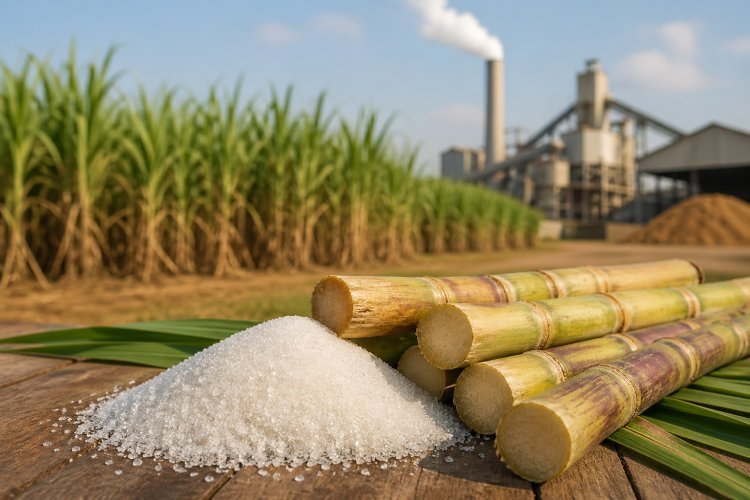
India’s sugar production is expected to decline in the 2026–27 marketing year as erratic rainfall, waterlogging and pest infestations affect sugarcane yields and sugar recovery rates. The US Department of Agriculture (USDA) has cut its forecast for Indian sugar production to 29.5 million metric tonnes (MMT), on a raw-value basis, down 14% from its earlier projection of 33.6 MMT.
According to the USDA Foreign Agricultural Service’s (FAS) Sugar Semi-annual report, the production shortfall could widen the gap between domestic consumption and output, putting further pressure on sugar supplies and prices. Sugar production is expected to remain among the lowest levels recorded in recent years.
Sugarcane Production Forecast Cut to 434 Million Tonnes
FAS New Delhi has also revised its estimate of the sugarcane-planted area down by less than 1%, from 5.95 million hectares to 5.9 million hectares. The planted area may continue to shrink slightly as some farmers shift towards more profitable cash crops, although this trend remains limited for now.
While the current crop appears healthy, erratic rainfall has added to crop stress, prompting a reduction in the sugarcane production forecast to 434 million metric tonnes (MMT), around 6% below the earlier estimate of 455 MMT.
Post-crop surveys conducted in Maharashtra, Karnataka and Uttar Pradesh have led to a 1% downward revision in the estimated harvest compared with the previous forecast, driven by concerns over erratic, El Niño-linked weather.
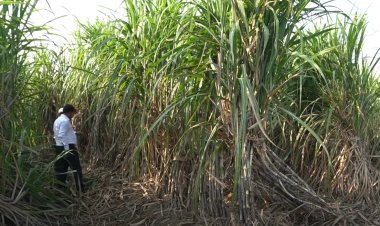
Field surveys conducted between March and September 2026 across the sugarcane belts of these states confirmed strong crop establishment and healthy vegetative growth, supported by two consecutive years of above-normal rainfall. However, a severe rainfall deficit in 2026 is expected to reduce sucrose content in the cane, lowering the effective harvesting area and overall sugarcane production.
Significant rainfall deficits and extended dry spells during critical growth periods have stunted crop development across major sugarcane-growing regions, reducing both the weight of harvested cane and yields per hectare in key producing states. Reduced moisture availability, combined with pressure to begin crushing earlier in the season, is expected to further lower the proportion of sugar extracted from crushed cane.
Waterlogging and Red Borer Add to Crop Stress
In addition to rainfall shortages, untimely rain in Maharashtra caused waterlogging in some sugarcane fields, further affecting yields. In parts of Uttar Pradesh, red borer infestations were observed and linked to the repeated use of the same sugarcane variety. As a result, the sugar recovery rate is projected to be 8.6%, with crushing operations set to begin in October 2026.