
Flesh-Eating Screwworm Reappears in US After Decades, Threatening Livestock Industry
The USDA has confirmed a second New World screwworm case in Texas, heightening concerns about the return of the flesh-eating parasite to the United States. Authorities have launched containment measures, including quarantines and sterile fly releases, to prevent wider spread and protect the nation’s livestock industry from major losses.

 Join the RuralVoice whatsapp group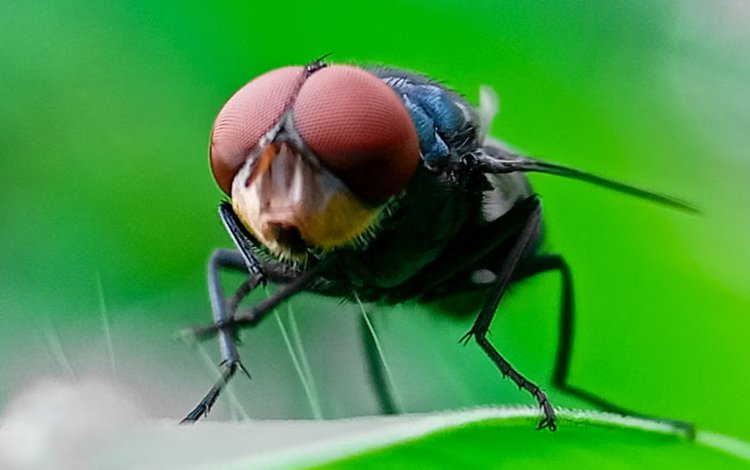
Cases of the New World screwworm (NWS), a flesh-eating parasitic fly eradicated from the United States more than five decades ago, are now being detected in Texas, raising alarm across the country's livestock sector. U.S. agriculture authorities have launched emergency containment measures amid fears that the parasite could spread further and inflict significant economic damage on the cattle industry.
The U.S. Department of Agriculture (USDA) recently confirmed screwworm infestations in calves in Zavala County, South Texas, marking the first domestic detections since 1966. The findings come after months of warnings from federal and state officials as the parasite steadily moved north through Mexico toward the U.S. border.
USDA Secretary Brooke Rollins said the department, in collaboration with the Texas Animal Health Commission, has formed a unified Incident Command Team and deployed personnel to the affected area to contain and eradicate the parasite. Authorities have established a 12.5-mile infested zone around the detection site, accompanied by quarantines, movement controls for animals, and enhanced surveillance activities.
New World screwworm is a parasitic fly whose larvae feed on the living tissue of warm-blooded animals, including cattle, wildlife, pets, and, in rare cases, humans. Female flies lay eggs in open wounds or body openings, and the hatched larvae burrow into flesh, causing severe tissue damage, infections, and potentially death if left untreated.
Although public health experts consider the risk to humans to be very low, the parasite poses a serious threat to livestock. A widespread outbreak could inflict billions of dollars in losses on the U.S. cattle industry and place additional pressure on beef prices, which are already at record levels. Texas alone has a cattle industry valued at approximately $15 billion.
USDA officials believe the parasite likely migrated northward from Central America and Mexico, where outbreaks have been reported since at least 2022. After being eradicated from the United States in the 1960s, screwworm cases re-emerged in several Central American countries, with Mexico reporting its first case in 2024.
To prevent further spread, the USDA has intensified its sterile fly release program, one of the most successful pest-eradication techniques used against screwworm in the past. The method involves releasing sterilized male flies into affected areas so that females, which generally mate only once, produce no viable offspring. Currently, U.S. authorities are releasing around 100 million sterile flies every week across the United States and Mexico.
In addition to aerial releases, the USDA plans to accelerate targeted ground releases of sterile flies around the affected zone, replicating a strategy that successfully eliminated an outbreak in the Florida Keys in 2016. The department is also investing in new sterile fly production and dispersal facilities in Texas and Mexico to strengthen long-term response capabilities.
The U.S. has been preparing for the parasite’s possible arrival for months. Since early 2025, more than 8,000 detection traps have been deployed, resulting in the testing of 58,000 samples and 19,000 wildlife specimens before the first positive case emerged.
Rollins has assured Americans that the food supply remains safe and that there is currently no threat of mass infestation. Agriculture experts warn, however, that continued vigilance will be essential to prevent the parasite from gaining a foothold in the country’s already strained cattle sector, which is experiencing its lowest herd levels in 75 years.