
India’s Food Challenge Shifts from Surplus Production to Affordable Nutrition: KPMG Report
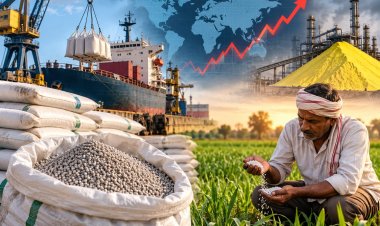
India's food challenge is shifting from production to affordable nutrition, according to a KPMG report. Despite surplus food production, 35.5% of the population could not afford a healthy diet in 2025. Cold-storage gaps, post-harvest losses and groundwater depletion highlight the need for sustainable farming and stronger supply chains.

 Join the RuralVoice whatsapp group
India has made substantial progress in achieving foodgrain self-sufficiency, but ensuring access to affordable, nutritious food for all remains a major challenge, according to a new report by KPMG. Titled Future of Food System: Preparing for the Next Frontier, the report highlights a widening gap between food production and actual nutritional intake, alongside weaknesses in storage infrastructure, supply chains and the sustainability of agricultural practices.
The report argues that India's next agricultural priority must go beyond producing sufficient calories to ensuring that nutritious food reaches consumers at affordable prices without exhausting natural resources.
Food availability does not ensure nutrition
India's per capita food production is estimated at around 1,721 grams per day, approximately 36% higher than normative dietary requirements. Yet actual food consumption remains around 20% below prescribed nutritional standards, pointing to affordability and access barriers rather than an overall shortage of food.
Using the Food and Agriculture Organization's (FAO) Cost of a Healthy Diet indicator, the report estimates that approximately 35.5% of India's population, or 520.1 million people, could not afford a healthy daily diet in 2025.
Although households are spending a smaller proportion of their monthly budgets on food overall, consumption patterns are shifting towards higher-value commodities such as dairy products, fruits, vegetables and protein-rich foods. However, affordability constraints continue to prevent vulnerable households from meeting recommended dietary requirements. The consequences are reflected in persistent nutritional challenges, including child stunting, wasting and underweight.
Cold-chain gaps deepen food losses
Weaknesses in storage and distribution infrastructure further widen the gap between agricultural production and consumer access. Despite India's extensive warehousing network and thousands of cold-storage facilities, the country faces an estimated shortfall of 10-15 million tonnes in cold-storage capacity for perishable commodities.
The uneven distribution of facilities compounds the problem. Uttar Pradesh accounts for more than 38% of India's total cold-storage capacity, while several northeastern and hill regions have fewer than five facilities. Moreover, approximately three-fourths of existing cold-storage space is primarily used for potatoes, leaving fruits, vegetables, dairy products and seafood with inadequate specialised storage.
These infrastructure gaps contribute to post-harvest losses estimated at 6-15% for fruits and 4.8-11.6% for vegetables. Such losses reduce farmers' earnings, constrain market supplies and add to the cost of delivering fresh produce to consumers.
Resource-intensive farming raises sustainability concerns
The report also flags the environmental costs of intensive agricultural practices. In Punjab, groundwater extraction has reached 156% of the state's annual extractable groundwater resources, exceeding sustainable limits.
This underscores the need to integrate water efficiency and resource conservation into agricultural policies. Raising production alone will not ensure long-term food security if farming systems continue to deplete groundwater and other natural resources.
Five priorities for transforming the food system
KPMG calls for a shift from conventional food security towards comprehensive nutrition security through coordinated action across the food value chain. Key priorities include improving agricultural productivity through innovation and adaptation to changing agro-climatic conditions; strengthening supply chains through solar-powered cold storage and blockchain-based traceability; leveraging digital public infrastructure; and improving transparency across the food system.
The report also emphasises the role of consumer-facing businesses in making healthier food choices more accessible and affordable.
Nikhil Sethi, Partner and Head, Consumer Markets, KPMG, said, “India has made remarkable progress in food security. The next challenge is ensuring that nutritious food is accessible, affordable and convenient for every citizen. Consumer market companies have a critical role to play in shaping healthier choices and building a more nutrition-secure India.”
The report concludes that India's food system must be assessed not only by the volume of its harvests but also by its ability to deliver affordable nutrition sustainably and equitably. Improving farm productivity, reducing post-harvest losses and strengthening access to nutritious food will be central to this transition.