
15 Percent Monsoon Deficit Pushes Over Half of India into Drought, Raising Kharif Crop Concerns
More than 53 percent of India’s area has come under drought conditions, with monsoon rainfall 15 percent below normal. The deficit is higher in southern, western and northeastern regions. The acreage under kharif crops, including paddy, soybean, groundnut, sugarcane and cotton, is lower, while the rainfall shortage is also expected to affect crop production.

 Join the RuralVoice whatsapp group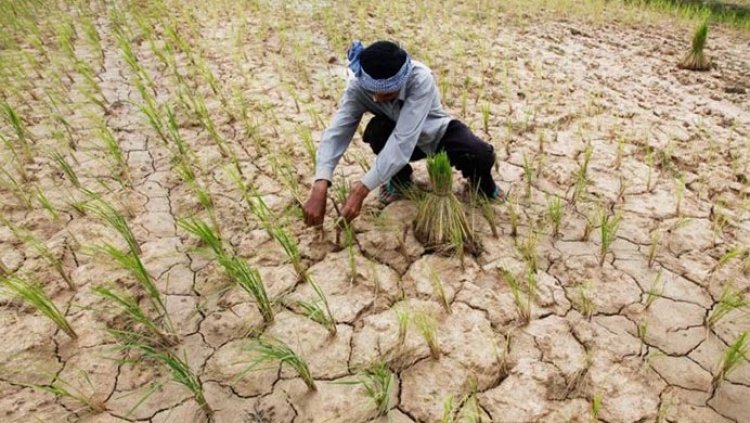
The impact of El Niño is now becoming increasingly visible, with more than half of the country’s area coming under drought conditions. In some areas, the monsoon rainfall deficit has exceeded 50%. Apart from Punjab, Haryana, Rajasthan and Bihar, all states in southern India are facing the impact. In the Northeast, all states except Nagaland, Mizoram and Tripura are affected. The rainfall deficit is affecting kharif crops. Besides paddy, the acreage under oilseeds, sugarcane and cotton is lower than last year. Even crops standing in the fields face the risk of lower production due to inadequate rainfall.
According to the India Drought Monitor of IIT Gandhinagar, 53.2% of the country’s area was under drought conditions as of September 9, up from 46% a week earlier. Among major states, the affected area stands at 90% in Andhra Pradesh, 86.2% in Telangana and 85.2% in Maharashtra.
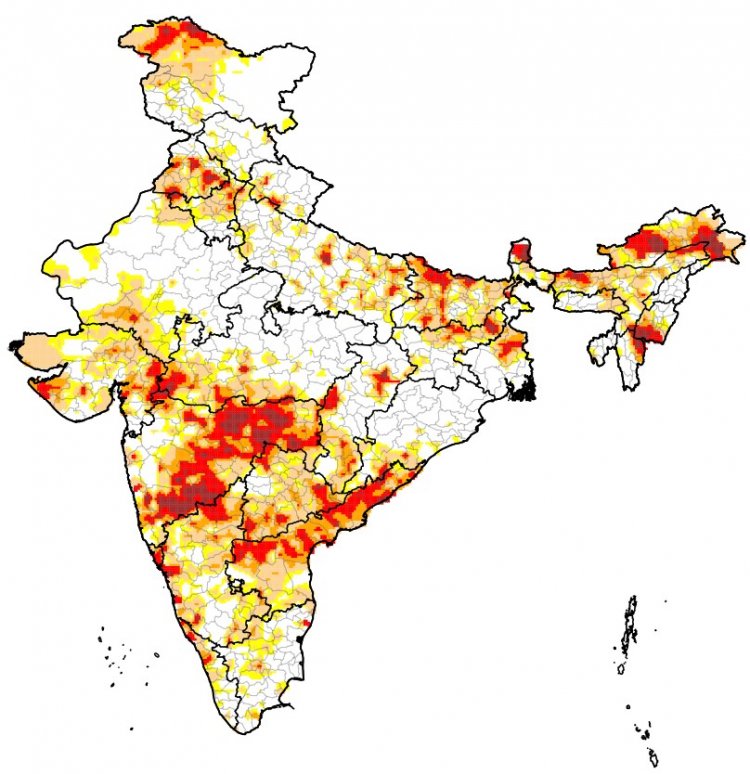
Drought conditions according to the India Drought Monitor.
Region-wise, 40% of northern India and 45% of northwestern India are currently affected by drought. The situation is relatively better in central India, where 39% of the area is under drought conditions. However, 82% of western India and 70% of southern India are affected. In eastern India, 45% of the area is under drought conditions, while the figure is 64% in the Northeast.
According to the India Meteorological Department, monsoon rainfall so far this year is 28% below normal in southern states, 25% below normal in eastern and northeastern states, 10% below normal in northwest India and 6% below normal in central India. At the national level, rainfall is 15% below normal. The department has said that the southwest monsoon is likely to begin withdrawing from western Rajasthan from September 19. However, it has forecast good rainfall in Tamil Nadu and Kerala towards the end of this week.
State-wise, rainfall is 40% below normal in Punjab, 23% in Haryana, 25% in Rajasthan, 30% in Karnataka, 20% in Telangana, 42% in Andhra Pradesh, 23% in Tamil Nadu, 27% in Kerala and 36% in Bihar. In the Northeast, rainfall is 26% below normal in Assam, 42% in Arunachal Pradesh, 43% in Manipur and 59% in Meghalaya.
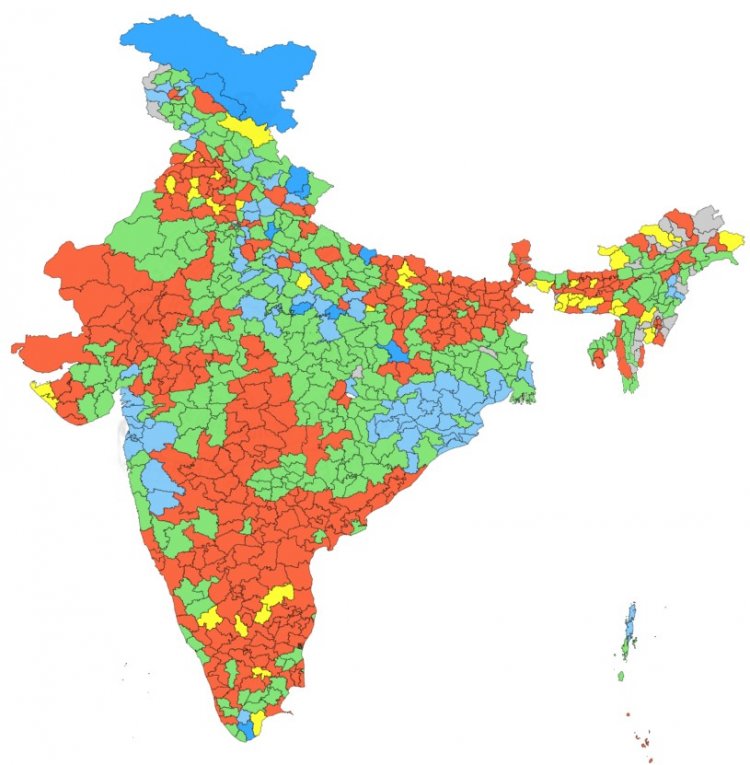
Rainfall situation according to IMD. Blue indicates rainfall above normal; green indicates rainfall between -19% and 19% of normal; red indicates a 20-59% deficit; and yellow indicates a deficit of more than 60%.
The impact of the rainfall deficit is clearly visible on kharif crops. According to information available on the Ministry of Agriculture and Farmers Welfare’s yield portal, paddy acreage is 3.82% lower than last year. Among pulses, except urad, the acreage under other crops is either broadly at last year’s level or lower. The area under coarse cereals is marginally higher than last year, while oilseed acreage has declined. Both major oilseed crops, soybean and groundnut, have recorded a fall in acreage. Soybean acreage is 0.8% lower than last year, while groundnut acreage is down 0.42%.
Sugarcane acreage is also 0.69% lower than in kharif 2025-26, while cotton acreage has declined by 0.88%. Overall, the acreage under all kharif crops is 1.44% lower than last year.
Paddy is expected to be among the crops most affected by the rainfall deficit. Eastern and southern states, where paddy is widely cultivated, have received very little rainfall over the past several weeks. With both acreage and rainfall lower, there are concerns that rice production could also decline this year. Farmers had also faced fertilizer shortages at the beginning of the season.
Besides paddy, other kharif crops are also expected to be affected. In some rain-fed areas of Maharashtra, there have been reports of farmers destroying soybean crops by running tractors over them due to crop stress caused by inadequate rainfall.