
As Sugar Prices Fall, Industry Denies Excessive Profits From Brief Price Peak
Retail sugar prices have fallen 11-12% ahead of the festive season, prompting ISMA and NFCSF to deny that mills made excessive profits during the recent price spike. The associations said only 2.5% of annual consumption was sold at peak prices, while seasonal realisations remain subdued and cane payments continue.

 Join the RuralVoice whatsapp group
With retail sugar prices falling by 11-12% across the country ahead of the festive season, the sugar industry has sought to counter the narrative that mills benefited disproportionately from the recent price spike. The Indian Sugar & Bio-energy Manufacturers Association (ISMA) and National Federation of Cooperative Sugar Factories (NFCSF) said the surge was brief and involved only a small share of annual domestic sugar sales.
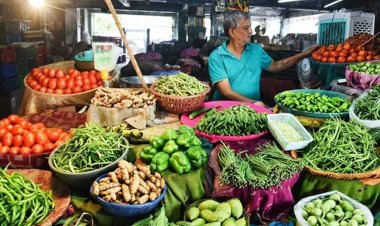
Retail sugar prices have now declined to around Rs 57.5 per kg, according to the two industry bodies. On September 21, prices were Rs 55.09 per kg in Uttar Pradesh, Rs 55 in Delhi, Rs 56.74 in Maharashtra, Rs 56.19 in Karnataka and Rs 57.45 in Tamil Nadu.
The sharper correction has been visible at the ex-mill level, where the pan-India average is currently around Rs 4,450 per quintal, nearly 30% below the recent peak. The industry has used this decline to argue that the price spike did not translate into sustained gains for sugar mills.
According to data from the Ministry of Consumer Affairs, the average retail price of sugar was Rs 58.02 per kg on September 22, compared with Rs 58.14 per kg on September 21 and Rs 60.74 per kg a month earlier. The average wholesale price stood at Rs 5,309.78 per quintal on September 22, against Rs 5,324.23 per quintal on September 21 and Rs 5,617.53 per quintal a month earlier. A year ago, the wholesale price was Rs 4,316 per quintal, while the average retail price was Rs 46.48 per kg.
ISMA and NFCSF said mills sold only 7.22 lakh metric tonnes (LMT) between August 17 and August 31 at an average ex-mill price of Rs 4,996.98 per quintal. Against annual domestic sugar consumption of around 285 LMT, this represents less than 2.5% of total annual demand.
The associations therefore maintain that more than 97.5% of the country's annual requirement was sold at normal or subdued prices. This, they said, "dispels any notion" that mills made excessive profits from the temporary price peak.
However, sugar sold during the brief window fetched substantially more than the current ex-mill average. The weighted average ex-mill realisation for the entire Sugar Season 2025-26 up to mid-September stands at only around Rs 4,100 per quintal, or Rs 41 per kg.
ISMA and NFCSF argue that even this seasonal average remains below the industry's overall cost once statutory sugarcane prices and conversion costs are taken into account. The assertion comes at a time when consumers are benefiting from the subsequent correction, while the industry continues to emphasise the financial pressures faced by mills.
Farmer payments form a key part of the industry's defence. During Sugar Season 2025-26, mills have paid around Rs 1.12 lakh crore to sugarcane farmers, equivalent to about 97.5% of total cane payments due. For Sugar Season 2024-25, more than 99.5% of cane dues have been cleared, according to ISMA and NFCSF.
The associations said the fall in retail prices is particularly significant ahead of the festive season and expect further softening in the coming weeks. Lower sugar prices could also help contain costs for consumers and businesses using sugar in festive-season products.
At the same time, the industry has stressed that excessively low realisations could affect mill liquidity and, consequently, the ability to make timely cane payments. This creates a delicate balance between consumer affordability and the financial sustainability of sugar mills.
ISMA Director General Deepak Ballani said, “The correction in sugar prices - around 11-12% at the retail level and nearly 30% at ex-mill from the peak - is a welcome development for consumers ahead of the festive season, and one the industry has actively supported. It also puts the recent price episode in perspective. Barely 7 LMT, less than 2.5% of India's annual consumption, moved during that brief window; the remaining 97.5% has been supplied at normal or subdued prices. In fact, the season's weighted average ex-mill realisation of about Rs 41 per kg remains well below the cost of production once statutory cane prices and conversion costs are accounted for.”
“The industry has consistently been a stabilising force on food inflation, with sugar's long-term price growth trailing almost every other staple. As we head into the festive season, our commitment is twofold: uninterrupted, affordable supplies for consumers, and fair, viable realisations that keep mills liquid and ensure timely cane payments to crores of farmers across the country,” Ballani said.
The industry's position thus rests on two arguments: that the high-price period was too short and involved too little volume to generate significant windfall gains, and that the broader season average remains under pressure. With retail prices now substantially lower, the immediate issue for consumers is affordability, while for mills the focus is on maintaining sufficient realisations to meet operational costs and farmer payments.