
From Enrolment to Retention: The Challenge of Keeping India’s Children in School
India has achieved near-universal access to primary education, but retaining students through secondary and higher secondary levels remains a major challenge. Structural fragmentation, school transitions, financial hardship, migration, teacher shortages, and distance barriers contribute to dropouts. Experts and policymakers advocate integrated schools, better infrastructure, and improved access to ensure more children complete their educational journey.
 Join the RuralVoice whatsapp group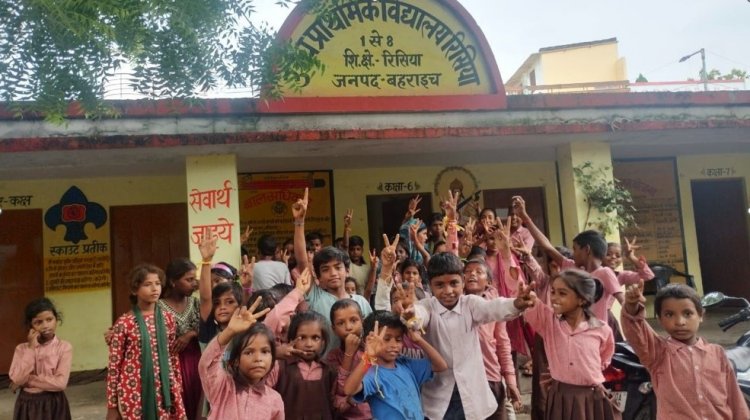
Snehil Chaubey
India operates one of the largest school education systems globally, supporting over 24.69 crore students across 14.71 lakh operational schools. Over the past decade, the country has made remarkable strides in ensuring that almost every child has access to foundational education. However, despite these early enrolment successes, a critical challenge remains: retaining students through the completion of their higher secondary education.
This article examines official data to understand the structural challenges, transition hurdles, and recent policy shifts shaping the educational landscape in India.
1. The "Pyramid Problem" and Structural Fragmentation
A major structural issue within the Indian education system is what the NITI Aayog's May 2026 report describes as the "Pyramid Problem". The schooling infrastructure is highly fragmented, featuring a massive base of primary schools that narrows drastically at higher levels.
Currently, India has 7.3 lakh primary schools, but this number falls to just 1.64 lakh schools at the higher secondary level. Most notably, only 5.4% of schools offer a continuous educational journey from Grade 1 to 12 under one roof. This forces students to frequently change schools, significantly increasing the risk of dropping out. As a result, 4 out of every 10 children drop out before completing their higher secondary education.
|
Structural parameter / Indicator |
Baseline Metric |
Current Status (NITI Aayog 2026 Analysis) |
|
Total Operational Schools |
15.58 Lakh (2017-18) |
14.71 Lakh |
|
Total Student Enrollment |
26.95 Crore (2014-15) |
24.69 Crore |
|
Primary Schools (Classes 1-5) |
- |
7.3 Lakh |
|
Higher Secondary Schools (Classes 11-12) |
- |
1.64 Lakh |
|
Continuous Journey Schools (Grade 1-12) |
- |
5.4% |
|
Gross Enrolment Ratio (GER) Higher Secondary |
- |
58.4% |
Source: NITI Aayog, "School Education System in India — Temporal Analysis and Policy Roadmap for Quality Enhancement," May 2026 Report.
2. National Dropout Rates
While overall dropout numbers have seen a gradual decline over the last three academic years, attrition remains a severe problem as students progress to higher grades. According to the Unified District Information System for Education Plus (UDISE+) 2024-25 report, dropout rates are relatively low during the preparatory years but jump significantly by the time students reach secondary school.
|
Educational Stage |
Dropout Rate (2022-23) |
Dropout Rate (2023-24) |
Dropout Rate (2024-25) |
|
Preparatory (Classes 3-5) |
3.7% |
3.1% |
2.3% |
|
Middle (Classes 6-8) |
5.2% |
4.3% |
3.5% |
|
Secondary (Classes 9-10) |
10.9% |
9.6% |
8.2% |
Source: Ministry of Education, Unified District Information System for Education Plus (UDISE+) 2024-25 Report.
3. The Crisis of Cohort Retention
Retention rate measures the system's ability to keep students enrolled from one academic year to the next. The data reveals a "leaky pipeline" effect. While foundational retention is nearly universal at 98.9%, the rate plummets as students advance. By the secondary level, the retention rate is a concerning 47.2%, meaning less than half of the students who enter the system successfully navigate contiguously through secondary school.
|
Educational Level |
Retention Rate (2022-23) |
Retention Rate (2023-24) |
Retention Rate (2024-25) |
|
Foundational |
92.1% |
98.0% |
98.9% |
|
Preparatory |
90.9% |
85.4% |
92.4% |
|
Middle |
75.8% |
78.0% |
82.8% |
|
Secondary |
44.1% |
45.6% |
47.2% |
Source: Ministry of Education, UDISE+ Educational Indicators and Flash Statistics 2024-25.
4. Transition Node Metrics
Transitions—moving from one major school stage to the next—are the most vulnerable points for student attrition. The UDISE+ data shows that while foundational to preparatory transitions are very smooth (98.6%), the leap from middle school to secondary school sees significant drop-offs. In 2024-25, the transition rate into secondary education was 86.6%, meaning over 13% of the student cohort failed to make this specific academic transition.
|
Transition Point |
Transition Rate (2022-23) |
Transition Rate (2023-24) |
Transition Rate (2024-25) |
|
Foundational to Preparatory |
92.2% |
98.1% |
98.6% |
|
Preparatory to Middle |
87.9% |
88.8% |
92.2% |
|
Middle to Secondary |
86.7% |
83.3% |
86.6% |
Source: Ministry of Education, UDISE+ 2024-25 Transition Indicator Briefs.
5. Private School Growth vs. Government School Rationalisation
A significant shift is occurring in the types of schools students attend. Over the past decade, government school enrolment has decreased from 71% in 2005 to 49.2% in 2024-25. Concurrently, there has been a sharp increase in private school enrolment, which now accounts for nearly 38.8% of students. This is partly driven by parents seeking English-medium instruction and perceived better discipline.
At the same time, state governments have been conducting "school rationalisation" or merger programs to improve efficiency. Between 2014 and 2024, the number of government schools declined as nearly 1 lakh schools were closed or merged. Some observers have raised concerns that closing smaller village schools and relocating students to more distant campuses might increase dropout rates, particularly for girls who cannot travel far.
- Ground Realities: Voices from Classrooms in Uttar Pradesh
To understand the human stories behind these macro-level statistics, recent accounts from government primary teachers in Uttar Pradesh reveal the exact reasons children are pulled from the system:
- Financial Pressures: At Faizan Ul Uloom Inter College in Saadatganj, Barabanki (a government-handled school for Classes 1 to 8), financial problems are a primary cause for students leaving after passing certain grades. Recent examples of students leaving due to family financial struggles include Mobish (passed 8th in 2026), Sadiya Bano and Mo. Azeem (passed 5th in 2026), and Mo. Bilal (passed 5th in 2019).
Faizan Ul Uloom Inter College, Barabanki (Photo: Snehil Chaubey)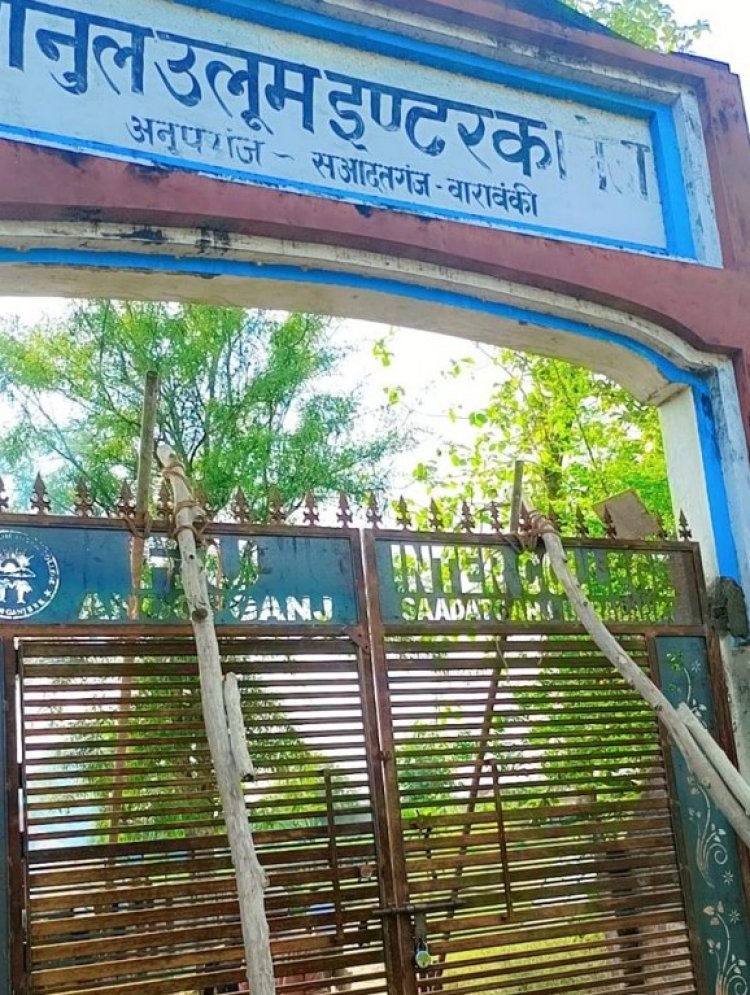
- Family Migration and Labour: At the Composite School in Risia, Bahraich (Classes 1 to 8), students are sometimes pulled out abruptly for economic reasons. For example, Jambi (Class 8) and her younger brother Sameer Ahmad (Class 7) dropped out to relocate to Bombay for a family business. Their parents pulled them out before they were even allowed to attend their final exams.
- Distance and Resource Deficits: Physical distance and a lack of school resources push students toward private alternatives. In the same Composite School in Risia, a Class 6 student named Daksh Kumar Rae left and was admitted into a low-cost private primary school simply due to the long commuting distance. This issue is heavily compounded by severe teacher shortages at the school, which operates with just one teacher for approximately 90 students in Classes 1 to 5, and only two teachers (including the headmaster) for an even larger cohort in Classes 6 to 8.
Though the New Education Policy (NEP) 2020 places teachers at the centre of any fundamental reforms in the education system, as per UDISE+ 2024-25 report, number of single-teacher schools in the country are 1,04,125.
7. Ground Perspectives on School Mergers
While the statistics show a reduction in the sheer number of government schools, education experts on the ground offer a more nuanced perspective on the impact of these mergers.
Ashwath Bharath, Senior Director at Teach For India, in conversation with Rural Voice, points out that the issue of school mergers is complex and not simply a strategy for closing schools. According to him, “The sole reason for school consolidation is fundamentally aimed at improving access and the quality of education. He notes that parents often prefer larger "hub schools" because they provide better infrastructure, access to specialist teachers, and the vital opportunity to continue studying up to the higher secondary level under one roof. Mr. Bharath also stated that mergers generally happen after consulting with stakeholders and cautioned against making broad generalizations about their negative effects on marginalized communities without long-term evidence.”
Anurag Behar, Chief Executive Officer of the Azim Premji Foundation, shares a broadly similar assessment. Drawing from the Foundation's extensive experience working across 59 districts and 350 blocks, he noted that most "closures" are actually practical school mergers rather than outright shutdowns. Importantly, he highlighted that the Foundation has rarely observed instances where school mergers resulted in children dropping out. His insights suggest that the real impact of consolidation may actually be beneficial in most cases, and harmful in some. "The matter should be evaluated based on whether children ultimately gain access to better educational opportunities,” he told Rural Voice.
Conclusion
India's education system has successfully brought millions of children into primary classrooms, but retaining them requires urgent structural evolution. To counter the dropout crisis, NITI Aayog recommends a transition towards "cylindrical" schools—integrated institutions providing continuous education from Class 1 to Class 12. By listening to on-ground experts, streamlining school resources into better-equipped hub schools, and removing the physical and structural barriers to grade transitions, policymakers can ensure that more students successfully complete their entire educational journey.
(The writer is a 2nd year Master's Student in Public Policy and Governance at Dr. B.R. Ambedkar University, Delhi. Currently interning with Rural Voice.)