
India Cuts Import Duty on Crude Edible Oils to 10% to Ease Prices, Boost Local Refining Industry
The Government of India has halved the basic import duty on crude edible oils to 10%, reducing the total tax to 16.5% while keeping refined oil duties at 35.75%. The move, welcomed by IVPA, aims to curb food inflation and boost domestic refining. It addresses trade imbalances caused by refined oil imports under SAFTA provisions.

 Join the RuralVoice whatsapp group
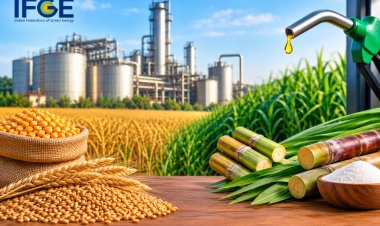
In a significant move, the government has reduced the basic customs duty on edible oils to 10%, while keeping the duty on refined oils unchanged at 35.75%. This step will not only boost the domestic refining industry but also help in controlling inflation. However, oilseed farmers may face challenges in getting better prices, and the move is seen as contrary to the policy of achieving self-reliance in edible oils.
With this revision, the total effective import duty on crude edible oils - factoring in the Agriculture Infrastructure and Development Cess and Social Welfare Surcharge - now stands at 16.5%, down from 27.5%.
However, the import duty on refined edible oils remains unchanged at 35.75%, creating a wider gap of 19.25% between crude and refined oils. This gap is designed to encourage the import of crude oils instead of processed ones, enabling value addition and job creation within the country.
IVPA Welcomes Move
Sudhakar Desai, President of the Indian Vegetable Oil Producers’ Association (IVPA), welcomed the decision, calling it a "bold and historic move" that aligns with the government’s Make in India initiative.
“Indian Vegetable Oil Producers’ Association (IVPA) welcomes the decision of the government to reduce the basic import duty on crude edible oil only from 20% to 10%, while leaving the net refined oil duties unchanged at 35.25 percent,” said Desai.
“We thank the government for accepting the IVPA recommendation to increase the duty differential between crude and refined edible oil to 19.25%. This is a significantly bold move towards ensuring Make in India and also protecting the sector from the influx of refined oils causing capacity injury to the vegetable oil sector. This move will not just strengthen the domestic refining capacities of Indian refiners but also ensure a fair price to oilseed farmers and a fair price to the consumers.”
Desai noted that persistent efforts by IVPA to highlight trade distortions under SAFTA (South Asian Free Trade Area) have played a key role in driving the decision.
According to IVPA data, imports of refined palm oil surged from 4.58 lakh metric tonnes during June-September 2024 to 8.24 lakh metric tonnes between October 2024 and February 2025, accounting for nearly 30% of total palm oil imports. Under SAFTA’s zero-duty provisions, refined oils from neighboring countries were flooding Indian markets, benefiting from the duty advantage and adversely impacting domestic refiners.
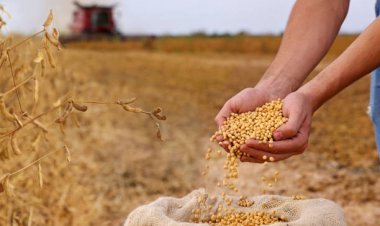
However, reducing the import duty on crude edible oils is not in line with the policy of achieving self-reliance. Lower duties may make it difficult for farmers to receive fair prices. Just two days ago, the government announced the Minimum Support Price (MSP) for Kharif crops. Among oilseeds, the MSP for groundnut was increased by Rs 480 to Rs 7,263 per quintal, sunflower by Rs 441 to Rs 7,721 per quintal, and soybean by Rs 436 to Rs 5,328 per quintal.
India is the world’s largest importer of vegetable oils, sourcing over 70% of its total demand through imports. It buys palm oil primarily from Indonesia, Malaysia, and Thailand, and soybean and sunflower oil from Argentina, Brazil, Russia, and Ukraine. With this policy change, the government seeks to strike a balance between price stability for consumers and long-term industrial sustainability through domestic value addition.